







Wax Heaters for Taiwan, China: 110 V First, Then the BSMI File
Taiwan, China is the market where two facts reorder the whole quotation before any paperwork is discussed: the grid runs on 110 V / 60 Hz, and most household electrical appliances sit on the inspection list of BSMI — the Bureau of Standards, Metrology and Inspection. A heater built for a 230 V market cannot be fixed with a plug adapter, and it cannot be cleared with a CE file alone. Here is the order in which a Taiwan, China order should be engineered.
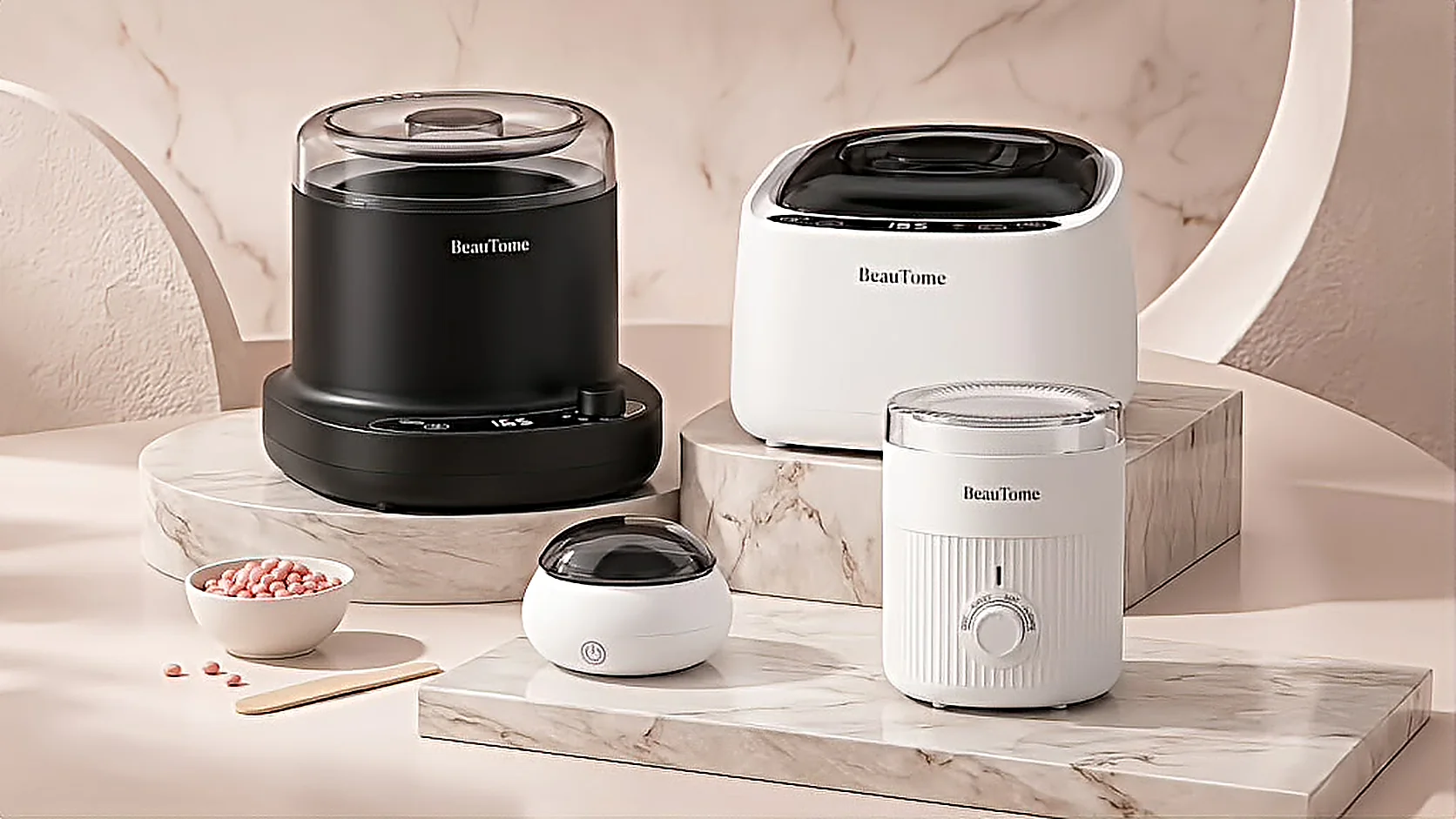
Ten models from 20 to 800 ml — but for Taiwan, China, every one of them starts life as a 110 V build.
Fact one: 110 V / 60 Hz is a redesign, not a conversion
Taiwan, China runs on 110 V / 60 Hz with North American-pattern plugs — flat two-pin ungrounded and grounded three-pin — covered by the household plug standard CNS 15767-1. A heating element specified for 230 V connected to 110 V delivers roughly a quarter of its rated power by the P = V²/R relation, which means a 230 V wax pot will sit indefinitely below working temperature and come back to the distributor as a “defective” unit that never was one. The Taiwan, China variant therefore needs a genuine 110 V element, harness and thermal cutoff rated for the resulting current — the same engineering exercise as a 100 V build for Japan, one market north.
Frequency matters less for a resistive heater but still belongs in the file: any AC fan or mains-referenced controller must be verified at 60 Hz, and the test report must cover 110 V at 60 Hz, not a 230 V report with a voltage note bolted on. The nameplate should read one unambiguous string — 110 V, 60 Hz, rated watts at that voltage — and the purchase order should list the plug and cord as their own line item.
The market itself justifies the engineering. Taiwan’s registered beauty and body-care businesses number in the tens of thousands (the S 9622 industry classification covering beauty, body care and nail services lists over 17,000 registrations), and the 2025 chain-franchise census by Mirai Market Research recorded beauty and body-care chains growing 15.5% to 9,928 stores, with nail and lash services the fastest-growing leisure category of the year at +42.2%. Waxing menus ride inside that expansion — and each waxing room needs pots.
Fact two: the BSMI file, two routes
Under Taiwan’s Commodity Inspection Act, household electrical appliances rated up to 250 V are broadly listed for legal inspection. Testing follows Taiwan’s CNS national standards — safety on the CNS 60335 series for household appliances, electromagnetic compatibility on CNS 13783-1, and restricted-substance marking per CNS 15663 — at BSMI-designated or BSMI-recognized laboratories. Two conformity routes exist, and choosing between them is a business decision as much as a compliance one:
RPC — Registration of Product Certification. Type test first, then a conformity-to-type declaration drawn up by the manufacturer or the authorized local representative. Certified products carry the Commodity Inspection Mark with an “R” code and clear customs directly unless sampled at the border. The application and annual fee are NT$5,000 per certification, serial products add NT$3,000 each, and certificates run three years.
TABI — Type-Approved Batch Inspection. Type approval first (NT$3,500, generally valid three years), then a batch-inspection application for every shipment before it arrives at port. For steady reorders the per-shipment step adds friction; for a cautious first container it caps exposure.
Three practical points decide the file. First, who applies: the importer is the obligated party, and certificates cover defined models — a private-label buyer changing the housing or element changes the certificate scope. Second, marking: the commodity inspection mark with its identification code goes on the product body, permanently and legibly, with RoHS status declared per CNS 15663. Third, language: manuals and safety warnings are in Traditional Chinese — not Simplified, and not English-only. Selling listed products without valid inspection carries fines in the NT$200,000–2,000,000 range per the Commodity Inspection Act, plus removal from sale. A standard heater has no radio functions, so NCC approval is not triggered; add Wi-Fi or Bluetooth and that changes. Scope details — which part of CNS 60335 applies to a wax heater and the current inspection list — should be confirmed in writing with the importer and BSMI before tooling decisions are finalized.
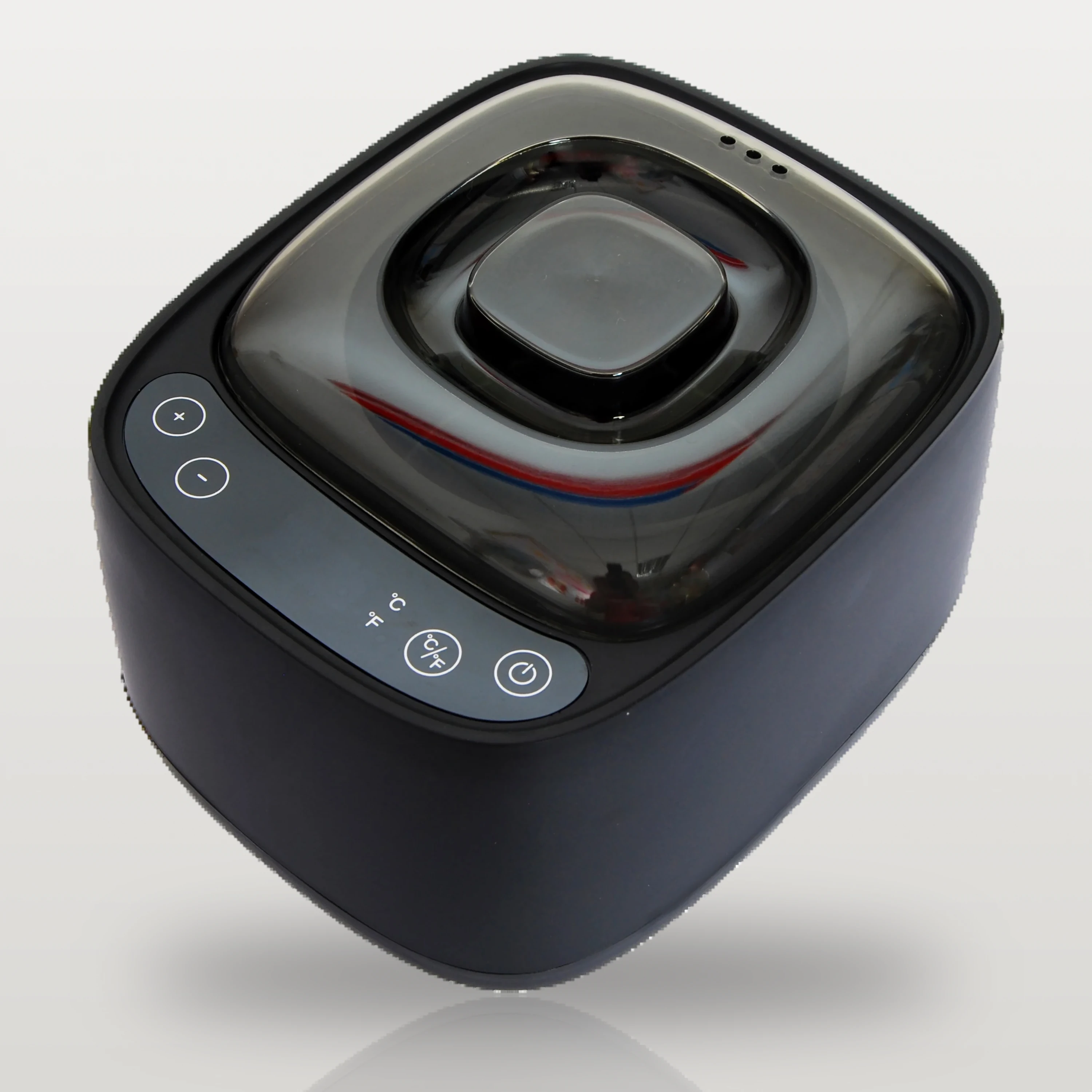
The 450 ml workhorse holds about 400 g of beads — one technician’s day — and becomes the anchor SKU of any Taiwan, China order once the 110 V build is settled.
What the room buys: capacity in a subtropical salon
Taiwan, China’s salons face the same two-temperature reality as every professional waxing market: a low-melt rosin-free formula working around 45–50 °C and a film wax working around 55–60 °C cannot share one pot setting. Two working temperatures mean two pots — which is why the twin-pot station earns its footprint in waxing-led rooms.
The ladder that fits most orders: the 450 ml class as the working standard (about 400 g of beads, one technician’s day); the 180 ml mini as the brow-and-face second pot and for compact studios; the 250 ml for single-service rooms; the 500 ml digital display model for salons that want the number on the wall during training and audits; the 800 ml for high-volume back and chest work; and the entry BWW5K 450 ml, 100 W, 30–125 °C single-knob unit — a fine starter pot, but not for a newly trained technician whose only feedback is the wax itself.
Humidity is the local condition worth engineering for. A subtropical island runs warm and damp most of the year; chip-based temperature control holds its set point where a bimetal thermostat drifts, drifted settings mean hotter wax, and hotter wax means rework. Storage for the wax itself stays at 15–24 °C, dry and shaded, whether it sits in a back room or a distributor’s warehouse.
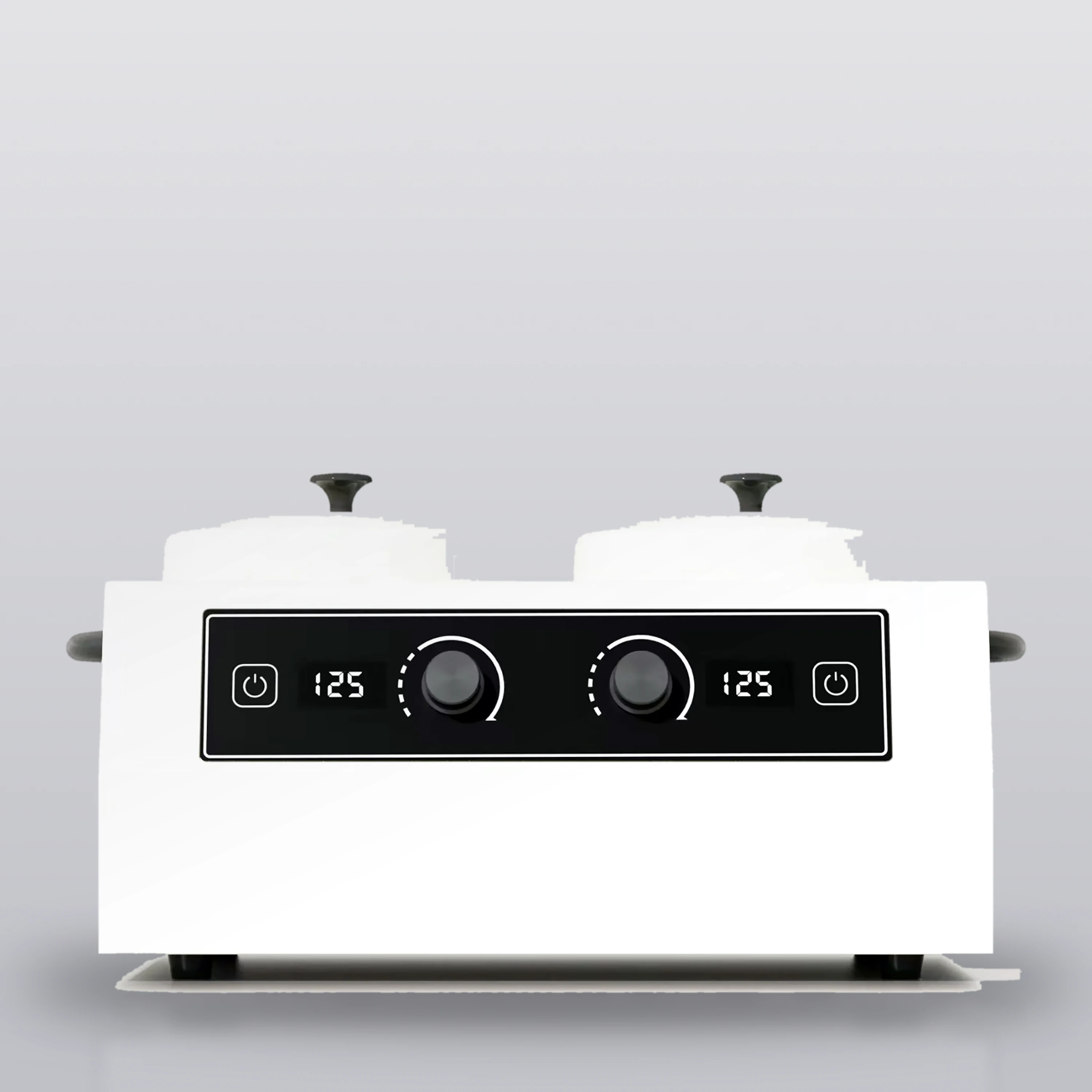
The twin-pot station puts 45–50 °C and 55–60 °C formulas side by side — two working temperatures without two desks.
What goes into the purchase order
Six lines cover a Taiwan, China order: model mix against the capacity ladder above; a nameplate string reading 110 V / 60 Hz with wattage at that voltage; North American-pattern plug and cord per CNS 15767-1, listed as their own line with spares; Traditional Chinese manual and warning text; the BSMI route and the named importer who holds the certificate; and a first-order spare-parts ratio of 1:10 — 110 V heating elements, inner pots, controllers and knobs — held by the importer, not the salon.
The wax heater range page lists all ten models, and the OEM/ODM program covers private-label options on the existing molds. Related reading: our guide to Japan’s 100 V market faces the same voltage-first logic.
Quick FAQ
Can a 230 V heater be sold in Taiwan, China with a step-down converter?
Who applies for BSMI certification, and how long is it valid?
Does a wax heater need NCC approval too?
Next step
Send us your room count and menu mix, and we will return a Taiwan, China quotation: 110 V model mix, BSMI-ready documentation, Traditional Chinese materials and the first-order spare-parts package. Contact Miro Wu, Dedicated Account Manager — email miro.wu@beautome.com or WhatsApp +86 188 1393 3019.
Related: the full product range, and buyer topics for distributors.