






The 20 ml Wax Warmer: Small Areas, Sample Kits and the Smallest Pot in the Line
Most wax-heater conversations start at 450 ml and work upward. This one starts at the bottom of the range, because the smallest pot we build — a 20 ml graphene-bodied warmer — quietly solves a problem the big pots cannot: waxing menus are increasingly made of small-area services, and a small-area service does not need four hundred grams of molten wax at 9 a.m. It needs a few grams, melted fresh, at the right temperature, in a machine that does not own the whole counter. If you distribute professional waxing equipment, the 20 ml unit is not a toy in the catalog — it is the SKU that sells the rest of the line.
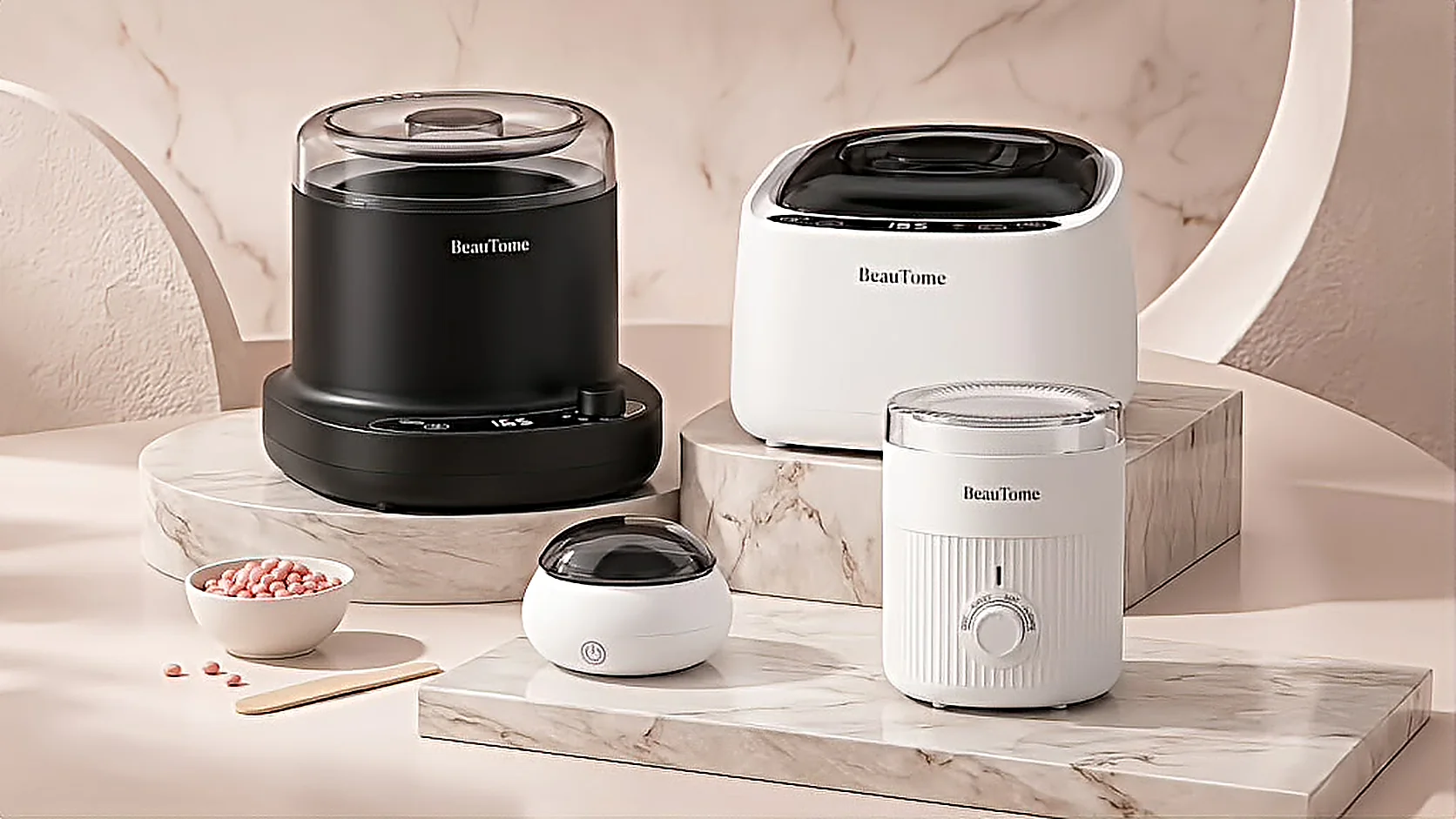
The line runs 20 to 800 ml. The 20 ml pot at the bottom is doing more work than its size suggests.
The mismatch between pot size and service size
The global hair-removal wax market was estimated at USD 2.34 billion in 2026, reaching USD 3.53 billion by 2032 at 6.68% a year, with hot wax taking about 55.4% of demand and the United States alone accounting for roughly 21.6% of global demand (Research and Markets and Market Growth Reports, 2026). Hot wax — hard wax — is the format applied without strips, and it is applied in very different quantities depending on the body area. A full-leg service can consume 100 to 150 grams across a session. An eyebrow reshape or an upper-lip service, by contrast, works with single-digit grams; a touch-up appointment uses less wax than a espresso cup holds.
Now put those numbers against the equipment. A 450 ml pot holds roughly 400 grams of beads — the right vessel for legs, backs and busy double-room schedules, and the standard we recommend for exactly that work. But melt 400 grams for a ten-gram service and you have created three problems: wax held hot for hours degrades and picks up color and scent from every service before it; the pot must be skimmed and eventually emptied and refilled, which is unpaid time; and a full pot of premium formula sitting open all day is inventory slowly oxidizing. For a brow-and-lip menu, the economics of the big pot run backwards.
USD 2.34B → 3.53B
Global hair-removal wax market, 2026 to 2032, 6.68% CAGR (Research and Markets, 2026)
55.4%
Hot wax share of global hair-removal wax demand (Market Growth Reports, 2026)
~18 g
Approximate bead capacity of a 20 ml pot — about two to three small-area services melted fresh each time (BeauTome engineering arithmetic)
Where the 20 ml pot actually earns its place
We see six working roles for the smallest unit in the range, and each one is a conversation a distributor can have with a different buyer:
1. Brow, lip and detail menus. Studios that lead with brows or facial services melt what the next client needs — roughly 18 grams of beads per session — and start each service with a fresh, clean melt. No day-old tinted wax underneath today’s client.
2. Touch-up stations in high-turnover salons. A full-service waxing room keeps the 450 ml pot for scheduled services and a 20 ml pot on the side for the client who came in for “just the lip.” The small pot pays for itself the first week in avoided re-melts.
3. Mobile kits. Combined with the 180 ml PW8 that anchors most mobile setups, a 20 ml unit adds facial and detail services to the bag without adding meaningful weight or power draw — useful when the appointment is a fifteen-minute detail service and nothing else.
4. Sample and starter kits. This is the distributor’s favorite. A salon considering a switch to a private-label hard-wax program receives the trial beads; pairing them with a small dedicated pot turns the trial into a turnkey kit and shortens the decision. The 20 ml unit is also the natural counter-demonstration machine: it warms fast, shows temperature behavior clearly, and does not occupy the showroom.
5. Spa and hotel treatment rooms. A facial suite that offers waxing as an add-on wants the smallest credible footprint at the counter — the same instinct that drives the 24 cm-class equipment choices in hotel fit-outs. A 20 ml warmer next to the facial trolley reads as intentional, not improvised.
6. Retail display sets. For brands selling hard-wax beads to home users, the small pot is the companion hardware in a gift-set or starter-bundle SKU — and the cheapest unit in the line to give margin on.
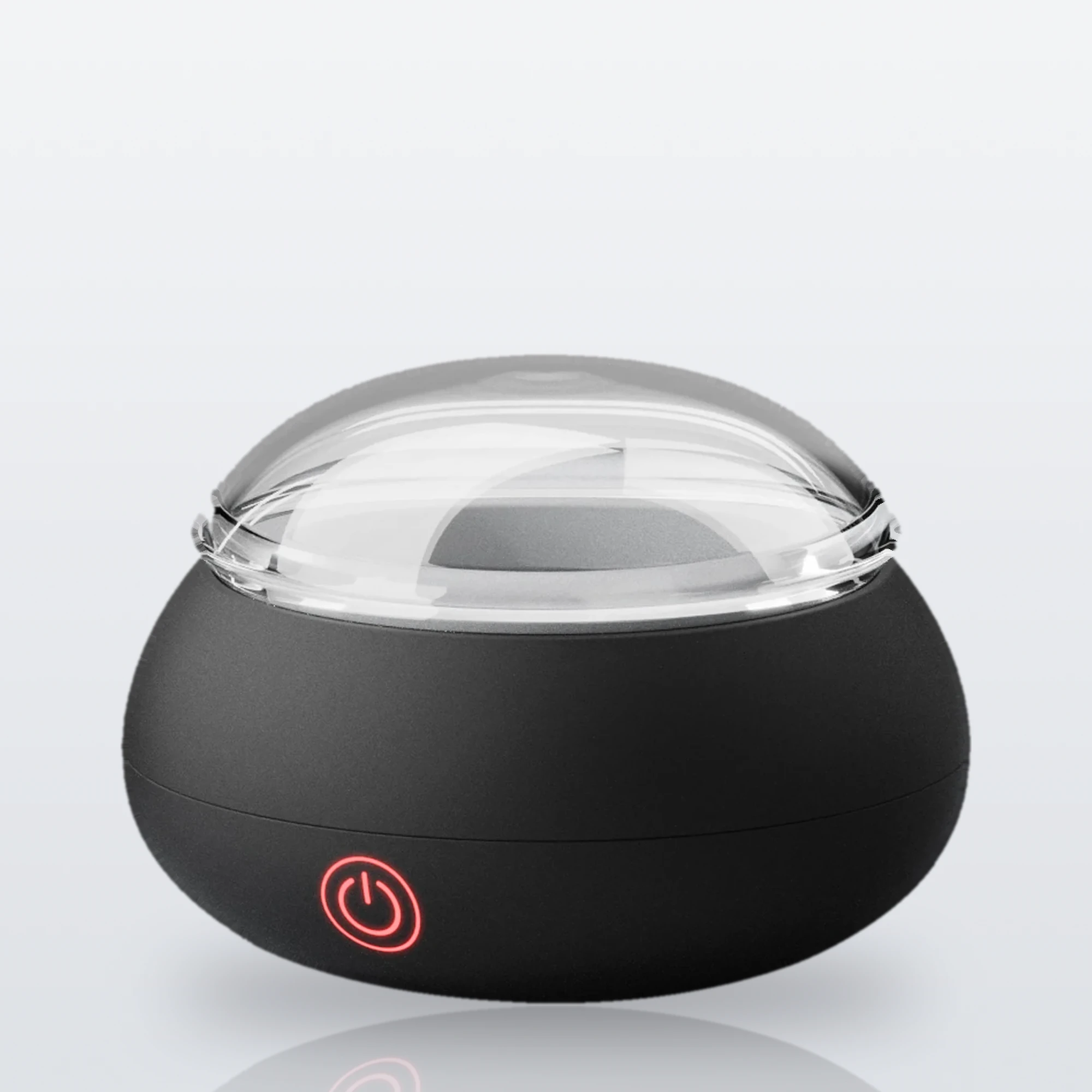
The PW6: 20 ml, graphene heating body, chip-controlled temperature — built for small-area work, not scaled-down leg work.
Why the heating body matters at this size
At 450 ml, thermal mass forgives a slow heater: the wax stays put for hours. At 20 ml the opposite is true — the pot is expected to go from beads to working temperature quickly, hold the set point through a short service, and cool down without the wax burning in the cup. That is why the small unit in our line uses a graphene heating body with chip-controlled temperature rather than a bimetal thermostat. Bimetal controls swing around the set point by several degrees; on a big pot the swing is averaged out by mass, but on 18 grams of wax a wide swing is the difference between a clean spread and a stringy one. Fast warm-up also changes the service rhythm: the therapist melts per client instead of per morning.
The upsell logic writes itself, and it is honest: the 20 ml pot is for small-area and detail work; the 180 ml PW8 is the mobile and single-room workhorse; the 450 ml class carries scheduled full-body menus; the 800 ml and dual-pot stations serve high-volume back bars. A distributor who understands where each size ends does not discount — they specify.
Stocking note for distributors
Across the ranges we ship into professional channels, the pattern that holds is a pyramid: many small and mid units, fewer large ones — but the small unit is rarely bought alone. The most common configurations we see on purchase orders pair a 20 ml unit with either a 450 ml single pot or a 180 ml mobile setup, and sample-kit programs often order the small pot by the dozen. When you build a launch assortment, quote the 20 ml unit inside those bundles rather than as a standalone line item; attach a 1:10 spare-parts ratio (heating element, inner pot, control module) to any first order, and the after-sales picture is settled before the first service call.
Quick FAQ
Can a 20 ml warmer handle a Brazilian or full-leg service?
What voltage does the 20 ml unit run on?
Do you offer the 20 ml warmer in sample kits with private-label wax beads?
Next step
Ask for the full capacity ladder — 20 ml to 800 ml — with the configuration options and a sample-kit quotation for your market. Contact Miro Wu, Dedicated Account Manager — email miro.wu@beautome.com or WhatsApp +86 188 1393 3019.
Related: the wax-warmer maintenance checklist, the booth-renter buyer profile, the small-pack logic for mobile waxing, and the full product catalog.