







Wax Heaters for Korean Waxing Studios: 220 V at 60 Hz and the KC File
Korea combines two things almost no other Asian market does: a 220 V grid running at 60 Hz, and a mandatory KC mark that must be held by a Korea-based entity. Professional waxing is growing fast in Seoul’s dedicated studios, and the equipment buyer there reads labels the way their clients read ingredient lists. This is what a Korean wax-heater order needs: a 220 V/60 Hz build with the right plug family, the KC route scoped early, and Korean-language labels and manuals from the first shipment.
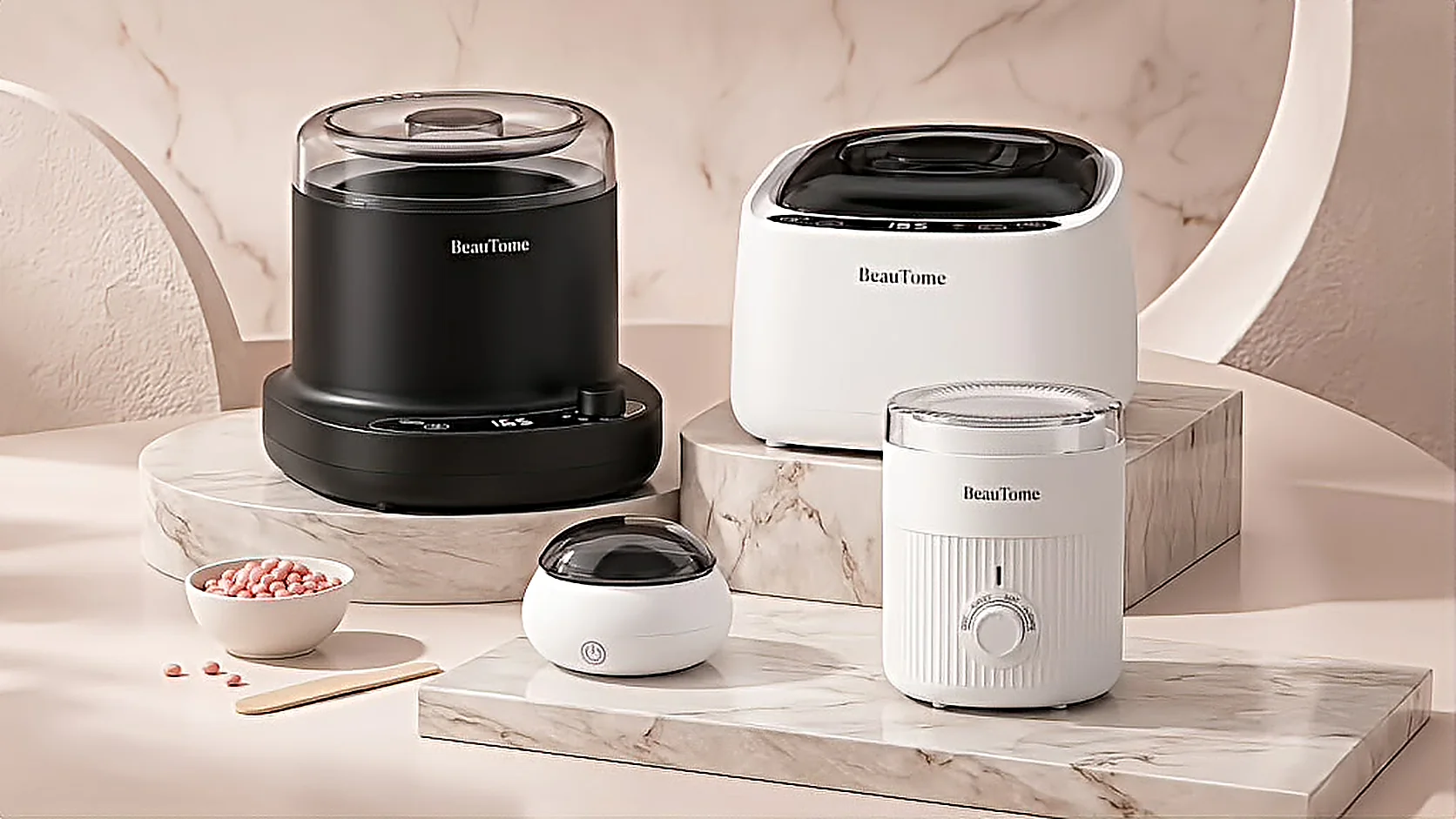
Ten models, 20–800 ml: the capacity ladder lets one Korean distributor cover home studios, single rooms and back bars.
A waxing market built on hygiene expectations
Korea’s professional waxing segment is one of the fastest-movers in Asian beauty services. Industry analysis put professional waxing services up about 12% in 2025, with the average Seoul full-leg wax around 90,000 won and a 2024 consumer survey reporting that 78% of waxing clients rank hygiene and technician expertise above everything else when choosing a studio (industry reports, 2024–2025). Dedicated waxing studios have multiplied in Seoul over the past two years, and men’s grooming is the fastest-expanding end use: Korea’s men’s hair-removal wax segment was valued at roughly USD 0.2 billion in 2024, projected toward USD 0.38 billion by 2033 at 6.8% a year (Verified Market Reports, 2026). The broader Korean hair-removal products market is estimated at USD 1.15 billion in 2025, heading to USD 2.16 billion by 2032 (6Wresearch, 2026).
Two buyer consequences follow. First, the hygiene-first mindset maps directly onto equipment: a heater with a removable inner pot, a lid and a stable chip-controlled temperature is not a nice-to-have, it is the visible core of the studio’s hygiene story. Second, the growth is concentrated in professional studios rather than home kits, so the entry order is a studio outfitting batch, not a single-unit purchase.
220 V at 60 Hz: the combination that catches importers out
Korea runs 220 V at 60 Hz — the voltage of most of Asia but at the frequency of the Americas. For a resistive heater the frequency itself changes little, but the nameplate, the thermostat and controller ratings, and the test report must all cover 220 V/60 Hz, and a 50 Hz-only report from another Asian market will be questioned at certification. On plugs, Korea uses its own KS C 8305 system: type C two-pin for Class II equipment and a German-style grounded plug for Class I equipment. Moulded cord sets should therefore be specified per class, listed as their own purchase-order line, and never improvised with adapters at the studio.
The second trap is legacy wiring. Older Korean buildings still contain pockets of 110 V outlets; a distributor servicing studios in mixed-age buildings will ask whether the heater carries a dual-range input. The honest answer for most professional heaters is a single 220 V build — so the cord, the plug and the studio-side circuit check belong in the installation checklist the distributor hands to the salon.
220 V / 60 Hz
Asia’s voltage at the Americas’ frequency — nameplate, controller and test report must all cover the pair
~12% growth
Professional waxing services in 2025, with 78% of clients naming hygiene and skill first (industry reports)
KC mark
Mandatory, with a Korea-based entity behind it — usually the importer or a designated agent
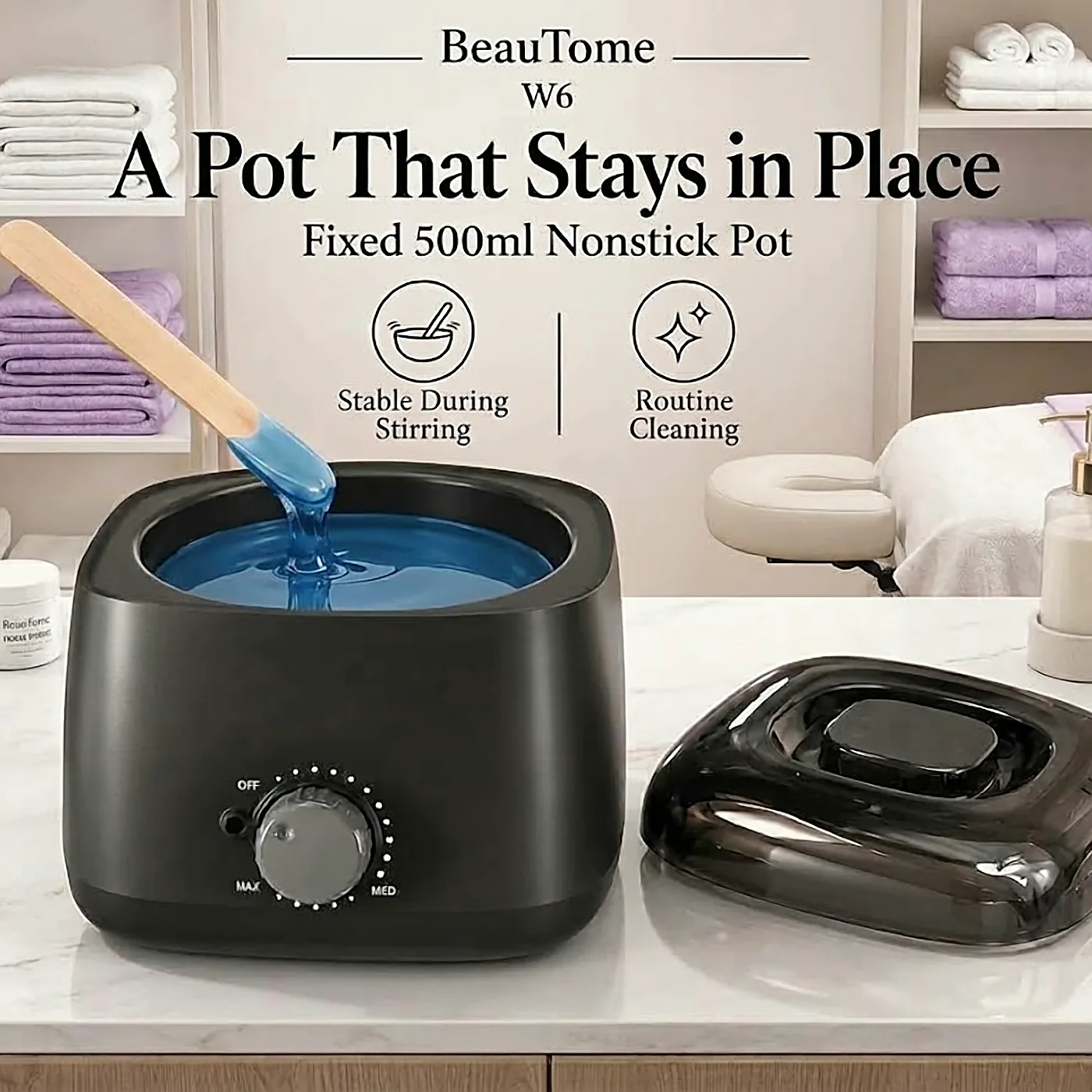
The 20 ml graphene unit covers touch-ups and peak overflow; the 450 ml pot is the daily workhorse.
The KC file: two tracks, one Korean entity
Korea’s KC (Korea Certification) system consolidates the country’s mandatory marks, and for electrical products it splits into two tracks that are often confused. KC safety, administered under KATS, applies the KS C 60335 series to household appliances — the family a wax heater sits in. Depending on the product category it runs either as certification with type testing at a Korean-designated laboratory (with factory inspection and annual follow-up on the stricter tiers) or as the lighter supplier’s self-confirmation route, still requiring designated-lab testing. KC EMC, under the national radio research agency, covers emissions and immunity. Certification bodies and test reports consistently note that the certificate or confirmation must be held by a Korea-based entity — typically the importer or a designated Korean representative — and that labels and manuals must be in Korean, with the KC mark and confirmation or certificate number on the product (test-lab and certification guidance, 2025–2026).
For an overseas manufacturer the practical sequence is: confirm which KC track the heater model falls under with a Korean laboratory or the importer’s agent before tooling the label; prepare Korean-language artwork with the KC mark and number field; and agree in the distribution contract who holds the confirmation and who bears recall responsibility. CE or IEC test data can shorten the Korean testing, but it does not replace the Korean route or the Korean entity behind it. Treat the KC scoping as part of the first quotation, not an afterthought after the goods land in Incheon.
Capacity that matches a studio, not a spa
Korean waxing studios are compact and treatment-dense, which makes the capacity ladder the real sales conversation. The 20 ml graphene unit handles touch-ups and facial work at the trolley; 180 ml suits facial studios and mobile technicians; 250 ml and 400 ml cover single-room studios; the 450 ml pot — holding roughly 400 g of wax — is the one-technician-per-day workhorse; 500 ml digital-display and 800 ml models anchor the back bar; and the 400/800 ml double-pot station serves studios that run both a 45–50 °C rosin-free hard wax and a 55–60 °C film wax, which need two working temperatures and therefore two pots. Chip-based temperature control holds the setpoint where bimetal strips drift — and drift is what burns wax, lengthens the morning warm-up and produces the strip-tested rework Korean clients notice. A first-order spares package — heating elements, inner pots, knobs and lids at roughly one set per ten units — should ride with the initial shipment, since Korean studios have no in-house technician.
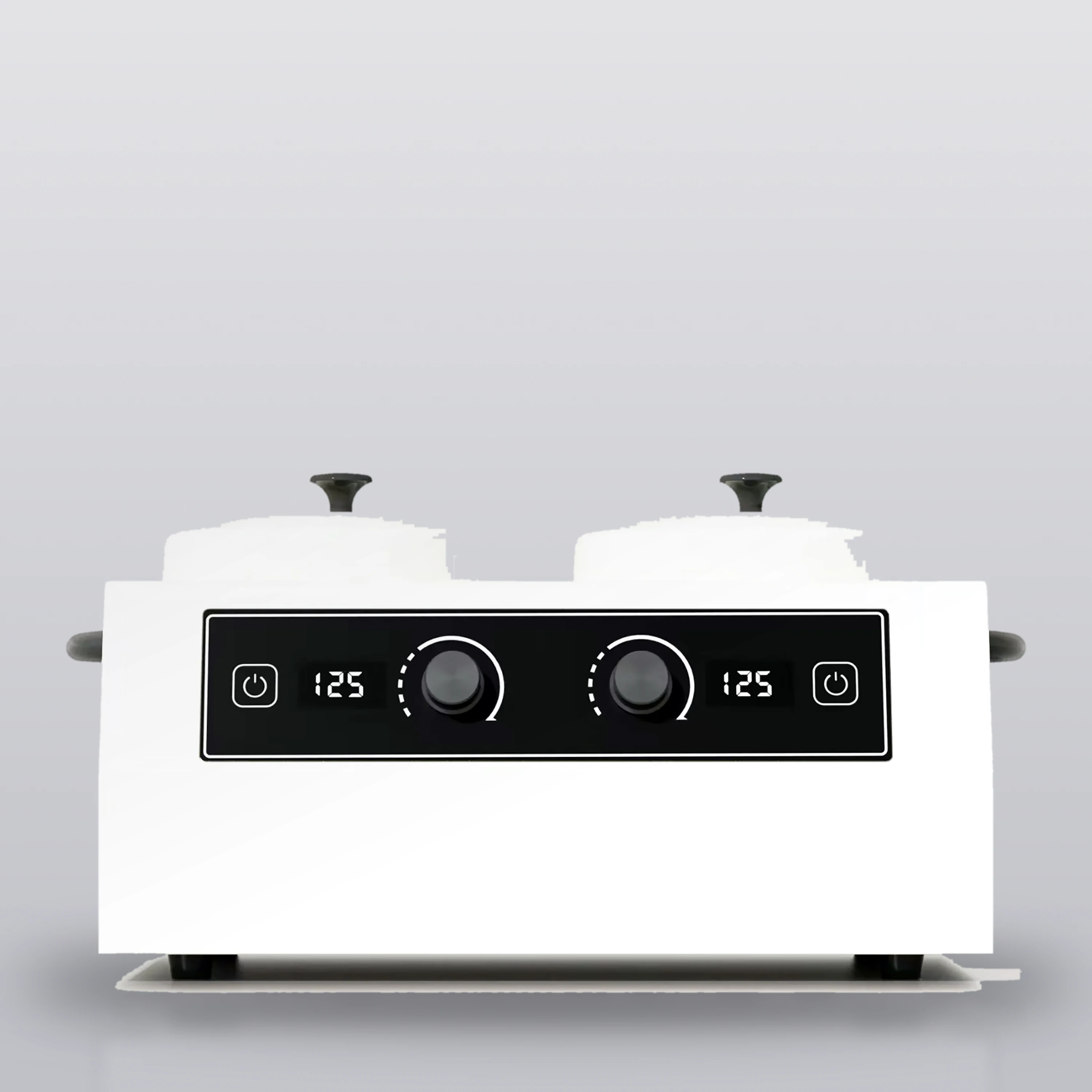
Two working temperatures, one station: the double-pot unit is what a studio running hard and film wax together actually buys.
The purchase order, line by line
A Korean order that clears certification and lands cleanly carries: the model mix by capacity; 220 V/60 Hz on the nameplate with the power rating; the moulded cord set by equipment class (type C or grounded German-style under KS C 8305); Korean-language labels with the KC mark and number field; Korean-language manuals; the Korea-based entity that holds the KC confirmation; and the first spares ratio. The white-label ladder is the same as elsewhere: unbranded units from three to five pieces, a single sample available, and full custom branding from 300–500 units. Specifications live on the Wax Heaters page, and the earlier regional read on voltage and certification selection across Japan, Korea and Australia is in this article.
Quick FAQ
Can we ship Korean heaters on a European Schuko cord?
Who holds the KC certification or confirmation?
Does 60 Hz change the heater design?
Next step
Send us the capacity mix, the equipment class for the cord set and the status of your Korean partner’s KC file, and we will return a quotation with the nameplate, label and spares lines spelled out. For a quotation, contact Miro Wu, Dedicated Account Manager — email miro.wu@beautome.com or WhatsApp +86 188 1393 3019.