







Wax Heaters for Australian and New Zealand Salons: The Most Expensive Minute Is the Changeover
An Australian salon pays at least AUD 26.44 an hour before the first strip is pulled. Ten minutes of changeover a day — cold start, morning skim, a second pot that does not exist, a clean-out that takes twenty minutes instead of five — is roughly 52 paid hours a year, per treatment room. That is the number a wax heater should be measured against, and it is larger than any discount a distributor can negotiate on the unit price.
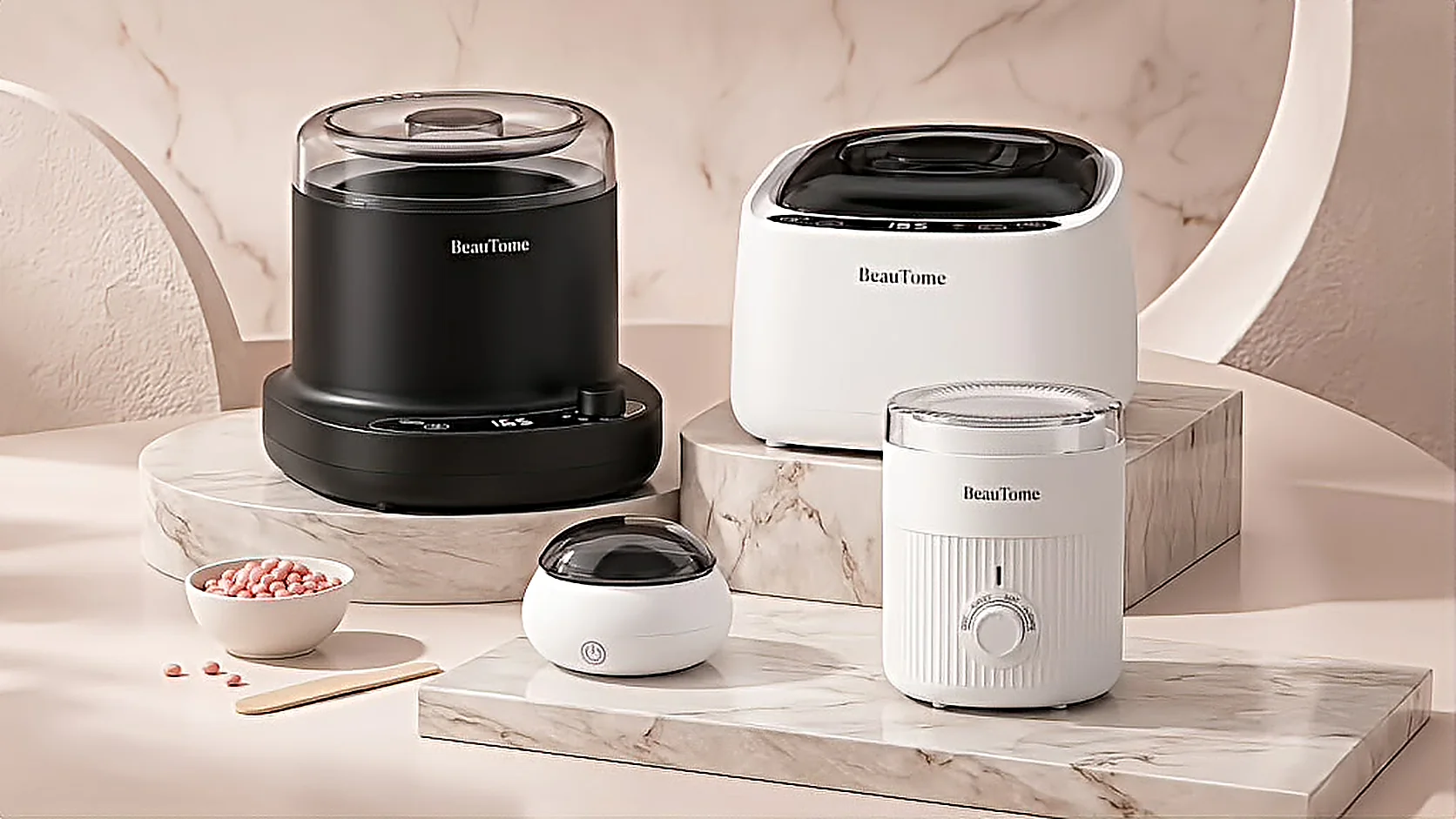
Twenty millilitres to eight hundred, one dial to a digital controller. The choice is not about price tiers — it is about how many pots a room needs to stop losing minutes.
A mature market that replaces rather than expands
Australia and New Zealand together counted 14,345 beauty salons as of 1 April 2026, up 4.09% from 2023, with 82.54% single-owner operations and an average business age of four years and ten months (Rentech Digital, 2026). Growth in the low single digits means most equipment spend is replacement, not expansion: a studio that already owns a warmer buys a better one when the old one starts costing minutes.
That is a different sales conversation from a growth market. Nobody here needs convincing that waxing is a service. The question is why the pot on the bench is worth replacing, and the answer has to be arithmetic rather than adjectives.
14,345
Beauty salons in Australia and New Zealand, 1 April 2026 — up 4.09% from 2023 (Rentech Digital)
AUD 26.44
Australian National Minimum Wage per hour from 1 July 2026; casual loading takes it to AUD 33.05 (Fair Work Ombudsman)
52 hours
Paid time lost per room per year to ten minutes of daily changeover, across six days a week
The arithmetic, before the sales pitch
Run the sum with the salon’s own numbers. Ten minutes a day, six days a week, fifty-two weeks: 52 hours. At the national minimum wage of AUD 26.44 that is about AUD 1,375 per room per year. Most salons pay above the minimum, and casual staff are entitled to at least AUD 33.05 including the 25% loading, which turns the same ten minutes into roughly AUD 1,719. A three-room studio is looking at somewhere between four and five thousand dollars a year, spent on waiting.
New Zealand runs its own minimum wage framework rather than the Australian one, but the structure of the argument is identical: high hourly labor cost, small studios, and a service where the technician is the production line. The minutes are what you sell against.
Where the ten minutes actually go
- Cold start. A 450 ml pot of hard wax takes time to reach working temperature when it is loaded, not empty. A distributor who quotes a cold-start figure measured on an empty pot is quoting a number the salon will never see.
- The morning skim. Wax left overnight skins over and collects dust. If the pot has no lid and a wide-open mouth, the first client of the day starts with a spatula and a bin.
- One pot, two temperatures. A 45–50 °C rosin-free hard wax and a 55–60 °C film wax cannot share a setting. A room that runs both with one pot spends the day waiting for the pot to come down or go up.
- Mid-service top-up. A pot sized for a light day runs out at 4 pm on a heavy one. Ladling from a second pot is faster than waiting.
- Clean-out. An insert that lifts out and has rounded internal corners cleans in minutes. A fixed pot with a square shoulder takes far longer, and the residue left behind burns into the next batch.
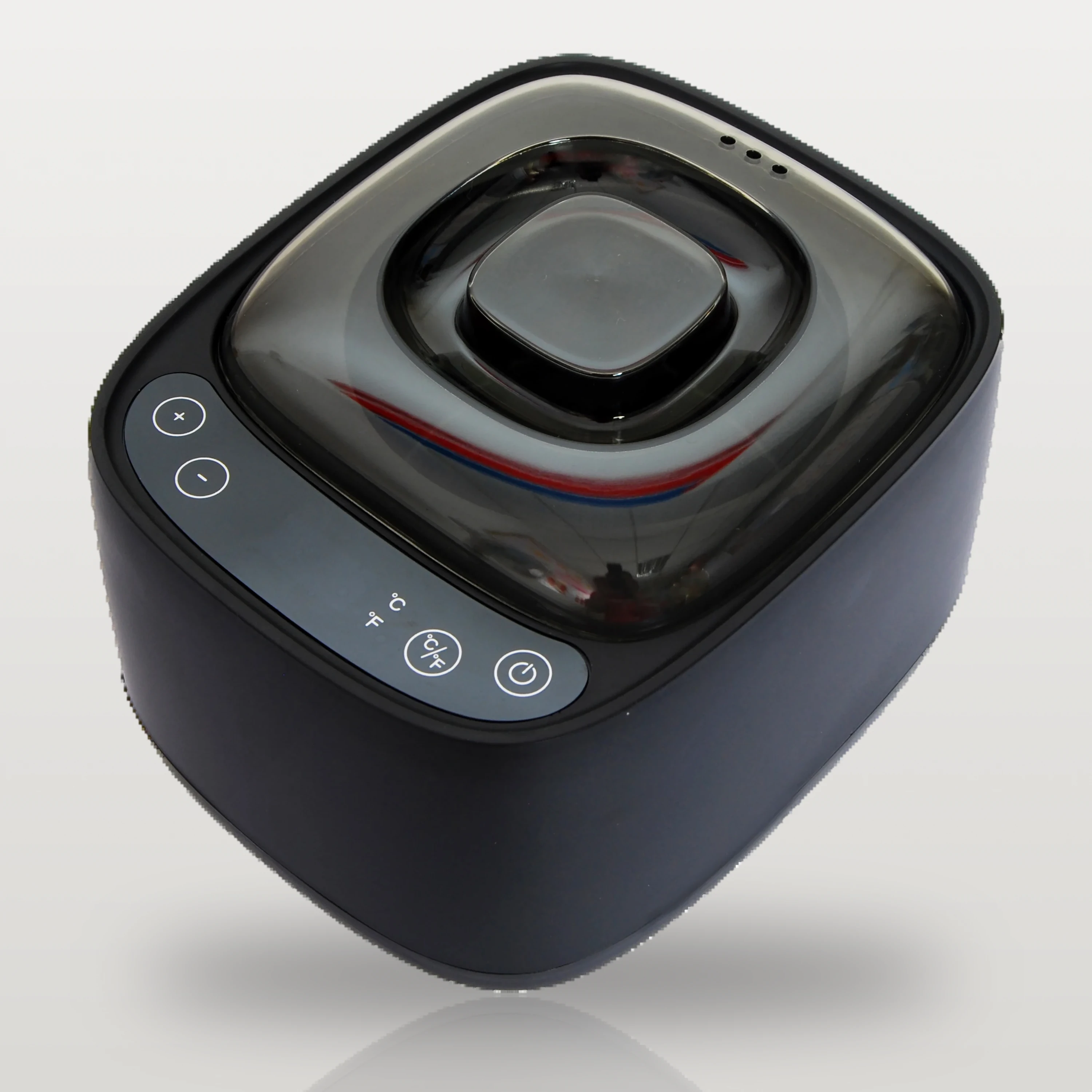
The 450 ml class is the workhorse of a single-therapist room: about 400 g of wax, one working day, one lid to keep the surface clean overnight.
Four specifications to ask for in writing
None of these appear on a typical product page, which is exactly why a distributor who supplies them wins the comparison against a cheaper unit:
- Cold start to working temperature with wax loaded, measured at a stated room temperature — 20–22 °C is a fair reference for an air-conditioned treatment room.
- Recovery time after five strips. How long until the wax is back at working temperature after a real service load, not after an idle hour.
- Hold accuracy over four hours. A chip-controlled pot should hold a narrow band; a bimetallic thermostat swings, and the swing is what burns wax and changes strip behavior.
- Clean-out minutes. Time to empty, wipe and reload, with the insert removed — not a theoretical figure, a stopwatch figure.
A capacity ladder that maps to rooms, not to price
The range runs from 20 ml to 800 ml: 20 ml for detail work and brows, 180 ml for a second small pot or a mobile kit, 250 ml and 400 ml for single-treatment rooms, 450 ml and 500 ml as the standard workhorse class, 800 ml for high-volume back bars, plus double-pot stations at 400 ml and 800 ml. A 450 ml pot holds roughly 400 g of wax, which is about one therapist’s day.
Two temperature classes matter commercially. Rosin-free Formula A1 works in a 45–50 °C band; consumer-grade film wax works at 55–60 °C. A studio that offers both needs two pots or a double station — and that is a legitimate equipment sale, not an upsell.
The BWW5K is the entry point: 450 ml, 100 W, a single dial covering 30–125 °C, no display, no touch controls. It is a good first pot for a small studio and a poor choice for a new technician who cannot read wax by eye — sell it to the right room and it stays sold.
RCM is a mark, not a certificate — and the supplier is local
Electrical compliance in both countries runs through the EESS and the RCM, and the first thing to explain to a buyer is what does not exist: there is no government-issued certificate to file. RCM is applied by the responsible supplier, which must be an Australian or New Zealand legal entity holding an ABN or IRD number. An overseas factory cannot register itself, and cannot legitimately apply the mark on its own account.
EESS sorts equipment into three levels. Level 1 is self-declared; Level 2 requires registration in the national database with a test report and a supplier declaration of conformity; Level 3 requires a certificate of conformity from a JAS-ANZ accredited certifier before registration. A wax heater is normally assessed against the AS/NZS 60335 household appliance series for safety, with EMC under the AS/NZS CISPR 14 household appliance standard, and the RCM used per AS/NZS 4417 with the supplier code shown alongside. Cords are AS/NZS 3112 type I, on a 230–240 V / 50 Hz supply.
The inspection a salon actually faces
In New South Wales, waxing and manicures are treated as skin penetration procedures under the Public Health Act 2010 and the Public Health Regulation 2022. Businesses must register with their local council before trading, and environmental health officers carry out routine inspections. The regulation requires equipment used at the premises to be in good working order, cleaned and dried after use, and kept clean and dry.
That sentence is an equipment specification in disguise. A lid, a removable insert and an interior with no square shoulders are what make “cleaned and dried after use” a two-minute job instead of a twenty-minute one. Other states, territories and New Zealand run their own regimes, so confirm the local requirement rather than assuming the NSW pattern applies everywhere.
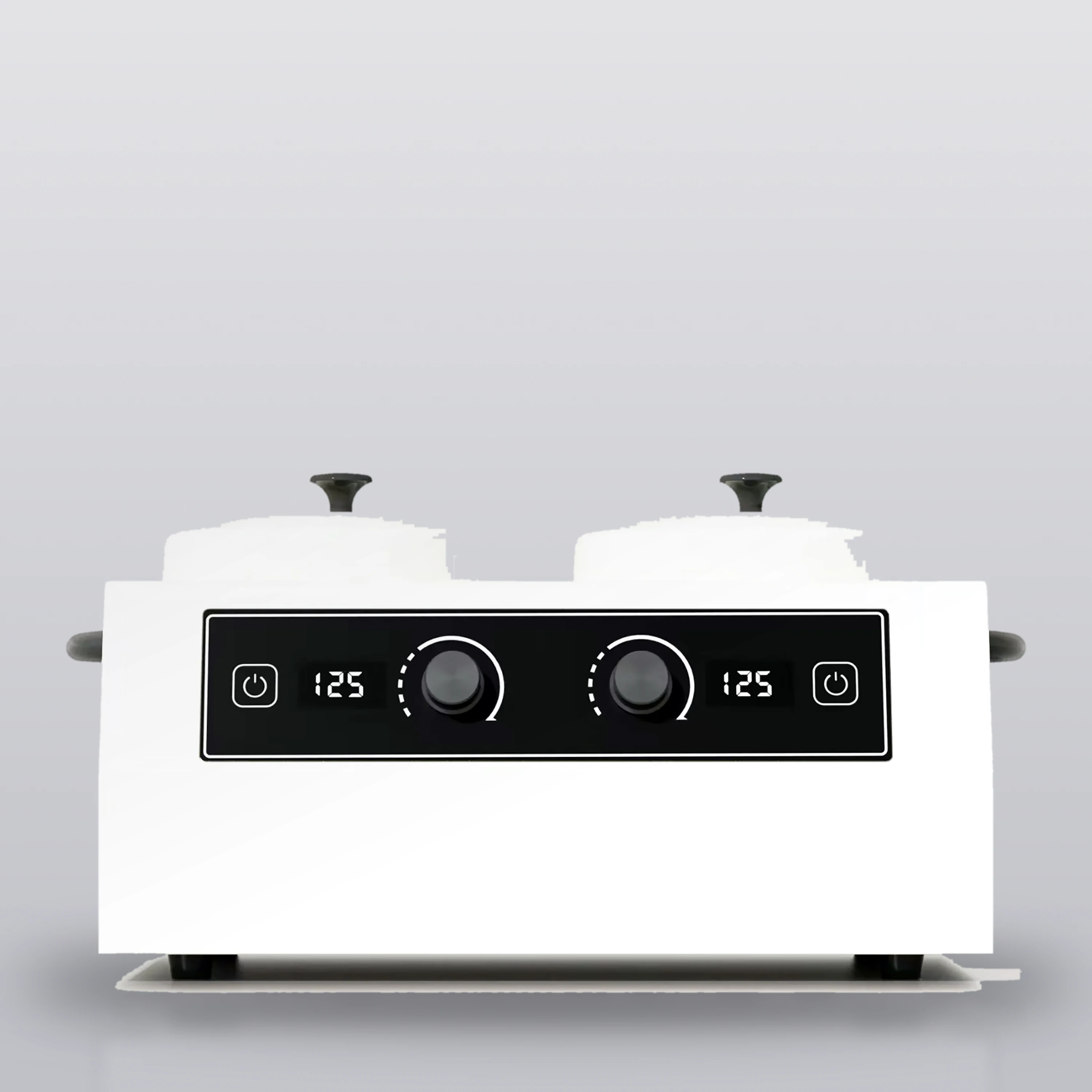
Two working temperatures, two pots, one footprint: the double station is the answer for a room that runs rosin-free hard wax and film wax in the same day.
What belongs on the purchase order
A well-written PO for this market carries six lines: the model mix by room type; the voltage and frequency stated as 230–240 V / 50 Hz; the type I moulded cord as a separate item; the responsible supplier named for the EESS registration; the RCM artwork with the supplier code; and a spare-parts ratio of about one in ten — heating element, inner pot, controller and dial, held by the distributor rather than the salon. Add the language line for the manual: English is enough here, but the safety instructions must match the model on the rating plate.
The full range is on the wax heaters page; the formulas that determine the two working temperatures are on the wax formulas page; and distributors building a private-label line can start from the OEM and ODM program.
Quick FAQ
Can our Chinese factory register the RCM for Australia?
Do we need different heaters for Australia and New Zealand?
Is a 450 ml pot enough for a two-therapist room?
Next step
Tell us the room mix you are equipping and the two working temperatures your studios run, and we will return a model mix with the cold-start and recovery figures stated in writing, plus the spare-parts ratio for your first order. Contact Miro Wu, Dedicated Account Manager — email miro.wu@beautome.com or WhatsApp +86 188 1393 3019.