



AI Smart Nail Lamp for Portugal: Tourism Demand, the EU File and the Portuguese Label Done Right
Portugal is the smallest Western European nail market on most maps — and one of the fastest-moving on this summer’s booking data. Beauty and wellness demand in Portugal grew 34.5% in the first half of July 2026 year on year, driven largely by visitors, and nail treatments are the single biggest service those visitors book. For an equipment brand the country is a distributor-sized opportunity with one easy-to-miss trap: European Portuguese is not Brazilian Portuguese, and the label law cares about the first one.
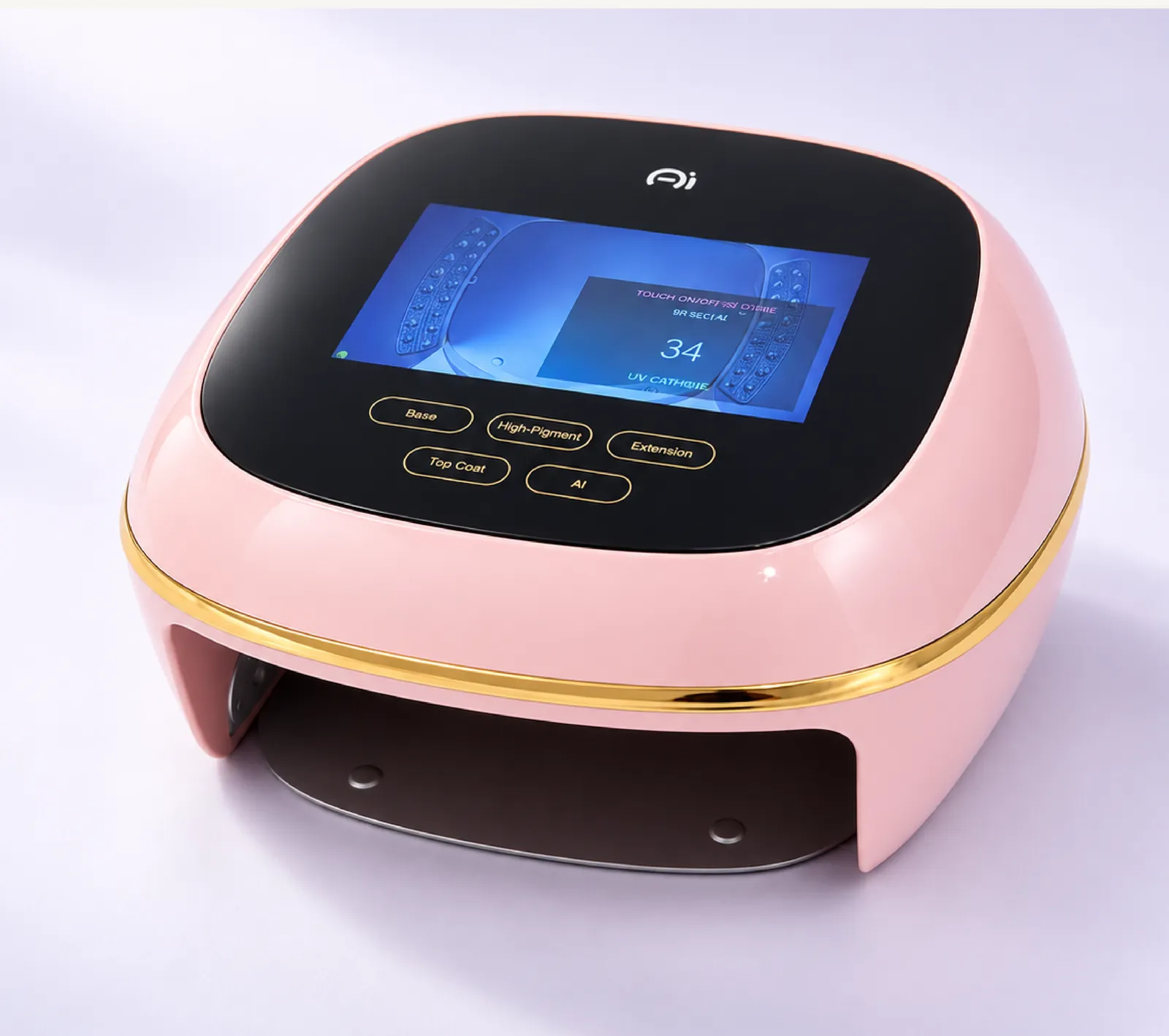
A compact 24 × 24 × 11.5 cm curing station for studios where one technician books, sets and checks out alone.
A small base, moving quickly
Two data sources frame the country differently, and the gap is definitional rather than contradictory. One registry-style count puts Portugal at 1,258 beauty salons as of 1 April 2026, up 6.06% from 2023, with 77.19% single-owner operations and an average business age of about three years; Lisbon district holds 488 of them, Porto 236 and Braga 207 (Rentech Digital, 2026). A second, drawn from the Portuguese company register, counts 684 beautician firms on 21 October 2026 — one in four sole traders, and 89% of the firms with known headcount employing one to four people (CompanyData, 2026). The first counts salons as locations, the second counts registered companies; read together they describe the same structure — a market of small owner-operated studios concentrated in the Lisbon–Porto–Braga corridor. Within that structure, the same source tracking salon locations lists 507 nail salons with an online presence, 320 of them with their own website.
The demand signal, however, is the summer of 2026. Booking-platform data released on 23 July showed beauty and wellness demand in Portugal up 34.5% between 1 June and 14 July 2026 versus the same period the previous year, with bookings by British visitors up 23% (The Portugal News reporting Treatwell data, 2026). Nearly half of those British bookings — 47.3% — were for nail treatments, ahead of hair removal at 19.7%. Around half of British and French visitors book less than 24 hours ahead, and 35.2% of Portuguese users book on the same day. A walk-in-heavy market with same-day bookings rewards studios that can turn a chair quickly and predictably — which is an equipment argument, not a marketing one.
1,258
Beauty salons in Portugal, 1 April 2026, up 6.06% from 2023; 77.19% single-owner (Rentech Digital)
+34.5%
Beauty and wellness demand in Portugal, 1–14 July 2026 vs the same period in 2025 (Treatwell via The Portugal News)
47.3%
Share of British visitors’ bookings in Portugal that were nail treatments in summer 2026 (Treatwell via The Portugal News)
Who buys, and in what size
Portugal is a dealer-network market, not a tender market. The buyer is usually the studio owner, often the only technician, and the decision happens after a demonstration with the studio’s own gel brand. That is why our commercial ladder starts below the container: a single evaluation unit ships before any commitment, the white-label, unbranded configuration starts at three to five pieces, and full custom branding — logo, colorway, retail packaging — begins at 300–500 units. In Portugal those 300–500 units are almost never one chain’s order; they are a distributor aggregating demand across the corridor from Braga to Faro.
What the distributor actually sells into a same-day-booking studio is time. The AI Smart Nail Lamp locates the nails with a 2 MP camera and about 0.2 seconds of on-board detection, then lights its 136 dual-band LEDs — 365–370 nm and 395–400 nm — only over the detected nail zones. The curing principle is the same as any modern gel lamp: LED diodes emitting long-wave UVA to set the product. What differs is control — because the light lands on the nail instead of flooding the whole hand, the surrounding skin receives far less unnecessary light exposure, which addresses the long-term “dark hands” concern that repeat gel clients raise. Smart heat control softens the exotherm spike that makes clients flinch, and the light-decay warning turns a slow output drop into a maintenance prompt instead of a month of under-cured sets noticed only at the next infill.
The EU file, and the Portuguese label
The regulatory path is the standard EU one: Low Voltage Directive 2014/35/EU, EMC Directive 2014/30/EU and RoHS 2011/65/EU under the CE mark, plus Regulation (EU) 2019/1020, which requires an economic operator established in the EU with name and contact details on the product or packaging. Where the lamp is also offered to consumers rather than professionals only, Regulation (EU) 2023/988 on general product safety, applying since 13 December 2024, adds traceability and documented safety-work expectations. In Portugal the market-surveillance authority is ASAE, which carries out inspections and CE-marking checks; compliance guides for the market consistently note that labels and instructions for products sold in Portugal must be in Portuguese (multiple compliance-service guides, 2025–2026).
Here is the trap. Portuguese is the world’s most-spoken language in Brazil, so many brands simply reuse their Brazilian Portuguese documents in Lisbon. The two variants differ in everyday vocabulary and spelling — usuário versus utilizador, equipe versus equipa — and a Portuguese studio owner spots it on the first page. It is rarely fatal, but it reads as a brand that translated for someone else. The fix costs nothing at order time: the 5.5-inch console ships in 29 languages and can be locked to European Portuguese at the factory, the one-page quick card is printed in the same variant, and the manual is checked word-for-word against the on-screen terms before shipment. Add the two Portuguese environmental registrations that sit with the importer — packaging and WEEE producer registration through the SILiAmb system with a licensed recovery organization — and the file is complete.
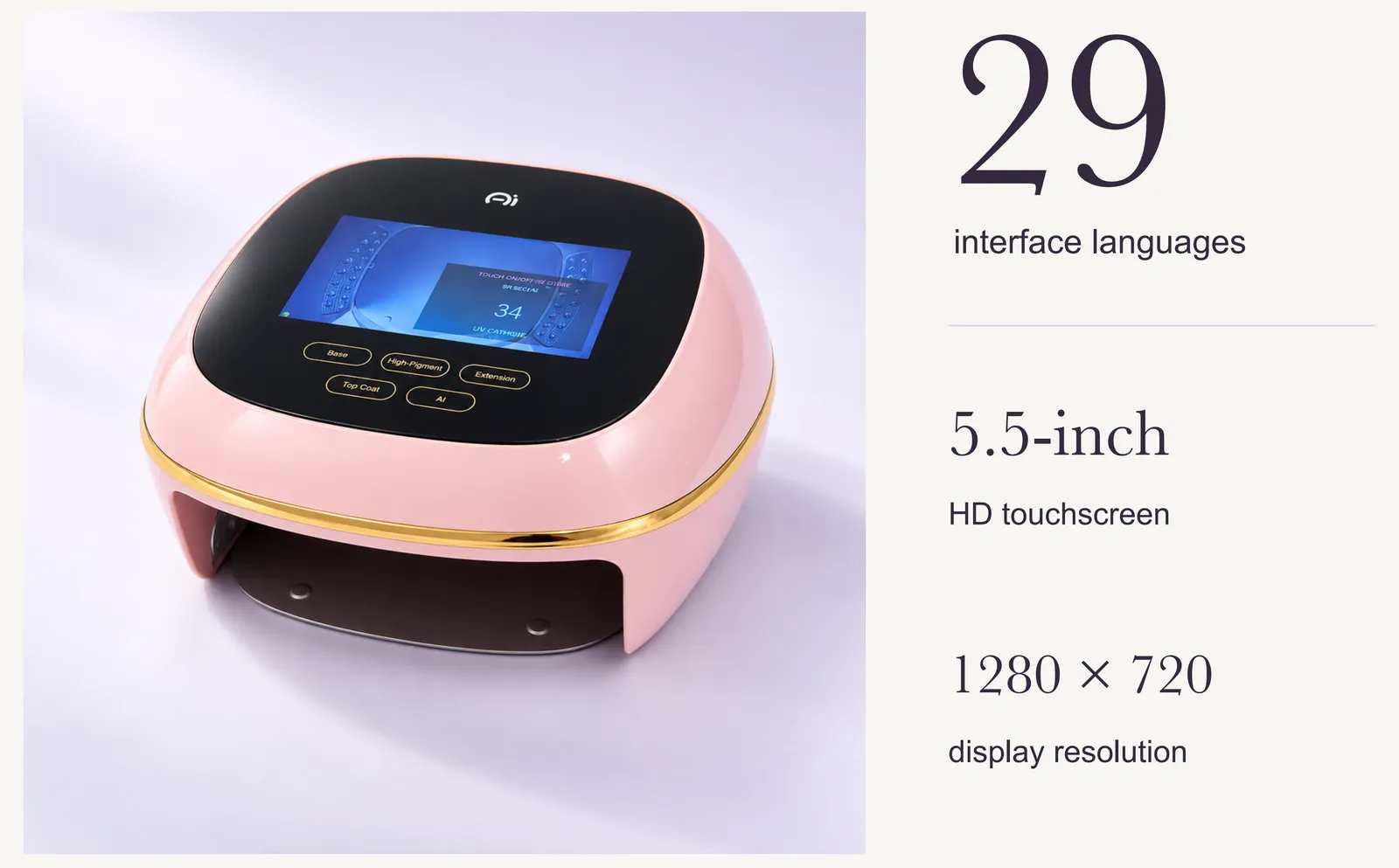
The console is factory-locked to European Portuguese, so the screen and the printed manual say the same words.
The easy part: 230 V, Schuko
Portugal runs 230 V / 50 Hz on Schuko type F sockets, the same as Spain and Germany, which makes the cord the least complicated line on the purchase order — a moulded type F assembly with roughly one spare per ten units. Write the input rating as a range on the nameplate and confirm the test report covers 50 Hz operation. Standard shipments are AC-powered with no battery; the 6,000 mAh battery version is ordered on request and carries its own air-transport documentation.
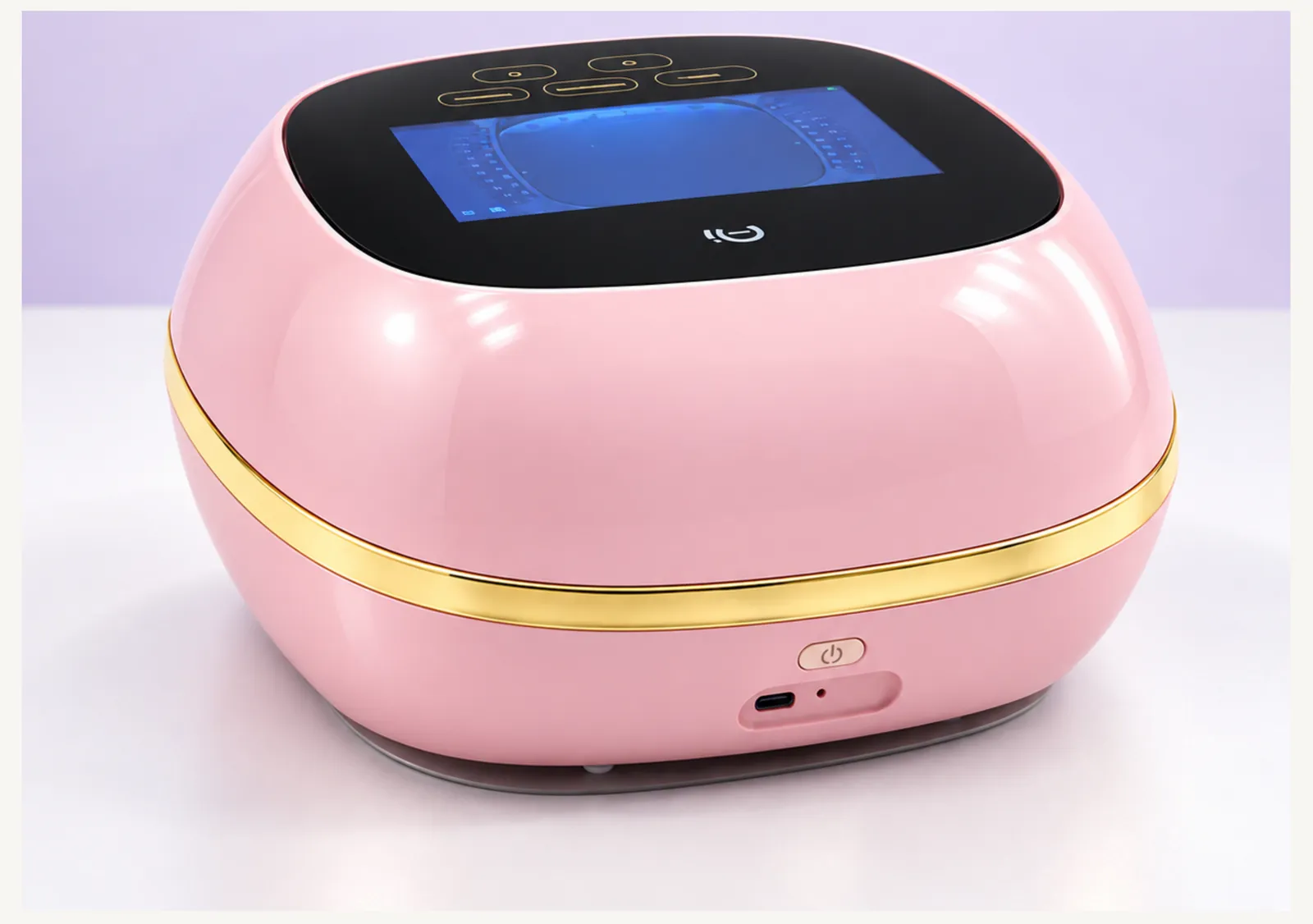
Rear cable entry keeps the working surface clear in studios where the lamp often shares the desk with everything else.
Quick FAQ
Is European Portuguese really required, or does Brazilian Portuguese count?
Can a Portuguese distributor start with one demo lamp?
Who handles the Portuguese registrations?
Next step
Tell us whether the program starts white label or custom, and whether the console should be locked to European Portuguese from the first unit, and we will return a quotation with the Portuguese lines itemized — language pack, manual, type F cords and the document set. Contact Miro Wu, Dedicated Account Manager — email miro.wu@beautome.com or WhatsApp +86 188 1393 3019.
Related: the AI Smart Nail Lamp specification, the Spanish private-label program for the other half of Iberia, and the OEM and ODM program behind it.