







The AI Smart Nail Lamp and the Salon Hygiene Protocol
Most lamp conversations start with LEDs and camera resolution. The conversation that decides whether a unit stays on the floor, however, happens during a hygiene inspection — and it is about something else entirely: how does this device get cleaned, disinfected and documented? For a distributor, that question is worth settling before the first container ships, because the answer lives in paperwork the salon is required to keep.
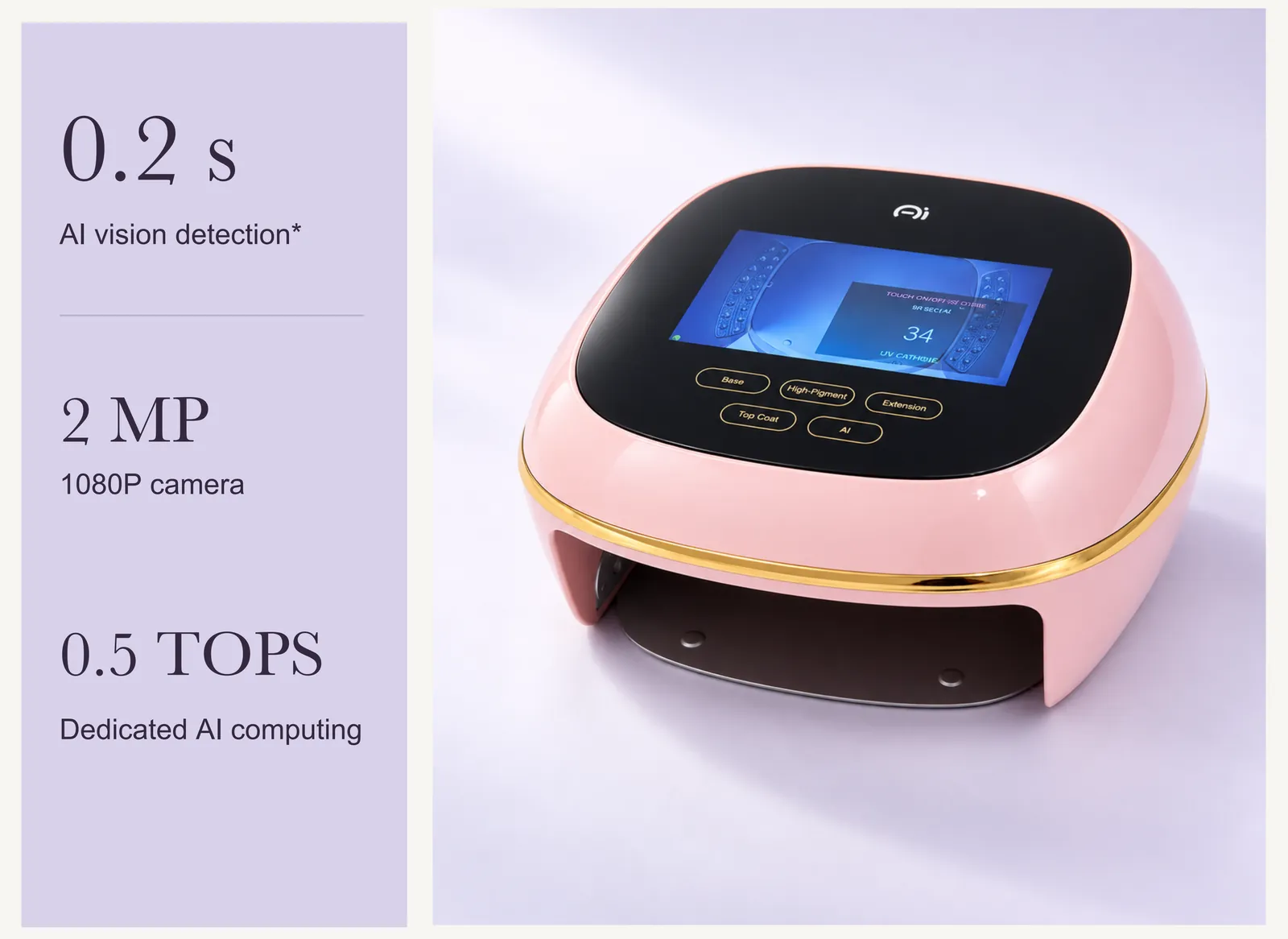
The camera window and the touch console are the two surfaces an inspector will look at first — and the two your cleaning protocol must name explicitly.
What health inspectors actually ask about electrical equipment
Nail services sit inside public-health frameworks in most markets, and the written rules share a pattern. Connecticut’s Department of Public Health salon infection-control guidelines, used by local health districts for annual salon inspections, require work surfaces where services are performed — nail tables included — to be cleaned and disinfected with an EPA-registered, hospital-level disinfectant, with the surface kept visibly wet for the full contact time stated by the manufacturer. For electrical equipment that cannot be immersed in liquid, the same guidelines specify the practical fallback: wipe the equipment clean of all visible debris, then disinfect it with an EPA-registered product.
Ohio’s sanitary rules (OAC 4713-15-15, current through June 2025) add the clause distributors should memorize: salons must maintain a copy of the manufacturer’s manual for all equipment in service and follow the manufacturer’s suggestions for cleaning the equipment. Kentucky’s infection-control regulation (201 KAR 12:100, amended 2025) rounds out the pattern by defining contact time — the surface must remain completely wet for the full period on the disinfectant label.
Three consequences follow from those texts, and they are the same in most jurisdictions that model their rules this way. First, the lamp is wiped, not soaked — so the housing must tolerate the chemicals a salon already stocks. Second, the salon needs your cleaning instructions on file, which means the manufacturer’s manual is a compliance document, not a marketing leaflet. Third, contact time is measured on the slowest-drying surface, so a protocol that says “wipe quickly” is not a protocol.
Sanitation rules vary by state and by country; the examples above are illustrative, and your buyers should confirm the current local requirements with their own licensing authority.
The trap on the marketing side: a curing lamp is not a sterilizer
Here is where an over-eager product description can hurt your distributor. The Connecticut guidelines explicitly exclude UV sterilizers and light boxes from acceptable infection-control devices, while noting that this restriction does not apply to ultraviolet lamps used to dry or cure nail products. The distinction matters: the AI Smart Nail Lamp is a curing device. It hardens gel with LED-emitted UVA — the same principle as every UV/LED gel lamp on the market — and its cameras and zoning exist to control where that light goes, concentrating it on the nail plate and reducing unnecessary light exposure of the surrounding skin.
What it is not is a disinfection step. Any listing, insert or social post that implies the lamp sanitizes implements will put a distributor on the wrong side of exactly the inspectors described above — and Kentucky’s rules, for one, state plainly that UV light shall not be accepted for disinfection. Keep the curing story and the hygiene story in separate paragraphs, and both will survive an audit.
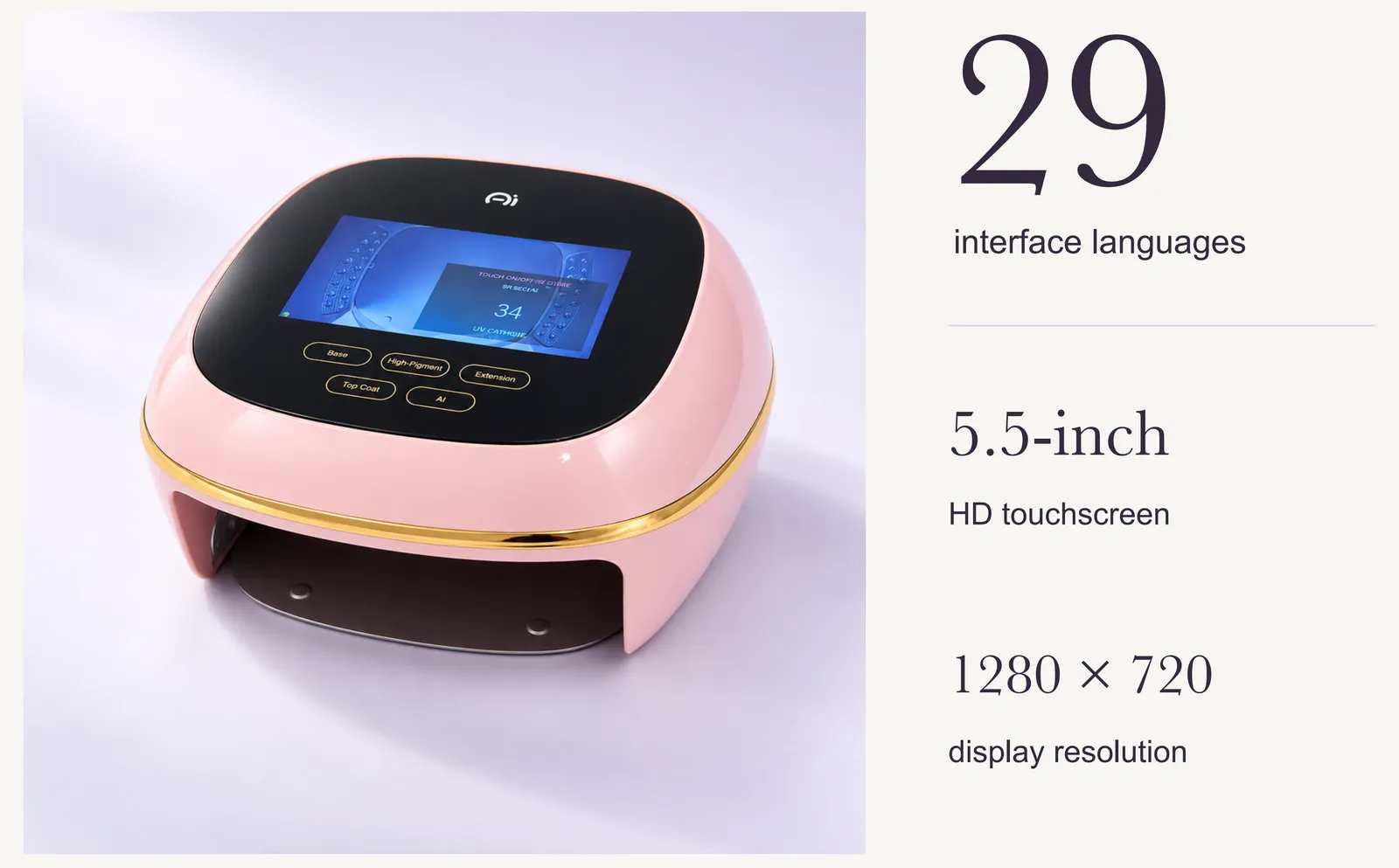
A sealed touch console with no exposed seams or crevices is what makes a between-clients wipe routine realistic.
Design decisions that show up during an inspection
The hardware choices that matter to a hygiene audit are unglamorous, which is exactly why they should be in the specification sheet you hand to a buyer:
A smooth, non-porous shell with no fabric seams. Every cloth joint and rubber trim strip is a place where debris collects and disinfectant sits. The lamp’s housing is a single-color shell with wipeable surfaces, so a hospital-grade wipe can do its full contact time without staining.
A sealed touch console. The 5.5-inch display runs 29 languages, but for this article the relevant property is that it is a flat, sealed panel — no bezel gap, no physical buttons to work disinfectant around between clients.
A glass camera window with its own cleaning instruction. The 2 MP camera looks through a small window above the nail zone. The service guidance is the same as for any precision optical surface: dry microfiber for daily film, and no acetone — solvent fog on that window reads to the vision system as a “hand not detected” fault, which technicians misdiagnose as a broken lamp. Put that sentence in the manual and you have just prevented a warranty return.
Rear cable entry. With the inlet at the back of the 24 × 24 × 11.5 cm housing, the cord stays off the work surface — one less item to move, wipe around, and re-contaminate between clients.
What to put in the box so your buyer passes the audit
Because inspectors ask for the manufacturer’s cleaning instructions, the deliverable is documentation, and it costs almost nothing to produce well. We ship a one-page cleaning card with each unit covering four points: daily wipe of shell and console with a 70% isopropyl alcohol or quaternary-ammonium wipe; camera window cleaned dry with microfiber only; contact time stated for the disinfectant class named; and a do-not list (immersion, bleach, acetone, abrasive pads). The card is translated into the console languages of the destination market along with the manual, so a salon in any of our 29-language markets files instructions its inspectors can read.
For private-label buyers this is also a branding opportunity: the cleaning card carries your logo next to ours, which puts your name in the salon’s compliance binder every single day. Neutral white-label units can ship in evaluation quantities — three to five units, with a single sample unit available — while a fully branded program with logo, colorway and retail packaging starts at 300 to 500 units. The standard configuration is AC powered with no battery; the 6,000 mAh pack remains an option requested per order.
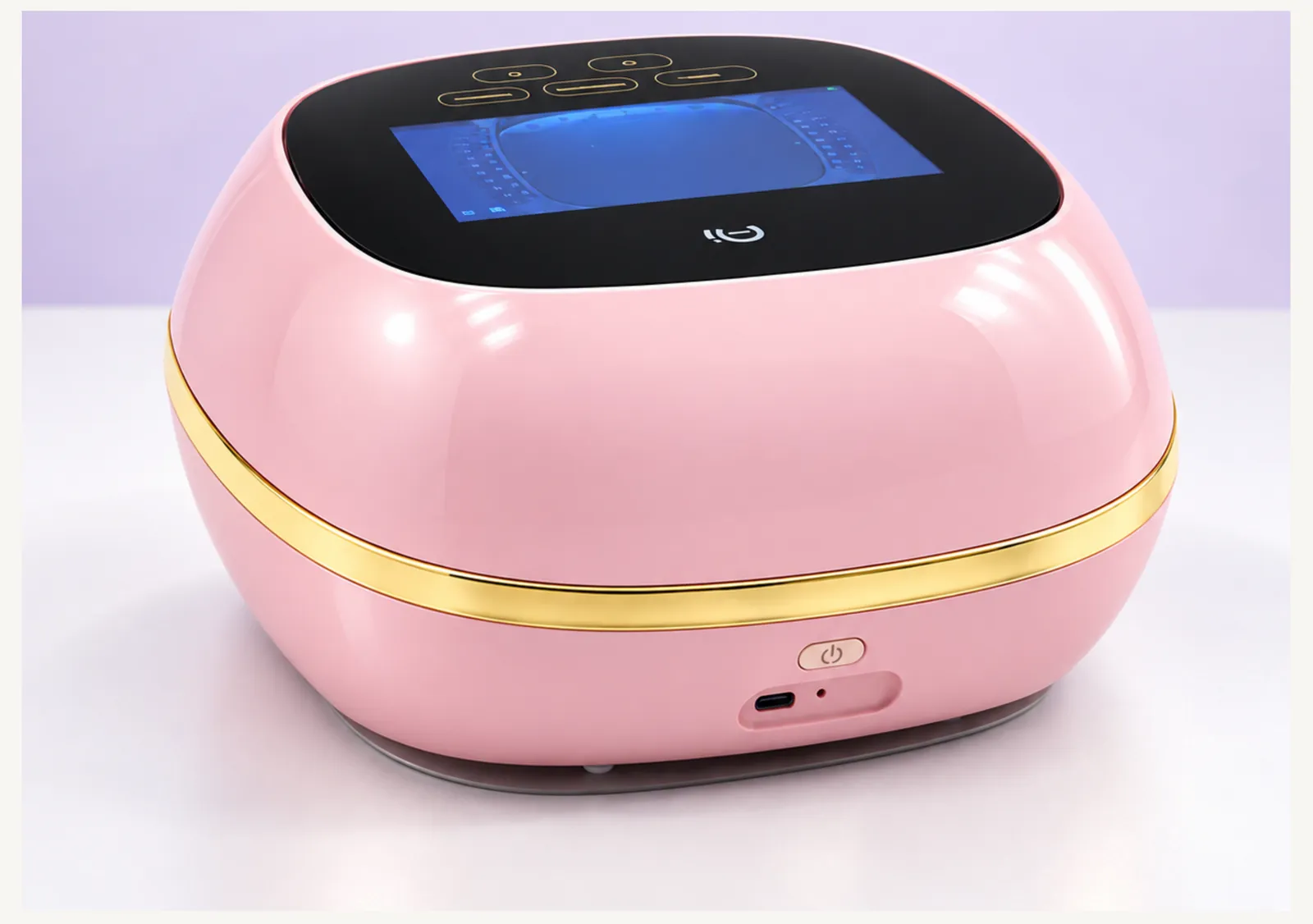
Rear power entry keeps the cord off the surface the technician wipes between every client.
Writing it into the purchase order
Three lines turn this topic into a contract term instead of a support ticket: the cleaning card languages per destination market; the spare-parts line that includes camera-window care materials; and a clause that product copy for your market may not present the lamp as a sterilizing or sanitizing device. The last line costs nothing and removes the single most common hygiene-related marketing mistake in this category.
The AI Smart Nail Lamp product page carries the full specification, and the OEM/ODM program covers what can be customized — including documentation — on an existing mold. For more buyer topics, see the blog index.
Quick FAQ
Can the lamp be disinfected with hospital-grade wipes?
Is the curing light a sterilizer?
Why does the manufacturer’s manual matter for inspections?
Next step
Tell us your destination market and console languages, and we will return the hygiene documentation package: cleaning card, manual wording and the spare-parts line that goes with it. Contact Miro Wu, Dedicated Account Manager — email miro.wu@beautome.com or WhatsApp +86 188 1393 3019.
Related: the curing principle compared with conventional UV/LED lamps, and the full product range.