







Private Label Hard Wax for a First-Year US Brand: Launch With Two SKUs, Not Eight
The most common first-year failure in US private-label waxing is not a bad formula. It is a bad SKU count. A new brand commits to eight SKUs — eight artworks, eight COA chains, eight regulatory listings, eight boxes of unsold inventory in a garage — before a single salon has reordered. The brands that survive year one usually launch with two, add the third when reorders justify it, and keep the cash that the other six SKUs would have burned. This article is the launch arithmetic we walk first-year US buyers through, including where the unlabeled transparent bag changes the math and what each SKU costs in MoCRA work.
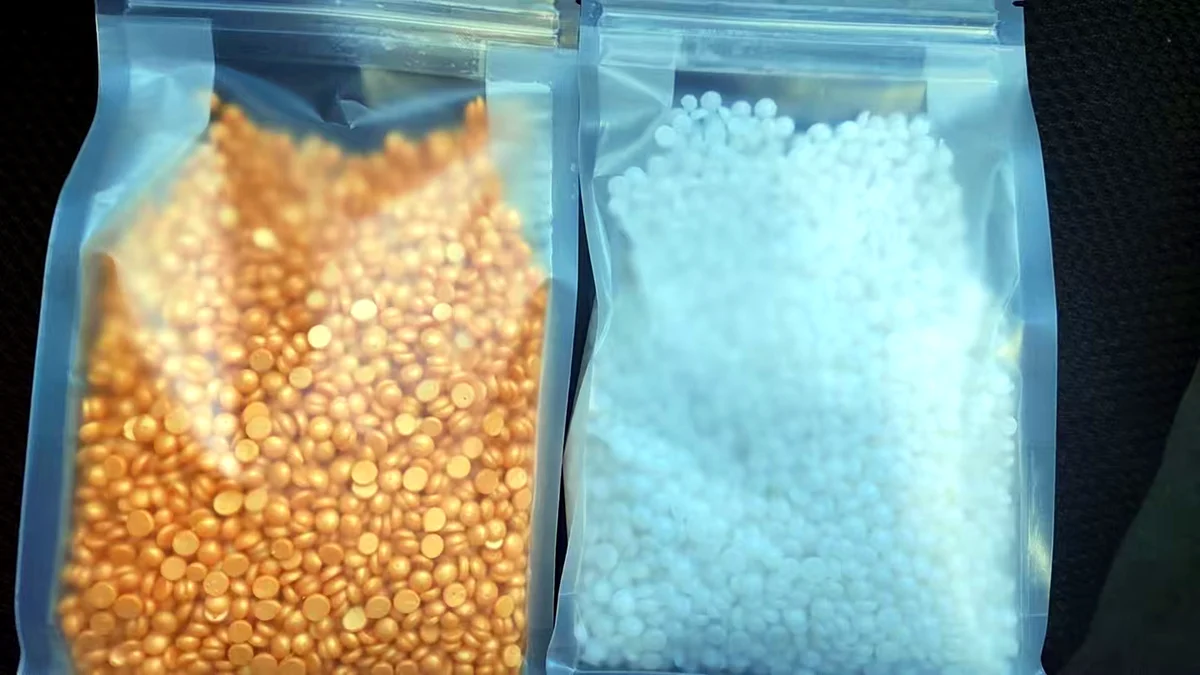
Two formulas, unlabeled transparent bags: the brand applies its own labels when the market has told it what the labels should say.
The two SKUs that cover ninety percent of a launch
For a first-year US brand selling to salons and independent technicians, the menu almost writes itself once you sort services by demand:
Formula A1, the rosin-free flagship — melting point 45–50 °C, standard color Gold & Pink (White is a custom color, produced to order and demanding the most from the process). Rosin-free formulation is the default recommendation for the services where client sensitivity shows up first: brows, lips, underarms, Brazilian work, first-time clients. It is also the SKU that carries the brand story, because “rosin-free” is the one formulation claim most salon owners already know how to explain to their clients.
Formula A2, the high-grip workhorse — cream white beads, rosin-based, high elasticity, built to grip short, coarse, densely packed hair. This is the formula for legs, backs and chests, and for the male grooming appointments a growing share of studios book on Saturdays. Where A1 wins clients, A2 wins throughput.
Those two cover the service map of a typical studio. The consumer-grade hard wax (55–60 °C film wax) belongs on the roadmap, not the launch list — it shines when the brand adds a retail or e-commerce leg, and the 450 g all-purpose soft wax (strip line, canned) belongs in year two when a brand has a stylist channel to sell it through. Every SKU added before the first reorder is cash, artwork and regulatory work spent on a hypothesis instead of a sale.
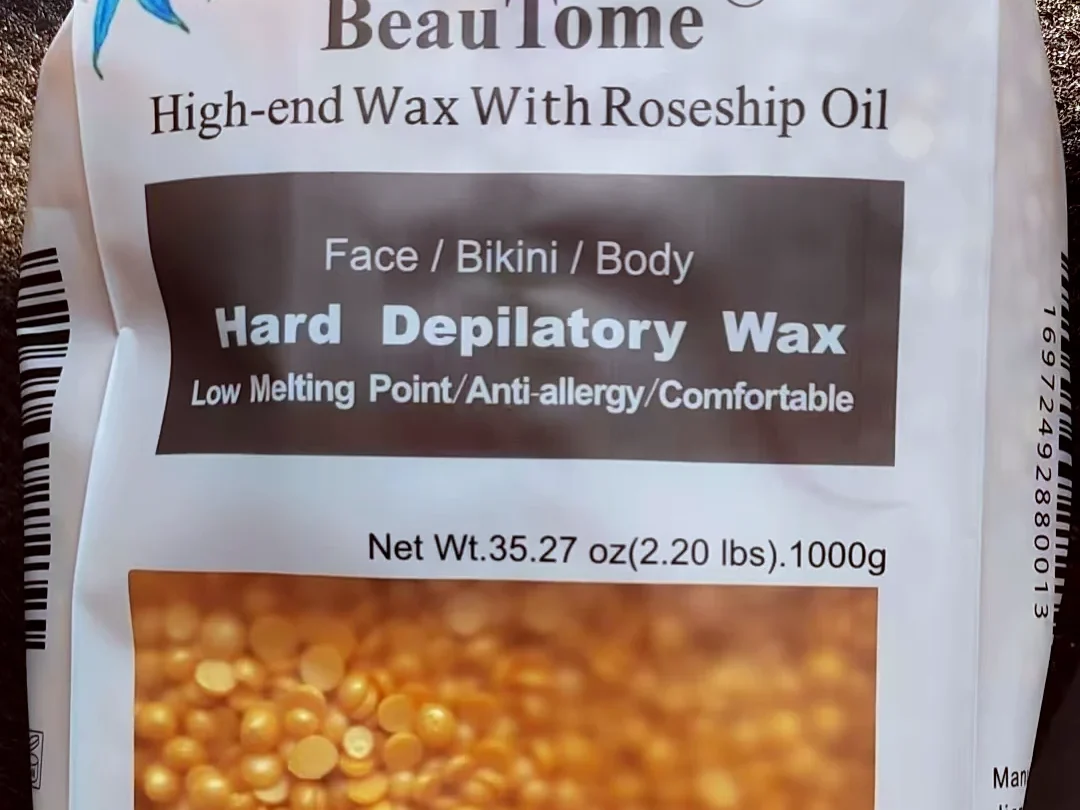
Formula A1 in Gold & Pink — the rosin-free flagship, melting point 45–50 °C, sold in 300 g, 500 g and 1 kg bags.
The cash arithmetic of eight versus two
The SKU count compounds faster than most first-time founders expect, because each unit of wax drags four cost centers behind it:
Inventory. Two SKUs at a 500 g bag, three pallets each, is a manageable first order. Eight SKUs at the same per-SKU depth is four times the cash, and wax does not self-liquidate — a violet bead nobody ordered in March is still violet in October.
Artwork and print lead time. Every labeled SKU needs bag artwork, a print run and a print lead time measured in weeks. This is where the unlabeled transparent bag restructures the launch: the factory ships sealed bags with a batch code and production date at the bag seam, the brand labels them itself, and the first label revision costs nothing but a reprint. Low MOQ applies to the private-label program, so a brand can launch with a small labeled batch, read its first sixty days of customer feedback, and revise the label before the print run that actually matters. (Note on storage: bags keep best at 15–24 °C, dry and out of direct sun — worth one line in the warehouse SOP, especially in Gulf Coast and Florida summer humidity.)
Quality records. Each SKU carries its own certificate-of-analysis chain and its own batch documentation. Two SKUs is two chains a founder can actually supervise; eight is a spreadsheet nobody reads.
Regulatory work. Under MoCRA, every SKU marketed in the US is its own product listing — see below. The compliance workload scales one-to-one with SKU count, and it arrives whether or not the SKU sells.
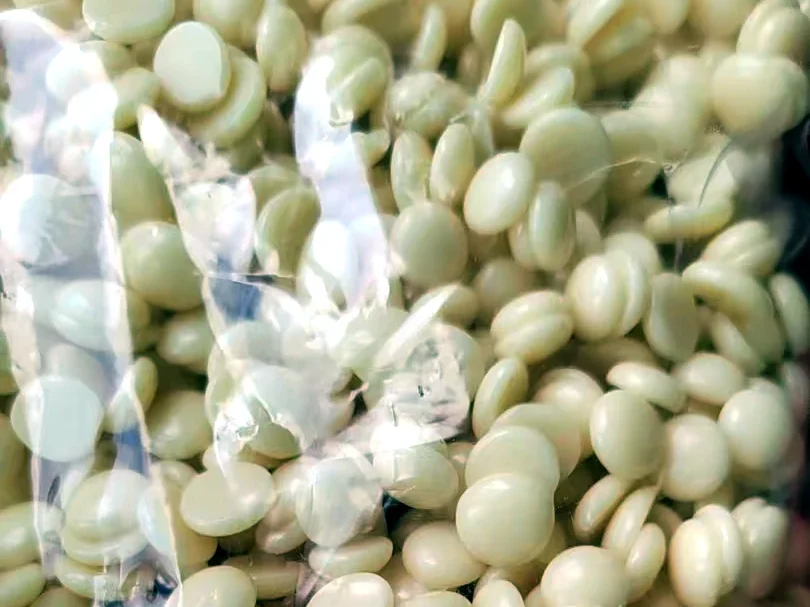
Formula A2 cream white beads — high elasticity, built for short, coarse hair and back-and-chest throughput.
The MoCRA work, per SKU — and why the count matters here too
The compliance picture for depilatory wax marketed in the US is set by the Modernization of Cosmetics Regulation Act (MoCRA). Three pieces land on a first-year private-label brand, and all three scale per SKU (verified against FDA’s registration and listing materials, most recently updated 2026):
Facility registration. The manufacturing facility — for a private-label brand, typically the contract manufacturer — registers with FDA. This happens once per facility regardless of how many brands it produces, so it is the factory’s task and not multiplied by your SKU count.
Product listing. The responsible person — in a private-label arrangement, generally the brand whose name appears on the label — lists each marketed cosmetic product with FDA. Two SKUs means two listings, each maintained and renewed on the regulatory cycle (2026 marked the first major biennial renewal period under the updated Cosmetics Direct submission process). Listing early, with the label finalized, is far cheaper than retrofitting.
Recordkeeping and safety substantiation. Adverse event records and product safety substantiation attach to each product. A two-SKU brand can keep this in one folder; an eight-SKU brand inherits a file system on day one.
The practical consequence: the unlabeled transparent bag does not postpone the listing work — the product is listed under the label it will be marketed under. What it does remove is the artwork dependency: the brand can finalize label copy (including any claims language) at its own pace, because relabeling does not require a factory print cycle. That decoupling — product in the country, label under the brand’s control — is the quiet advantage of the unlabeled route for a first-year launch.
A twelve-month SKU roadmap that ends with four, not eight
For buyers who want the plan on one line: launch A1 + A2 in unlabeled transparent bags with brand-applied labels, 300 g bags for sampling and salon trials, 500 g as the salon standard (one 450 ml warmer holds about 400 g — one bag, one working day). Add the consumer-grade 55–60 °C film wax in month four to six, when reorders justify a retail-facing SKU. Add the 450 g all-purpose soft wax when a stylist or barbershop channel opens. Four SKUs by month twelve, each one added by demand rather than by optimism, is the shape of a brand that reaches year two with inventory it sold instead of inventory it stored.
FAQ
Why launch with a rosin-free formula first?
Does the unlabeled transparent bag delay MoCRA compliance?
When should a brand add its third and fourth SKUs?
Contact Miro Wu, Dedicated Account Manager — miro.wu@beautome.com · WhatsApp +86 188 1393 3019. Private-label quotes, sample bags and launch SKU plans answered within one business day.