







Hard Wax for Southeast Asian Resort Spas: Seasonal Guests and the Island Supply Run
The resort spa is a different buyer from the city salon. Its guests are on holiday for a week, most of them have never met the therapist, and a large share are trying professional waxing for the first time in a place where everything is expected to be gentle, spotless and beautifully finished. The volumes are seasonal, the logistics are island-shaped, and the compliance file is per-country. Southeast Asia has more of these rooms than anywhere else — and supplying them well is mostly about matching four formulas to one very specific service calendar.
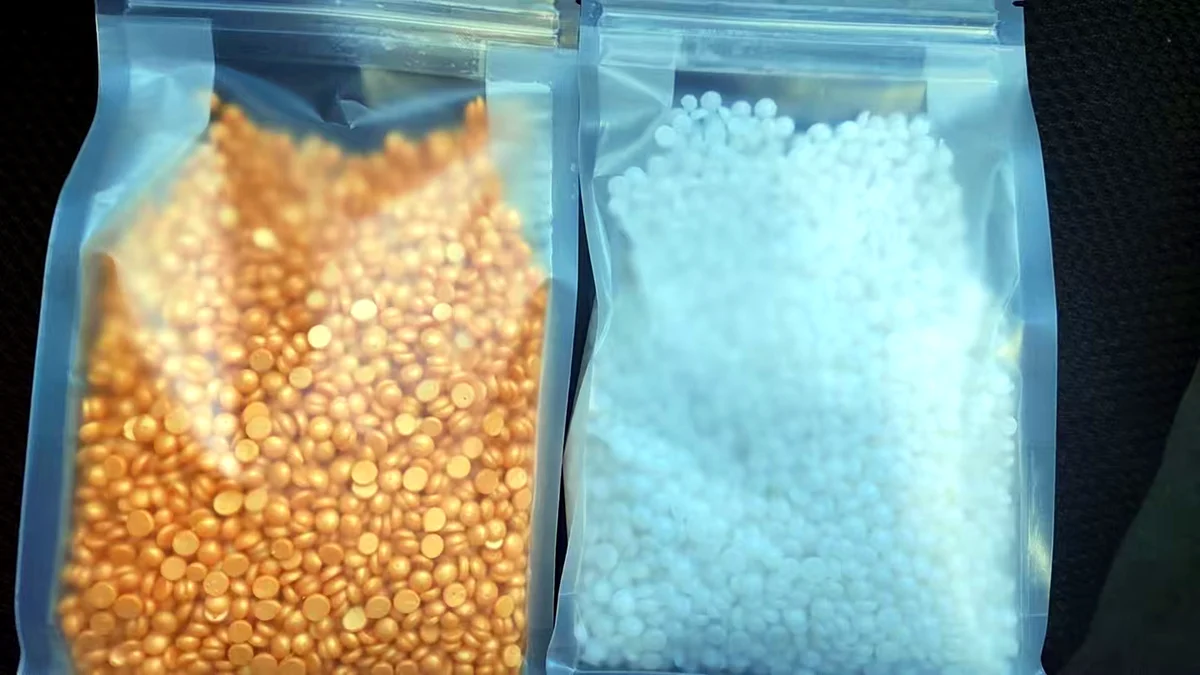
Unlabeled transparent bags: the resort group or its importer labels at destination, with no print run in the critical path.
The demand curve is a tourism curve
The anchor market is growing fast enough to plan against. Bali recorded 6.95 million direct foreign arrivals in 2025, up 9.72 percent from 2024 — an island record — with Australia the largest source market at about 1.63 million visitors, according to BPS-Statistics Indonesia. The Global Wellness Institute values Indonesia’s wellness economy at around USD 56 billion (2024), the largest in Southeast Asia, and wellness tourism is the segment the country’s tourism ministry is explicitly steering for. Singapore’s inbound wellness trips passed one million in 2024 on GWI’s count. Phuket, Da Nang, Ko Samui and the rest of the region’s resort belt move on the same calendar: dry-season peaks, December holiday weeks, and shoulder months when villas quietly retrain staff and re-stock.
What that demand does to the wax menu is specific. Resort guests book full legs and underarms in volume, often same-day, between beach and dinner. A meaningful share of guests are first-time or occasional waxers — skin that has not adapted, expectations calibrated to a five-star bill. And the male half of the guest list books back and chest work that most city spas in the region still do not offer.
Four formulas, one resort menu
The range we supply maps onto that menu directly:
Full legs and underarms — All-Purpose Soft Wax, 450 g cans. Strip wax is the throughput product: fast on large areas, quick to train, and the right choice when a villa spa needs to turn four bookings between breakfast and the pool. It belongs on the main spa’s back bar rather than in villa stock, because it needs a strip system and a different working temperature.
First-time and sensitive guests — Formula A1, the rosin-free flagship. Rosin is the allergen most often implicated in wax reactions; a meta-analysis of 73 patch-test studies covering some 459,757 patients (Contact Dermatitis, 2022) put the clinical allergy rate at about 3.5 percent. For a guest who may never come back, the low-temperature window of 45–50 °C and the rosin-free base are the two specifications that decide whether the review is five stars. It comes in Gold & Pink as standard colors, White as a custom option, in 300 g, 500 g and 1,000 g bags.
Coarse regrowth and male back or chest — Formula A2. The premium rosin cream-white bead is built for grip on short, coarse hair, which is exactly what a guest who last waxed two months ago presents with. One working temperature per band: a resort running both A1 and A2 needs two pots, not one thermostat — which quietly makes the spa a heater customer too.
Walk-in volume — Consumer-Grade Hard Wax, the 55–60 °C film wax. The film bead spreads in thin layers without strips and suits high-turnover hours on legs and arms; it is also the SKU that scales from the spa menu to the resort’s retail shelf.
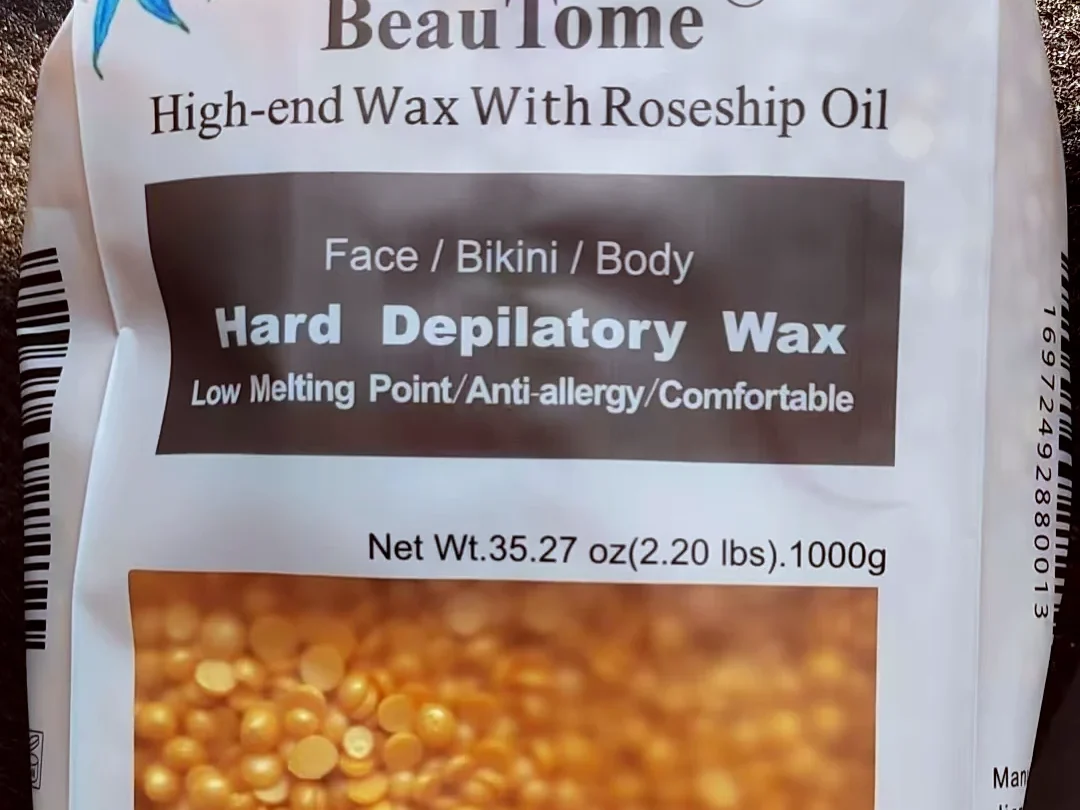
Formula A1 in its standard gold bag: the rosin-free, 45–50 °C flagship for first-time and sensitive guests.
The island supply run is its own discipline
Resort inventory lives at the end of a fragile chain: a container to a national port, customs, then a truck to the island, sometimes a ferry, then storage above a humidity level city salons never see. Three rules keep it intact. First, storage at 15–24 °C, dry and out of sunlight, and let bags return to room temperature before opening to avoid condensation on cold beads — the wet-season difference between a port warehouse and a beachfront stockroom is real. Second, size the bag to the room: 300 g for villa stock and low-traffic months, 500 g as the main spa’s working unit, and 1,000 g only for the central warehouse or a genuinely high-volume back bar — an opened kilo bag oxidizes on a shelf that turns over twice a year. Third, order against the season calendar, because production plus ocean freight plus clearance consumes most of a quarter; the groups that run this well lock their pre-season orders while the previous season is still busy.
The file that precedes the ferry
Indonesia is the strictest door in the region, and the numbers are worth knowing exactly. A cosmetic product needs a notification number (NA) from BPOM, valid for three years, and the notification must be held by an Indonesian local entity — a local manufacturer, the brand’s own subsidiary, or an importer or licensed holder acting for you; a foreign brand cannot hold the number itself. Renewal goes in at least 30 days before expiry, and since 17 October 2026 the halal obligation under Government Regulation 42/2024 is fully mandatory for cosmetics — products that cannot be certified can still be marketed, but must carry the official NON HALAL label, with the labeling transition running to 2027 (per BPOM and BPJPH guidance current in 2026). Thailand runs on the ASEAN Cosmetic Directive model: a Thai FDA notification, a local Thai responsible party, and a product information file behind it. Every country in the region notifies separately — there is no ASEAN-wide pass — so a regional resort group needs the file per country of operation.
This is where the unlabeled transparent bag earns its place. The bag ships with only the factory batch code; the destination label — local language, the local holder’s name, the notification number — is printed and applied at the importer’s or the group’s facility, where the compliance details are actually known. For a private-label resort program it runs at low MOQ with no print cycle in the supply chain, and it keeps one SKU valid across several countries that would otherwise each freeze their own printed packaging. The labeling obligation follows whoever puts the label on — which is why the program starts with the group deciding who that is.
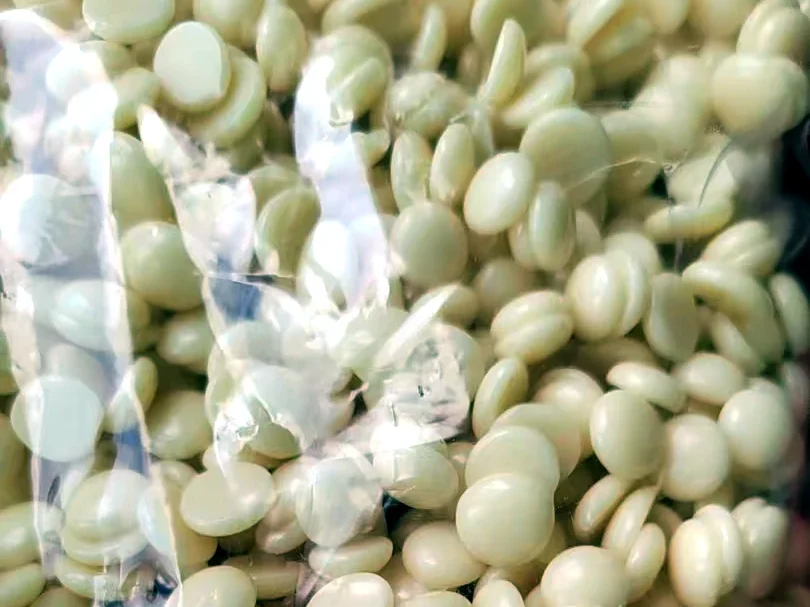
Formula A2 cream-white bead: the grip product for coarse regrowth and male back or chest work in the resort menu.
Quick FAQ
Does a resort spa in Indonesia need halal certification for its wax?
Can one bag size serve both the villa spas and the main spa?
What should the spa do for first-time waxing guests?
Next step
Tell us which countries your resorts operate in, the number of treatment rooms and your season calendar, and we will map the four-SKU program to your menu — with bag sizes per room type, the notification file requirements per country for your local holder, and an unlabeled-bag pilot at low MOQ to start the season with. Contact Miro Wu, Dedicated Account Manager — email miro.wu@beautome.com or WhatsApp +86 188 1393 3019.
Related: the Indonesia and Malaysia halal file, start to finish, heat, humidity and a four-tier range for Southeast Asian distributors, and the heater range behind the two-temperature room.