







Wax Warmer Maintenance for Salon Chains: The Checklist That Protects the Element
A single salon can remember how its heater behaves. A twenty-location chain cannot — and the places where heaters quietly deteriorate are the same in every city: wax crusting onto the element, a thermostat that drifts until a technician compensates with a higher setting, inner pots scratched by metal spatulas, lids that walked away. None of these failures announces itself, and every one of them ends in rework, wasted wax or a dead unit mid-season. This is the maintenance checklist that salon chains standardize before they scale — written so it can be handed to a location manager as-is.
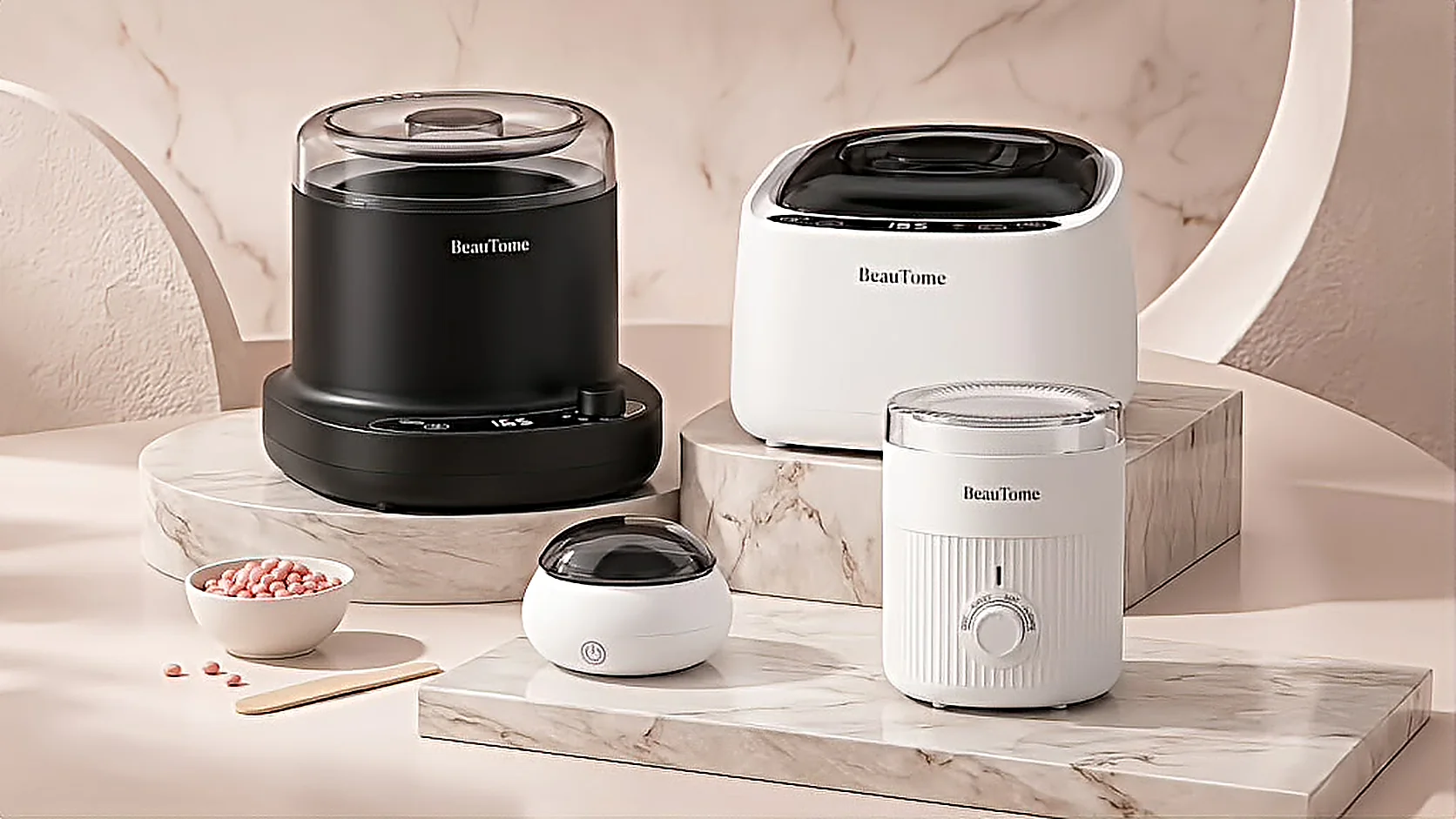
The same checklist covers the whole range: the failure modes do not care what size the pot is.
Why chains standardize this before they scale
The economics are simple. A heater that gets a ten-minute daily routine lasts years; a heater that only gets attention when wax spills lasts until the busiest week of the season. For a chain, the second scenario does not just cost a unit — it costs the bookings of a room that cannot operate, a replacement shipped mid-season, and a technician who improvises with a borrowed pot at the wrong temperature. The maintenance log is also the quiet source of procurement intelligence: locations that keep one know which models they run down fastest, and that data should decide the next container’s mix more than the last quotation does.
Every morning, before the first client
Cold-start timing. Note the time from switch-on to wax at working temperature, with the pot filled to its normal working level — a full-load measurement, never an empty pot. A heater whose cold start is creeping from twenty minutes to forty is telling you about the element before it fails. Write the number down once a week; the trend is the diagnosis.
The visual check. Wax on the rim, on the element housing, or crusted around the knob gets wiped before it hardens for the day. Wax that bakes onto the heating element insulates it, forces longer cycles and eventually cokes into a crust that changes how the whole pot behaves.
Lid on between clients. Heat escapes, dust and moisture enter, and the surface film thickens faster in an open pot. A lost lid is a five-dollar part that quietly doubles the daily scraping.
Weekly, between services
Skim the film, clean the pot properly once. The carbonized surface layer that forms in every working pot is stripped daily; once a week the pot itself gets a full clean with the wax softened at working temperature, using plastic tools. Metal spatulas scratch the inner coating, and a scratched pot cleans worse every week until it is replaced.
Probe the wax, not the air. Set the thermostat to its working point and check the temperature inside the wax with a probe. Air near the pot wall reads differently from the melt, and the gap between the setting and the wax is the number that matters. On a unit with electronic control this gap is small and stable; on a worn bimetal thermostat the gap widens season by season.
Cord, plug and vents. Chairs, trolleys and cleaning crews crush power cords against the wall — the most common non-electrical failure in the field. Check the plug for warmth after an hour of running and keep the ventilation path around the housing clear.
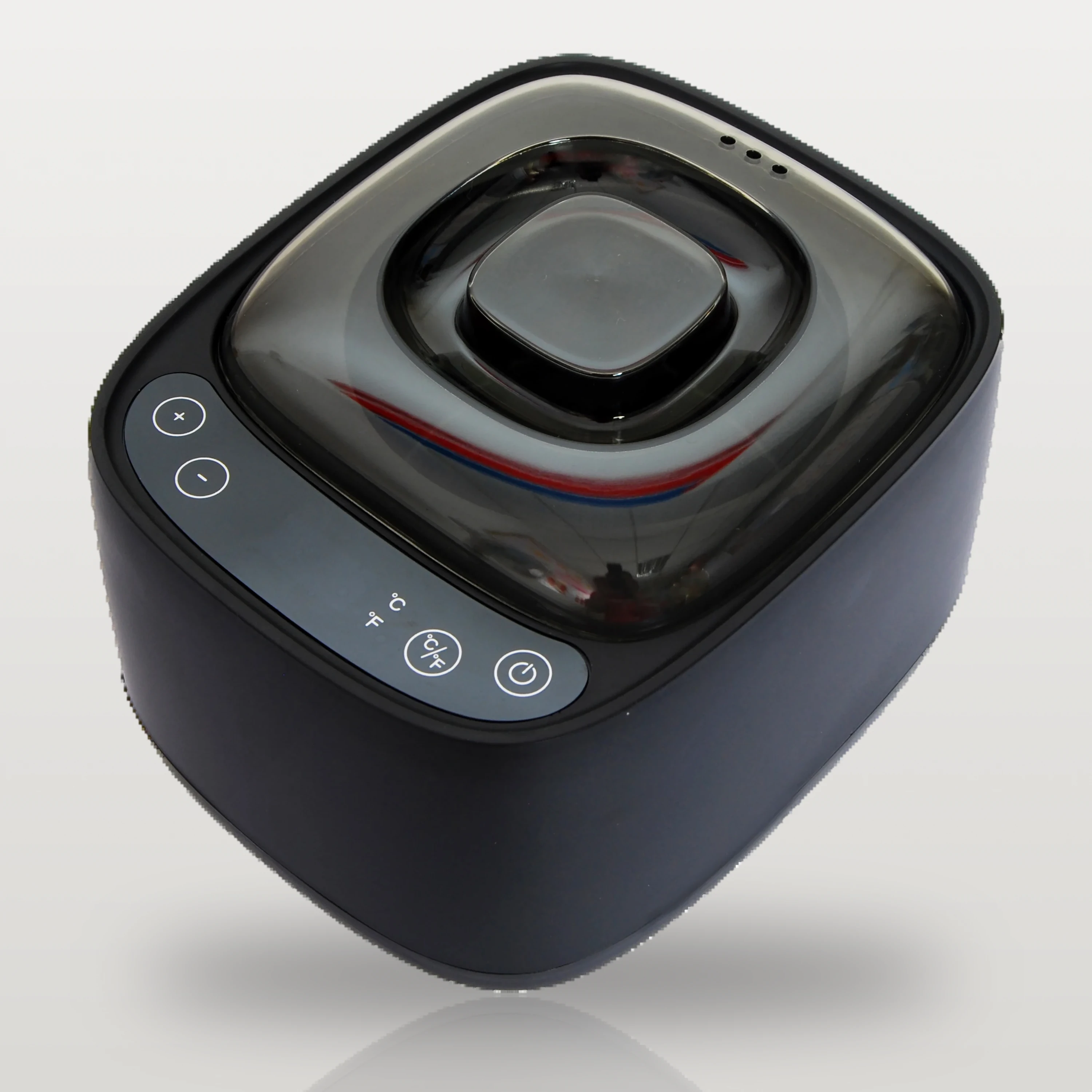
A 450 ml pot holds roughly 400 g of beads — about one technician’s day — which makes it the unit every location runs hardest.
Monthly: the calibration and the swap
The two-temperature check. Most working rooms run two bands — a lower band for low-temperature formulas around 45–50 °C and a higher band for film-type waxes around 55–60 °C. Check both points on every pot, because a drift at one setting is invisible until a formula starts stringing or tearing strips.
Inner-pot rotation. Where the model allows a removable inner pot, the cheapest maintenance in the industry is owning a second pot: swap it in, clean the first at leisure, and the room never loses a bed to a cleaning cycle. Keep one spare inner pot per two working heaters as a floor.
Log the model and the hours. One line per pot per month: model, working hours or services since the last check, cold-start minutes, any drift. The chain that has this table decides its reorder timing from evidence instead of panic.
The line maintenance must not cross
Cleaning is not sterilizing. Melted wax is not self-sanitizing, and melted-and-filtered wax is not clean wax — public health guidance is unambiguous on this. Australia’s NSW Health waxing fact sheet (updated 2025) states that wax must not be re-used between clients and that melting or filtering does not disinfect it, and comparable rules exist in many jurisdictions. No residue, decant or topping-up routine ever makes re-using wax across clients acceptable; the maintenance checklist manages the equipment, and single-use application practice is a separate, non-negotiable protocol. Local health requirements vary — confirm them with the local authority rather than with a supplier.
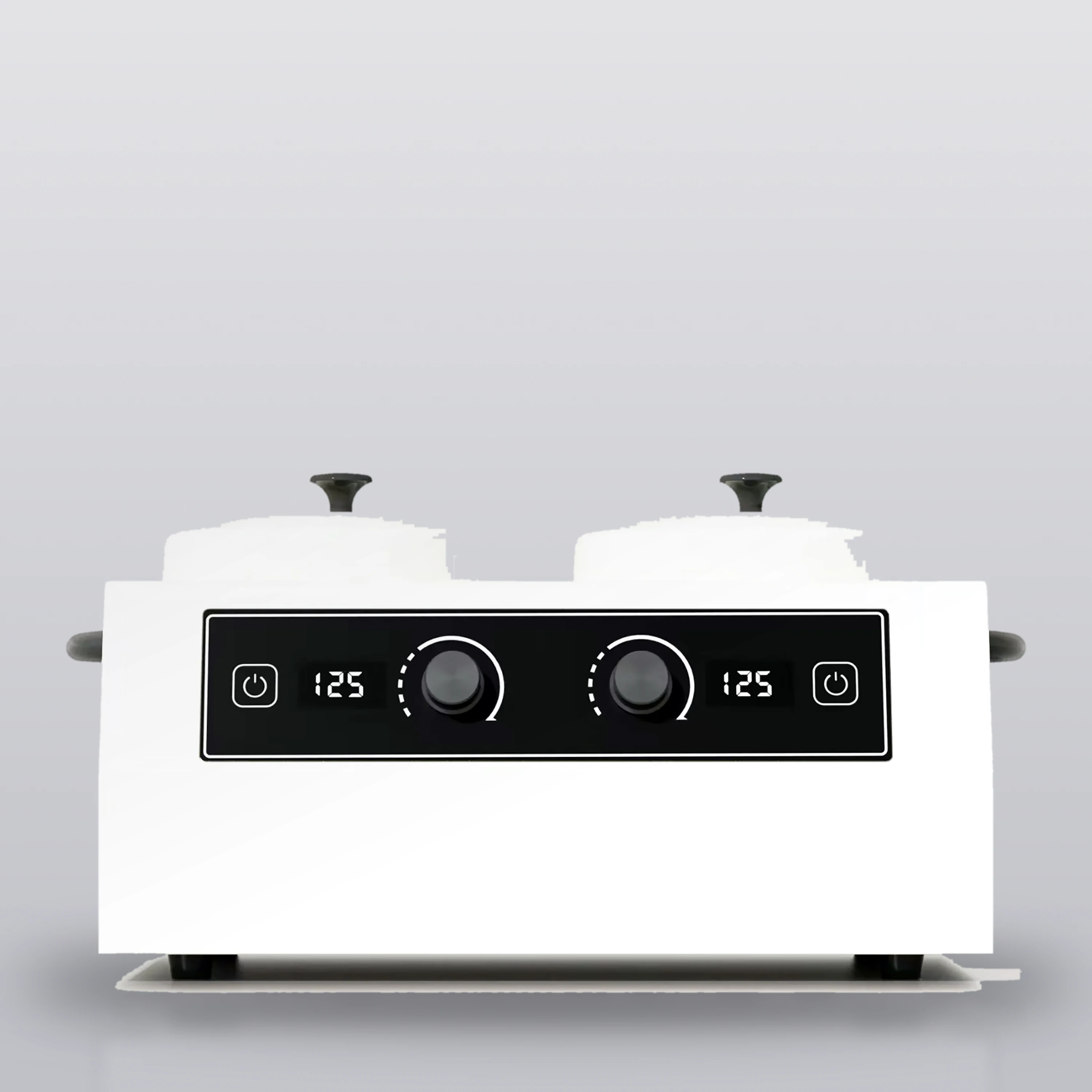
A double-pot station running two bands side by side also halves the cleaning interruption: one pot works while the other is serviced.
The spare kit that makes the checklist credible
A checklist without parts is a wish list. The standard ratio we recommend to distributors supplying chains is one service kit per ten heaters: heating elements, thermostats or controllers, knobs, inner pots, one cord set and a couple of lids — held at the distributor or the chain’s central store, not scattered across locations. The triage that decides whether a unit gets a part or a shelf is three questions on the phone: does it heat, does it hold the setting, and does the reading match the wax. Most field failures are one of the parts in the kit; the ones that are not belong on a repair bench, not in a treatment room.
When you specify the fleet, put the service kit and its ratio in the same purchase order as the heaters. A chain that owns its spares performs its own maintenance; a chain that does not owns a growing pile of units waiting for a workshop.
Turning the log into the next order
Twelve months of one-page logs across a fleet answers the questions a range review never can: which capacity the locations actually run down (in most chains it is the 450 ml class), whether the double-pot stations carry their share of the two-temperature load, and whether the compact 180 ml units earn their bench space or migrate between rooms. That is the moment to audit the range — cut the models nobody reaches for, keep the backbone, add the sizes the log justifies.
Quick FAQ
How often should a heating element be replaced?
Can we clean the inner pot with metal tools?
Does a bigger pot reduce maintenance time?
Next step
Send us the number of locations, the pot sizes currently in the field and the voltage per market, and we will put together a fleet proposal with the matching 1:10 service kit, a one-page maintenance SOP your managers can adopt directly, and spare-part pricing on the same quotation. Contact Miro Wu, Dedicated Account Manager — email miro.wu@beautome.com or WhatsApp +86 188 1393 3019.
Related: the range audit before your next container, why the changeover minute is the most expensive one, and the full wax heater range from 20 ml to 800 ml.