







Wax Heaters for Nordic Salons: The July Gap, the December Peak and Two Socket Families
Sweden, Norway, Denmark and Finland look like one market on a price list. They share a voltage, a frequency and most of a regulatory file — and then they split in two places that cost money: the wall socket and the calendar. A wax heater that is right for a Stockholm salon in October is the wrong order for Copenhagen in June, and neither is a problem of capacity.
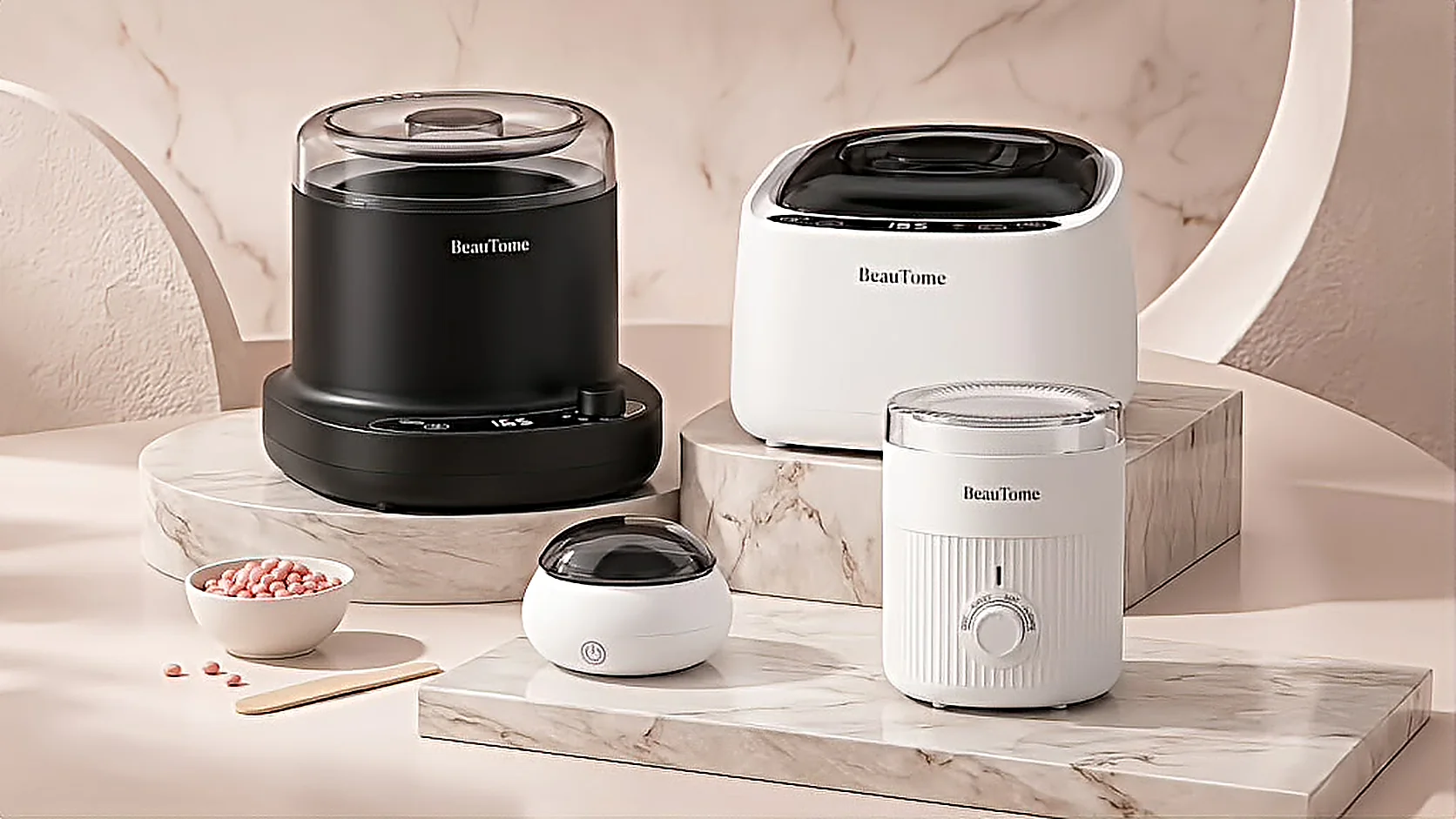
One range, four countries. The differences that matter to a Nordic buyer are in the line cord, the manual language and the month the pot is switched on.
One voltage, two socket families
All four countries run 230 V at 50 Hz, so nothing about the heating element changes between them. The sockets do. Sweden, Norway and Finland use Type F (Schuko) with side earthing clips. Denmark’s national standard is Type K (DS 60884-2-D1, 13 A): two round pins with a half-round earth pin on the plug. Danish sockets also accept Type C, E and F plugs, and since the late 2000s Danish installations may use Type F sockets as well — but a Schuko plug pushed into a K socket makes contact without earthing.
That single sentence is the whole commercial consequence: a Class I appliance needs the right line cord, molded at the factory, per destination. On a 450 ml pot with a metal housing, the earth path is not a detail a distributor should leave to a travel adapter or a warehouse swap. The practical fix is boring and cheap — two line-cord variants, two PO lines, the destination printed on the carton — and it removes the only compliance argument a Danish buyer can win against you at installation.
Everything else on the electrical side is common: Class II construction on models without exposed metal, a thermostat chain that holds within a working band rather than swinging, and a cord length that reaches the bench without an extension lead across a wet floor.
The service year is compressed at both ends
Nordic salons work a short, sharp year. Most close for three to four weeks in July — not by law, but as consistent industry practice, with staff on statutory summer leave and city-center foot traffic thinning out. August reopens with a full booking book, new staff, and a pot that has been sitting cold since June with last season’s wax still in it. Then November and December arrive: Christmas party season, Lucia, the long dark evenings that push people into salons, and the single busiest six weeks of the year.
Those two moments are where a wax heater either earns its price or costs it. In August, the question is how many minutes a full pot takes to reach working temperature from a cold room — and whether the answer was measured with wax in the pot or with an empty one. In December, the question is whether the salon can run two working temperatures at once, because a 45–50 °C rosin-free hard wax and a 55–60 °C film wax cannot share a pot without one of them being wrong for half the day.
Turning the dial up and waiting ten minutes is what salons actually do when they only own one pot. It is also how wax scorches, how the room fills with the smell of burnt rosin, and how elasticity drops far enough to cause rework on the next client. A second pot is cheaper than the rework, which is why dual-pot stations (400 ml and 800 ml sides) sell well in markets where the service menu is broad.
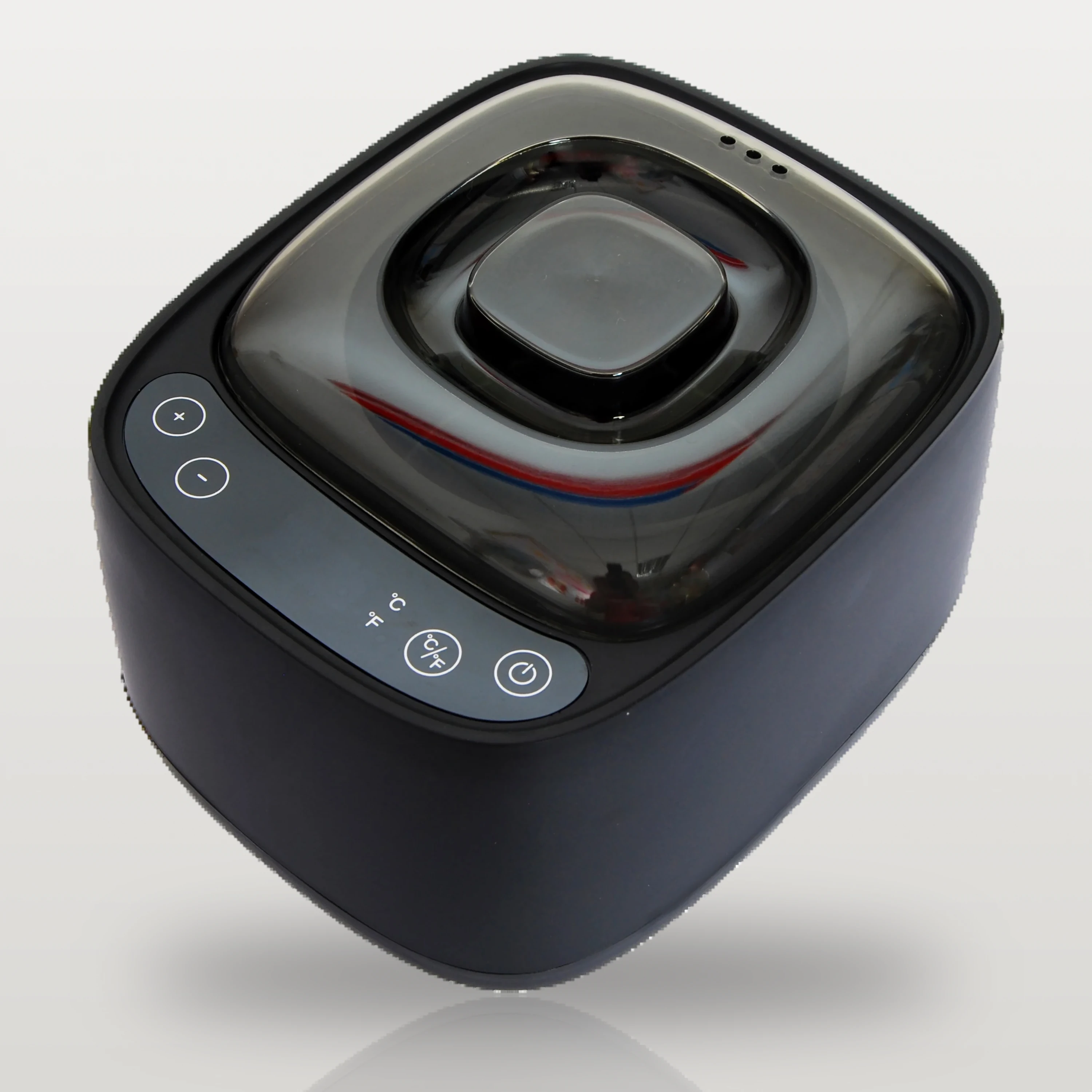
The 450 ml pot holds roughly 400 g of beads — one technician’s working day in most Nordic treatment rooms.
A capacity ladder that fits the room, not the catalog
Nordic treatment rooms tend to be small and multi-purpose: a brow and lash room in the morning, waxing in the afternoon, nails two evenings a week. That shape produces a predictable order mix.
450 ml is the workhorse. It holds about 400 g of beads, which is roughly one technician’s day across a normal mix of legs, underarms and bikini lines. 180 ml is the second pot — brow, lip, chin, and the small hard-wax work that should never wait behind a leg. 250 ml and 400 ml fill the space between them for single-service rooms. 800 ml only makes sense where back and chest work is regular. 20 ml is a retail and sample unit, not a treatment-room unit, and the dual-pot station is the answer for the two-temperature problem described above.
Two specification points separate a pot that survives a Nordic winter from one that does not. First, chip-controlled temperature rather than a bimetallic thermostat: the swing on a bimetal strip is exactly what turns a 48 °C working band into a 60 °C afternoon. Second, a removable inner pot and a lid: the August restart is a cleaning job as much as a heating job, and a pot that cannot be emptied and wiped to the bottom will carry last season’s oxidized film into the new one.
The EU file is shared; the national extras are not
The conformity package is the standard one: Low Voltage Directive 2014/35/EU, EMC Directive 2014/30/EU, RoHS, CE marking, and the economic-operator requirement under Regulation (EU) 2019/1020 — the EU-established operator’s name and address on the product or its packaging. Norway is in the EEA rather than the EU, which means the CE-marking obligations apply through the EEA Agreement while the waste and packaging regimes are national.
Where the four markets genuinely diverge is language and end-of-life registration. Four manuals, not one: Swedish, Norwegian, Danish and Finnish are separate documents with separate type approval habits, and a single “Scandinavian” booklet reads as an afterthought to every one of them. Add national WEEE and packaging registration per country — the importer usually holds these, but the artwork and the declared weights come from the factory. If a buyer tells you they will handle it, ask for the registration number before the carton is printed.
A word on cold logistics, which matters more here than in most markets: a container that has crossed the North Sea in January arrives with the units at ambient, sometimes below zero. Let the unit reach room temperature before it is powered for the first time. Condensation inside a cold housing and a switched-on element is a warranty conversation nobody wants in February.
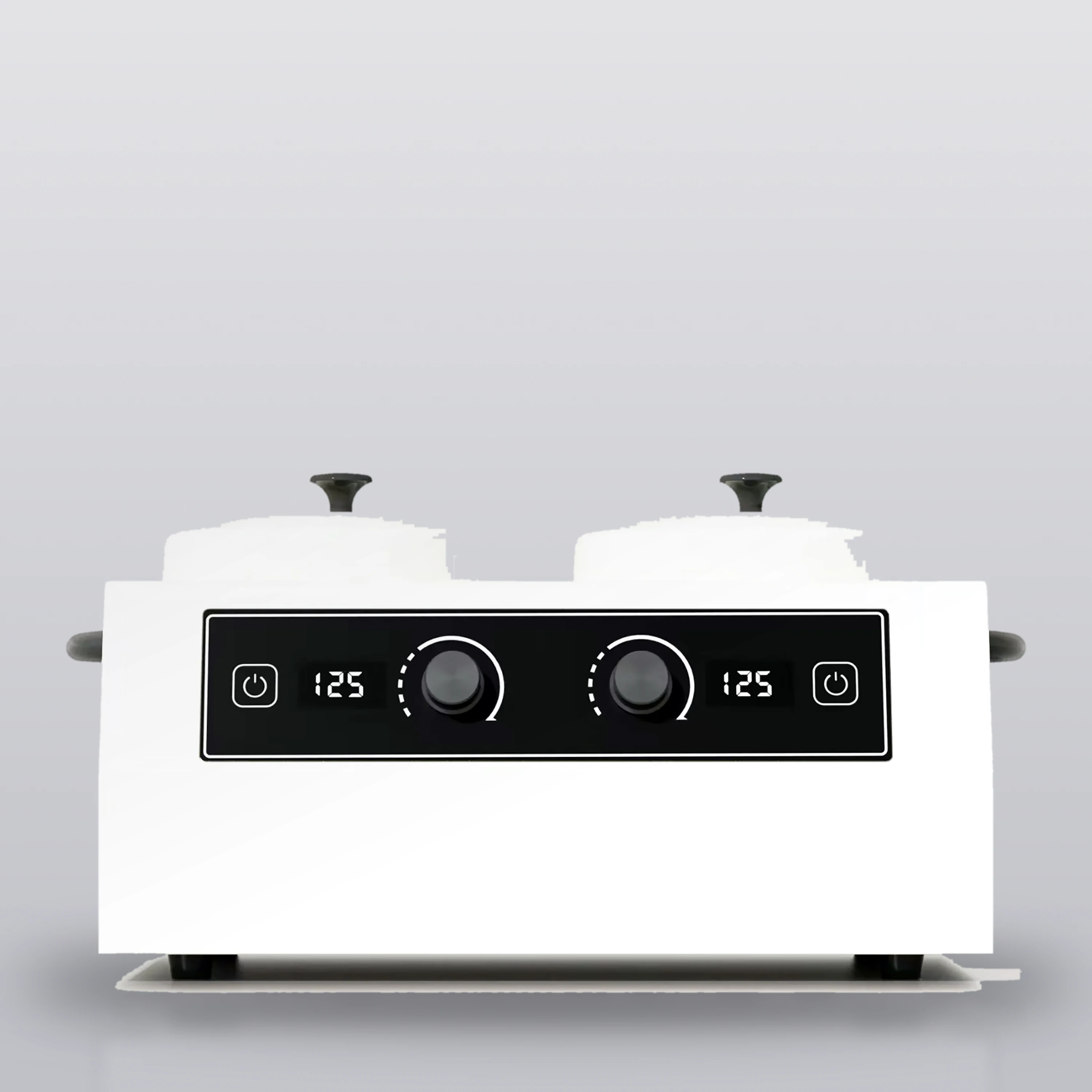
Two pots, two working temperatures: the December answer when a menu mixes 45–50 °C hard wax with 55–60 °C film wax.
What the second order depends on
Nordic buyers reorder on the strength of one thing: whether a failed unit was replaced inside the week. Distances are long, but logistics are excellent, so the distributor’s promise is credible only if the parts are already in the country. We ship a 1:10 service kit with the first container — heating element, thermostat or controller, knob, inner pot, line cord in the destination’s plug standard, lid — and the ratio is deliberate: one kit per ten units covers a typical first year across a mixed fleet.
Price the kit into the landed cost rather than treating it as an accessory. A salon that loses two days in December because a thermostat failed will not blame the part; it will blame the brand, and the December loss is worth many times the kit.
Quick FAQ
Can one SKU cover all four Nordic countries?
Why does the August restart break so many pots?
Is a bigger pot better for a busy December?
Next step
Tell us which of the four markets you are shipping to and whether the room runs one temperature or two, and we will return a model mix, the line-cord split and the service-kit ratio for your first order. Contact Miro Wu, Dedicated Account Manager — email miro.wu@beautome.com or WhatsApp +86 188 1393 3019.
Related: the full wax heater range from 20 ml to 800 ml, and the OEM/ODM program for branded fleets.