







Wax Heaters for Dutch and Belgian Salons: One Order, Two Socket Systems
The Netherlands and Belgium sit an hour apart by train, share a 230 V grid, the same EU regulatory file and much of the same client culture — and yet their wall sockets are not the same system. That single fact decides how a combined order for wax warmers should be written: one specification, one compliance file, and a cord plan split by destination before the container is stuffed.
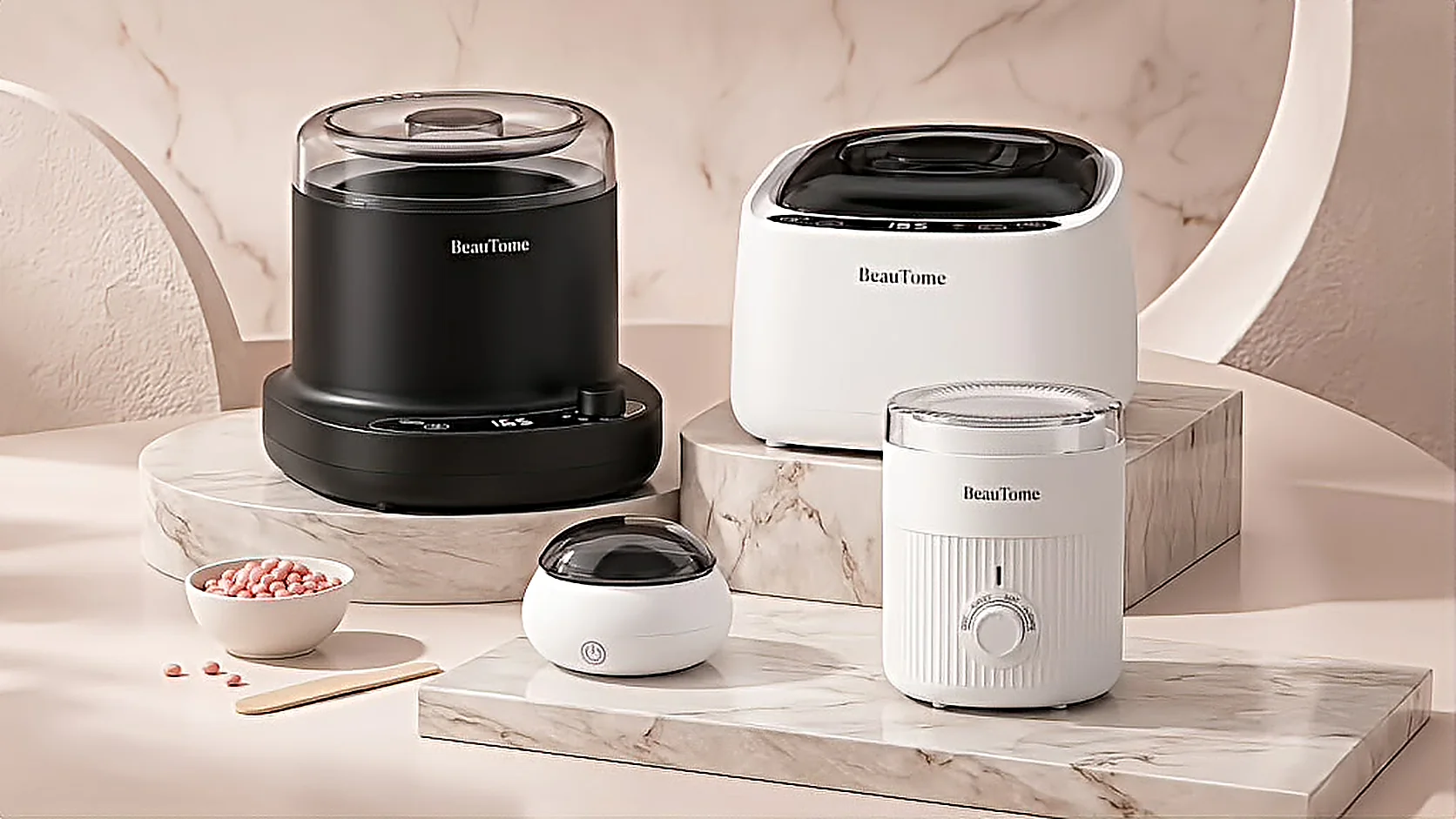
Ten models, one compliance file, two socket systems — the cord is the only line in the order that cannot be shared.
Two dense markets, mostly one-owner studios
A business-listing count put 5,753 beauty salons in the Netherlands as of April 2026, up 2.36% from 2023, with 93.99% single-owner operations, an average age of five years and two months, and the biggest concentrations in South Holland (1,460), North Holland (1,046) and North Brabant (897) (Rentech Digital, 2026). A points-of-interest dataset counted 22,395 beauty salon listings in the Netherlands as of August 2025 (POIData) — the wider figure includes spas and wellness studios that the business registry classifies elsewhere, so treat the two numbers as a range with different definitions rather than a contradiction.
Belgium is roughly a third of the Dutch count: 1,939 beauty salons as of April 2026, up 3.56% from 2023, 85.35% single-owner, averaging four years and six months in business, with 947 in Flanders, 610 in Wallonia and 382 in the Brussels-Capital Region (Rentech Digital, 2026); a POI count of 2,255 beauticians in August 2026 sits in the same band (POIData). Nearly nine in ten buyers in both countries own the chair they work behind — a profile that rewards compact, reliable equipment bought once and kept for years.
5,753
Beauty salons in the Netherlands, April 2026 — 94% single-owner (Rentech Digital)
1,939
Beauty salons in Belgium, April 2026 — Flanders 947, Wallonia 610, Brussels 382 (Rentech Digital)
2 sockets
Type C/F in the Netherlands, type E in Belgium — the one line of the order that splits by destination
The socket split, and the plug that solves it
Both countries run 230 V at 50 Hz, but the earthing geometry differs. Dutch walls are dominated by Schuko-style type F sockets, which earth through side contact clips. Belgian walls are dominated by type E sockets, which earth through a pin projecting from the socket itself. For the equipment in a waxing room, the consequences are simple:
- Class II (double-insulated) warmers with a moulded type C plug — the two round pins, no earth contact — work in both countries unchanged. This is the cleanest answer for a combined NL/BE order, and most of our range is built double-insulated for exactly this reason.
- Class I equipment that needs the earth connection requires a CEE 7/7 hybrid plug — a Schuko body with the socket hole for the Belgian earth pin. Specified once, it inserts into both the Dutch type F and the Belgian type E outlet. Writing “CEE 7/7” on the purchase order instead of “European plug” is the difference between one cord SKU and two.
Add a spare cord per ten units, and name the plug standard on the line item. A carton of warmers that arrives in Antwerp with pure Schuko plugs and earthed chassis is not a defect — it is a customs-clear, shelf-ready product that needs an adapter nobody stocks.
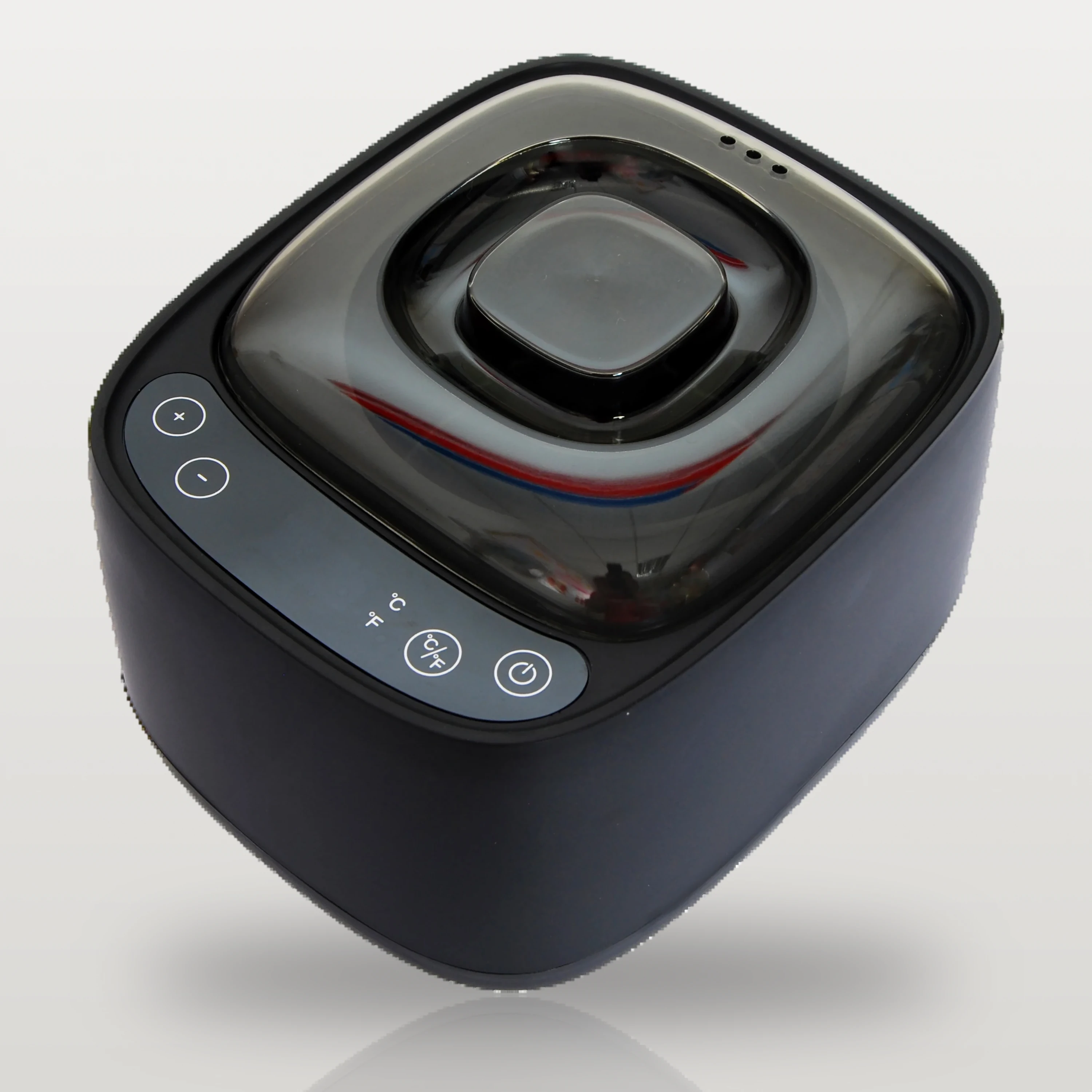
A double-insulated 450 ml machine with chip control: the same unit sells across the border with no cord change — which is what makes a two-country distributor program practical.
One EU file, two language packs
The compliance file is shared: the Low Voltage, EMC and RoHS directives behind CE marking, an EU-established responsible economic operator on the product or packaging under the market-surveillance and GPSR framework applicable since December 2024, and a batch or serial scheme for traceability. What is not shared is language. Instructions and safety information need Dutch for the Netherlands and Flanders and French for Wallonia and much of Brussels — a single three-language booklet per model, or two packs split at the distributor’s warehouse, both work; what fails is a German-market booklet with a sticker over the title. Each country also runs its own WEEE producer registration for electrical equipment, so the distributor of record registers once per country, not once for the region.
Capacity for small rooms and long days
Dutch and Belgian studios are dense-city businesses: Amsterdam alone counts 769 beauty salon listings in the POI dataset, Rotterdam 552, and the typical treatment room is a repurposed space where the waxing station shares a wall with the door. That argues for a compact ladder rather than one large pot:
- 180 ml (PW8) for a single-niche station or a second wax type kept melted;
- 450 ml (W5 / W6) as the working standard — roughly 400 g of hard wax, one technician’s day;
- 500 ml digital (W2) where the room needs to show a setpoint to an inspector or a franchise manual;
- 800 ml (SW1B) and the SW6B / SW8B dual-pot station for full-leg-plus-bikini rooms that hold two working temperatures at once.
Hard wax work runs two service temperatures, and a room that serves both a 45–50 °C formula and a 55–60 °C one needs two pots — which is how the dual-pot station earns its counter space. Chip-controlled thermostats hold the setpoint instead of swinging around it the way a bimetal switch does; in practice that means fewer scorching cycles at the bottom of the pot, cleaner wax at the end of the day, and a service team that stops recalibrating by feel. For price-conscious entry orders, the BWW5K — 450 ml, 100 W, a single knob from 30–125 °C — covers the basics without a display.
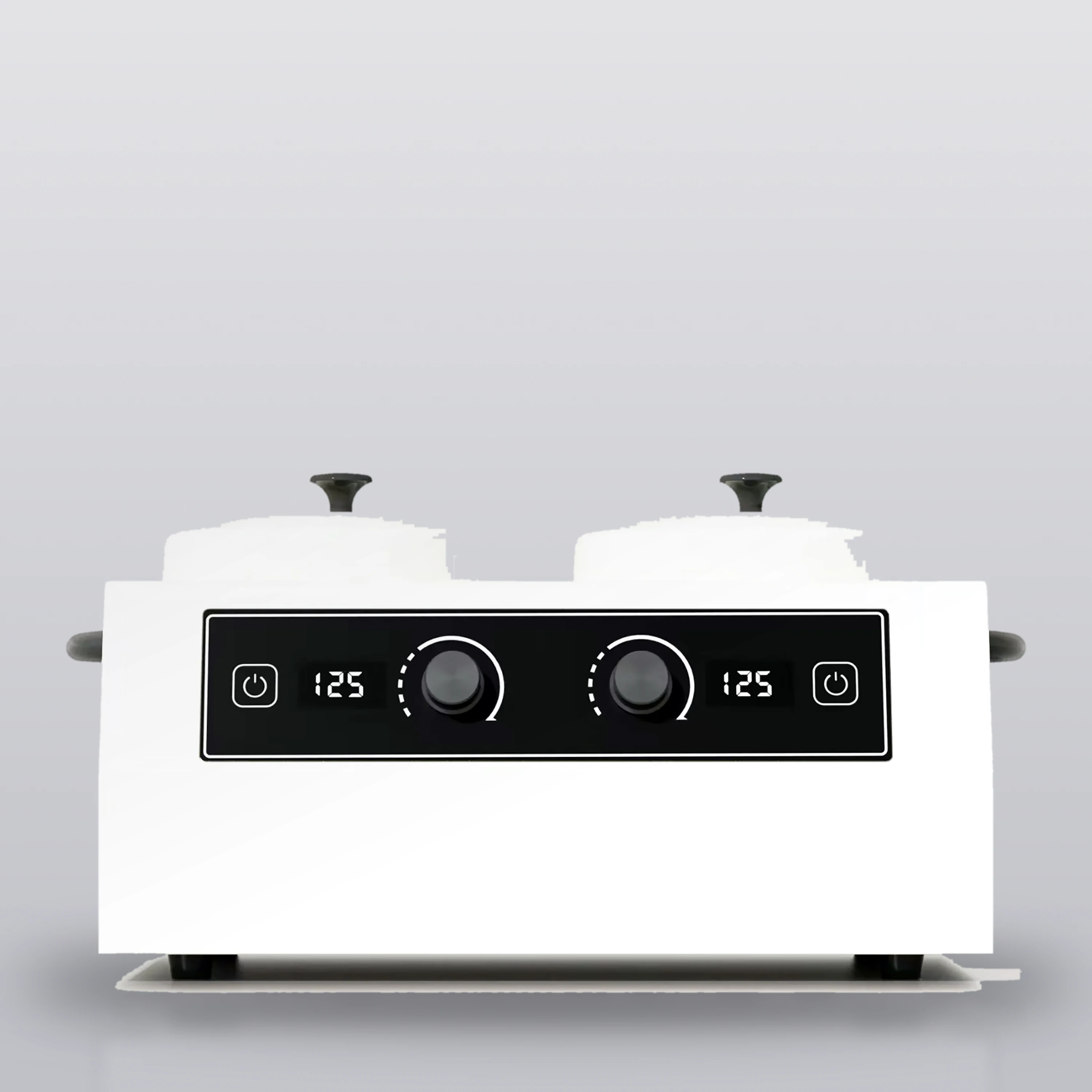
Two working temperatures, one footprint: the dual-pot station is the standard answer in rooms that switch between low- and standard-melt formulas within one client.
Writing the order for both countries at once
A combined NL/BE order is one PO with one split. Everything above the cord line is common: the ten-model capacity range from 20 to 800 ml, the chip-control specification, the EU file, the spare-parts kit (heating elements, inner pots, knobs, 230 V cords) at a one-to-ten ratio stored with the distributor. The cord line splits by destination — type C moulded cords for Class II units and CEE 7/7 hybrids where earthing is required — and the language pack line follows the same map. Private-label branding across both markets can share one artwork master with a language swappable on the second face. The range is detailed on the Wax Heaters page, and the private-label route is under OEM and ODM; buyers weighing a wider Benelux program can also review the full product catalog.
Quick FAQ
Can one warmers SKU really serve both the Netherlands and Belgium?
Which languages do the manuals and labels need?
How many pots does a typical two-bed waxing room need?
Next step
Send us the split — how many units for the Netherlands, how many for Belgium, which classes and which languages — and we will return a quotation with the cord and language plan already written into the line items. For a quotation, contact Miro Wu, Dedicated Account Manager — email miro.wu@beautome.com or WhatsApp +86 188 1393 3019.