







Wax Heaters for Irish Salons: An EU Order That Ships With British Plugs
Ireland is the awkward case in every EU product plan: fully inside the single market, fully covered by the ordinary European compliance file — and yet the only EU country where the wall socket is the British-style 13-amp type G. A distributor who quotes “EU” cords for a mixed Ireland-and-continent order will get one country right and one shipment stuck. Here is how the Irish order actually splits, and what the market behind it looks like.

Nine single-pot models from 20 ml to 800 ml plus twin-pot stations — the Irish order is usually a small mixed fleet, not one SKU.
One order, two legal worlds
The product file for Ireland is the standard European one. The Low Voltage Directive is transposed nationally by S.I. No. 343/2016 (as amended), EMC and RoHS follow as usual, and Regulation (EU) 2019/1020 requires an economic operator established in the Union to be named on the product or packaging — for an Irish order that is normally the importing business. Market surveillance sits with the Competition and Consumer Protection Commission (CCPC). Nothing exotic; it is the same file a Spanish or Polish buyer asks for, and a CE technical file travels to Dublin unchanged.
The plug is where the continent ends. Irish sockets take the 13 A flat three-pin plug of the BS 1363 pattern, governed by Irish standards rather than by the UK regime: I.S. 401:1997 specifies the fused plugs — with insulating sleeves on the line and neutral pins and a fuse link to BS 1362 — while I.S. 411:1997 covers the shuttered 13 A socket outlets they plug into. The framework dates to the NSAI (Section 28) Regulations, S.I. No. 526/1997, and consumer guidance from the Citizens Information Board is explicit that electrical goods sold in Ireland should come with the standard three-pin plug fitted. The supply itself is ordinary: 230 V at 50 Hz.
Note what Ireland does not have. The United Kingdom runs a separate 1994 regulation that requires domestic appliance plugs to be approved by a recognized body and carries a licensing scheme around the plug — we covered that in the British article. Ireland has no equivalent approved-plug licensing scheme: the requirement is conformity with the Irish plug standard, and the product file behind the heater is the EU file. Same physical plug, different legal machinery — which is why “UK plug” and “Irish plug” are not interchangeable phrases on a purchase order even though the pins are identical.
2,470 salons
Beauty salons in Ireland, April 2026, up 4.15% from 2023 — plus 4,899 beautician companies under the wider NACE count
type G, 13 A
I.S. 401 fused plugs with a BS 1362 fuse into I.S. 411 shuttered sockets — the EU member state on British pins
230 V / 50 Hz
The standard European voltage behind an unstandard European socket — the heater is unchanged, only the cord differs
The market behind the plug
Two counts describe Ireland, and the gap between them is instructive. The salon-level count puts 2,470 beauty salons in the country as of April 1, 2026 — up 4.15% from 2023, 79.23% single-owner, with Leinster holding 1,434, Munster 609 and Connacht 300, and an average business age of 4 years 11 months (Rentech Digital, 2026). The company-level count, using the wider NACE 9602 classification, reaches 4,899 beautician and beauty salon companies as of October 2026, with 66% of those reporting headcount employing just one to four people and Dublin holding 1,338 of them (CompanyData, 2026). The difference is definition — premises versus registered companies — and both numbers point the same way: a dense, young, owner-run market concentrated in and around Dublin, where the person choosing the heater is the person paying for it.
That buyer profile shapes the range. A single-room studio does not need an 800 ml workhorse; it needs one 450 ml pot that holds its set point all day, easy cleaning, and a spare element in the cupboard. Chains and multi-room salons in Dublin and Cork buy the ladder — and they buy the second pot before the second bed, because waiting for wax to melt is the visible failure in a booked-out room.
Capacity for the Irish treatment room
The working unit of the trade: a 450 ml pot holds roughly 400 g of wax, about one technician’s day of hard wax. Around it the range steps from 20 ml for touch-ups and a single small area, through 180 ml and 250 ml for brow and facial work, to 400 ml, the 450 ml standard pot, a 500 ml digital-display model for chains that want a set point on record, and 800 ml for the back bar. Twin-pot stations in 400/400 and 800 ml formats carry the two working temperatures — a film wax at 55–60 °C and a low-temperature hard wax at 45–50 °C cannot share one dial setting, and a salon offering both needs two pots no matter what the brochure says.
The control question is chip versus bimetal. A mechanical thermostat drifts with age and with the draft from a salon door; the operator compensates by turning the knob up, which is how scorched wax and reworked strips become normal. Chip-controlled heating holds the set point through a working day, and the difference shows up in two places the owner can see: fewer skinned pots at closing time, and cold-start minutes that stay predictable. Ask any supplier for the full-load cold-start time — measured with wax in the pot, not empty — and treat an evasive answer as data.
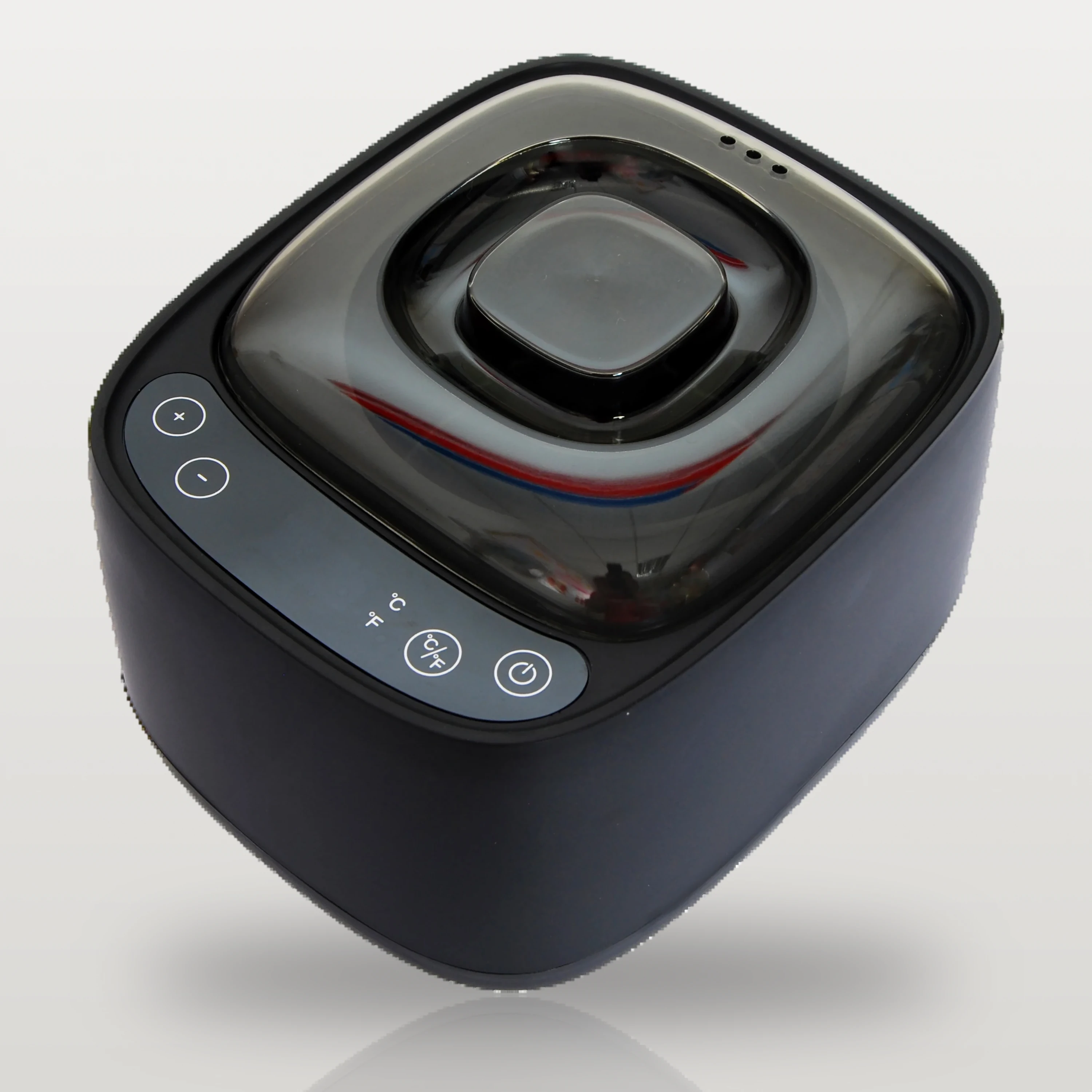
The 450 ml pot holds about 400 g — one technician’s day — and is the default first order for an Irish single-room studio.
What goes in the Irish purchase order
Six lines, in practice. The type G moulded cord set specified against I.S. 401, listed separately from any continental cords in the same shipment. The voltage-frequency string, 230 V / 50 Hz, on the nameplate. The EU economic operator’s name and address as they should appear on product and packaging. The manual — English serves Ireland; no second official language version is needed for ordinary trade. A first spares kit at roughly one per ten units: heater elements, inner pots, knobs, lids and a couple of spare type G cords, because cords live under trolleys and treatment chairs. And the WEEE producer registration — electrical equipment placed on the Irish market needs a registered producer on the national system, which for an importer is a to-do, not a detail.
One more habit worth copying from the continent: if the same shipment continues to Britain, remember that the UK applies its own approved-plug rule on top of the shared plug shape. The cord set is the same; the paperwork is not. A Dublin distributor serving both islands carries one cord and two files.
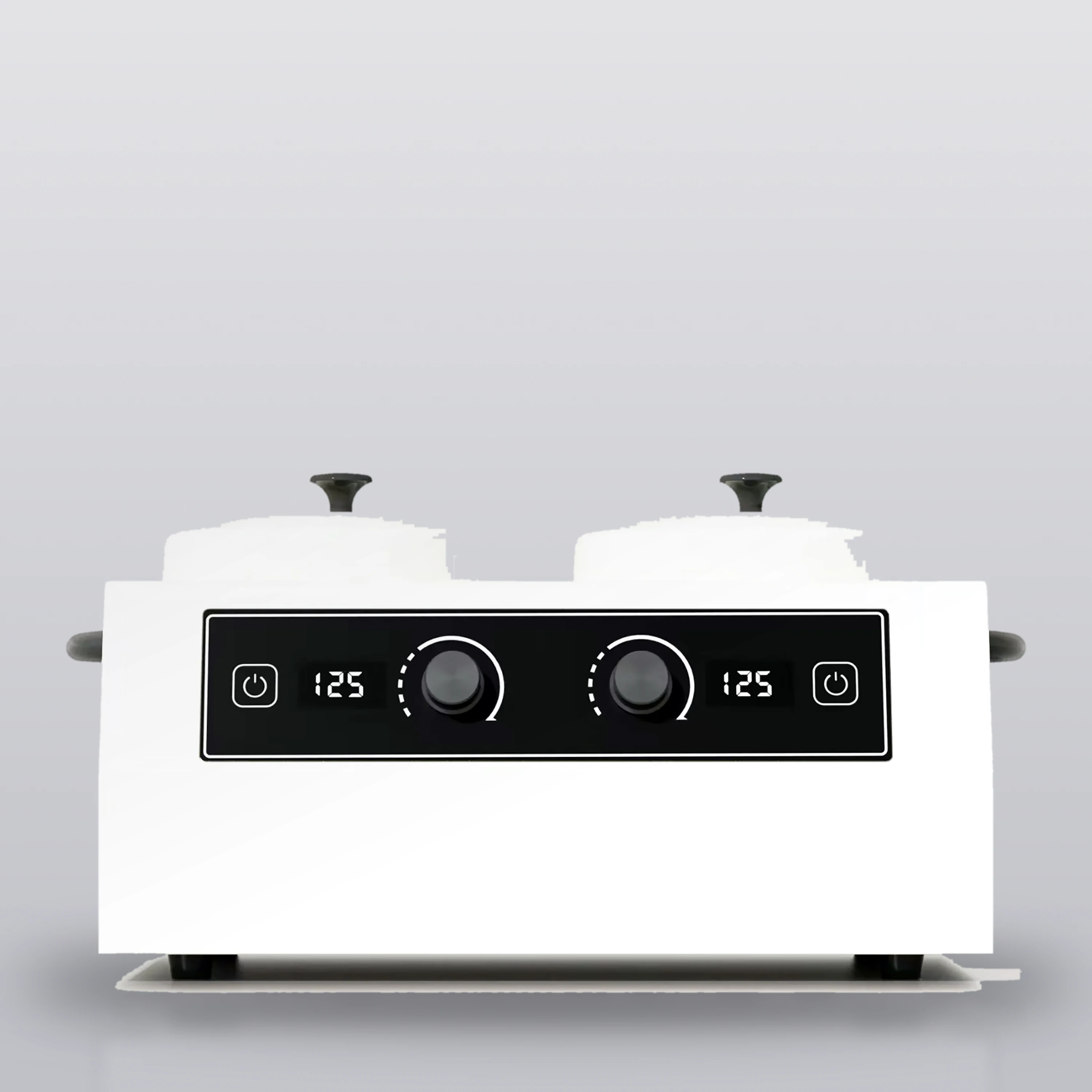
Two working temperatures, two pots: the twin station is what a multi-room Dublin salon adds before it adds a second bed.
Quick FAQ
Does a CE-marked wax heater need anything extra to be sold in Ireland?
Can we ship the same heater to the UK and Ireland on one order?
What size heater should a new Irish studio start with?
Next step
Send us the room count, the wax menu and whether the first order is a single-studio fit-out or a Dublin chain rollout. We will return a quotation with the I.S. 401 cord set, the capacity mix and the spares kit itemized. For a quotation, contact Miro Wu, Dedicated Account Manager — email miro.wu@beautome.com or WhatsApp +86 188 1393 3019.