







Wax Heaters for Canada: 120 Volts, Provincial Approval and Two Languages on One Label
Canada looks like a familiar market to a North American buyer and a European one to a factory — and both halves of that sentence contain a trap. Around 41,000 hair and nail salon businesses operated across Canada in 2025, generating roughly CAD 5.8 billion in revenue (IBISWorld), with Quebec alone home to about 12,400 of them. But the country has no federal electrical safety mark, approval is handled province by province, and Quebec expects French on the label that is at least as prominent as the English. For a wax heater order, three details — the voltage variant, the certification route and the label artwork — decide whether the container clears inspection or sits in a warehouse in Ontario.
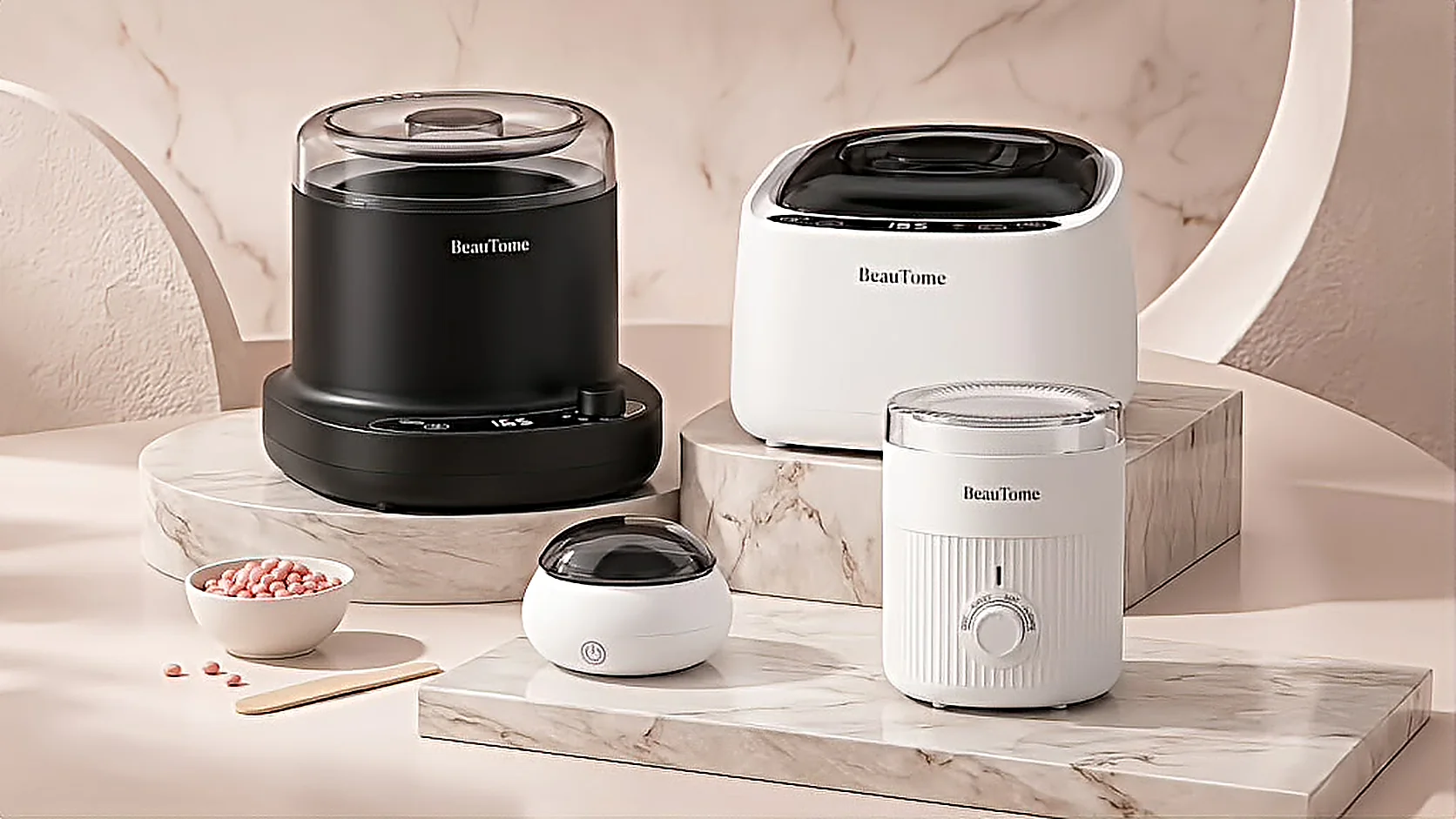
Nine warmers from 20 ml to 800 ml — the mix matters less than the electrical variant each one ships in.
120 volts first: the order line that quietly halves a heater
Canada runs 120 V at 60 Hz on NEMA 5-15P grounded plugs. A heating element’s power scales with the square of voltage, so a 230 V heater connected to a 120 V outlet delivers roughly a quarter of its rated power. The salon experiences it as a warmer that takes forty minutes to reach working temperature and never quite holds it on a back-to-back Saturday — which reads as a product defect even though the fault is a PO line.
That is why the 120 V variant is not a plug adapter. The heating element, the thermostat tolerances and the internal wiring must be genuine 120 V components, and the certification report must cover the 120 V/60 Hz configuration explicitly. It is the same conversation we walk through for the Japanese, Korean and Australian markets, where the voltage-and-frequency combination drives the component order before any paperwork does. On the purchase order, the voltage variant deserves its own line item and its own packaging label, because a mixed pallet of 230 V and 120 V units is the single most expensive mistake a first Canada container can contain.
No federal mark: approval is provincial
The second trap is structural. Unlike the EU’s CE marking, Canada has no single national electrical product mark — electrical product safety approval is provincial. The common thread across the provinces that matter for beauty distribution (Ontario, Quebec, British Columbia, Alberta) is that equipment must carry approval from an SCC-accredited certification body, of which the CSA mark is the best known; marks from other SCC-accredited bodies are legally equivalent in effect.
The specifics a distributor should know before the first quote:
Ontario. The Electrical Safety Authority (ESA) requires electrical products to be approved before sale, display or use under the Ontario Electrical Safety Code. ESA guidance is explicit that a CE marking alone is not accepted as a substitute. For small or specialized volumes, a field evaluation can serve where full certification is impractical.
Quebec. The Régie du bâtiment du Québec (RBQ) prohibits selling or installing unapproved electrical equipment under the province’s Construction Code, and adds two mechanics of its own: the certification mark has a required placement on the product, and limited-quantity or specialized equipment can go through a special on-site evaluation route under the CSA SPE-1000/SPE-3000 model codes instead of full certification.
British Columbia and Alberta. Both recognize SCC-accredited marks through Technical Safety BC and the Safety Codes system respectively; recognized marks and bodies can change, so they are re-verified at time of sale rather than assumed at contract signing.
One efficiency note for suppliers already serving the US: a CB scheme test report can substantially reduce duplicate testing when converting a UL-style evaluation to a North American dual-market file (cULus-style), because the underlying IEC reference standards are shared. The certification decision is still a Canadian one — the report reuse shortens the path, it does not skip it.
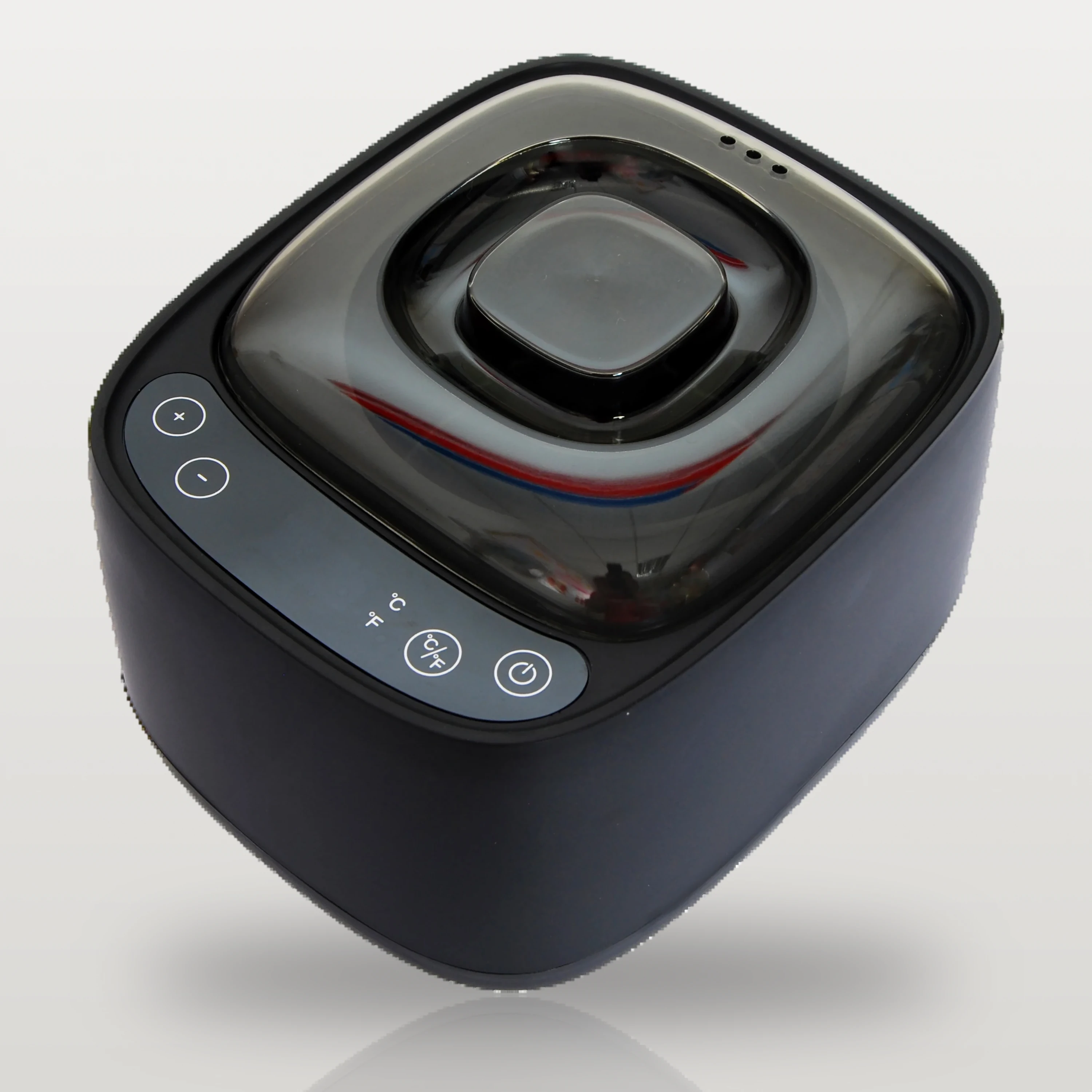
The 450 ml class: about 400 g of wax, one technician’s working day, the volume anchor of most Canadian orders.
Two languages on one label — and Quebec does not negotiate
The third trap is the one that catches Asian and European factories most often: Quebec’s Charter of the French Language. Products sold in Quebec must carry French on packaging, labels, warranties and public-facing documents, and where French appears alongside another language it must be at least as prominent. Enforcement tightened further under Bill 96, with the French text required to be no smaller than the English on product labeling; import enforcement activity against non-compliant labeling has been reported in the 2025–2026 period.
For a wax heater, the bilingual exposure is bigger than the carton: the rating plate, the control-panel markings where legally required, the manual (a genuinely translated French and English master, not machine translation), the warranty card and any in-box safety inserts. A practical rule that saves reprints: design the bilingual artwork once, at the start, with equal-size type blocks for both languages, and print one Canada-specific manual rather than bolting a French leaflet onto an English-only edition.
What the market actually orders
Canadian salons resemble the US structure — a long tail of small owner-operator studios plus urban chains — so the volume pattern is familiar:
450 ml as the working anchor (about 400 g of wax, one technician’s day), 180 ml as the second pot for brow and lip work, 500 ml digital-display units where a chain wants set-and-hold written into its SOP, 800 ml only for high-volume back-and-chest rooms, and the dual-pot station (400 + 800 ml) where two working temperatures run simultaneously — because a 45–50 °C formula and a 55–60 °C film wax should never share one pot, and turning one pot up ten degrees costs ten minutes and smells like burnt wax.
Winter adds a Canadian-specific line: units shipped through January arrive after weeks in a cold trailer. Wax and electronics both need to return to room temperature before first power-on, or condensation does the damage instead of the cold. It is one sentence in the manual and one sentence in the delivery note, and it prevents the most common dead-on-arrival call of the Canadian winter.
Chip-controlled temperature versus bimetal swing also matters more in Canadian treatment rooms than the price difference suggests: second-floor studios in July and older buildings with baseboard heating both push ambient temperatures into the range where a swinging bimetal thermostat wanders while a chip-controlled unit holds.
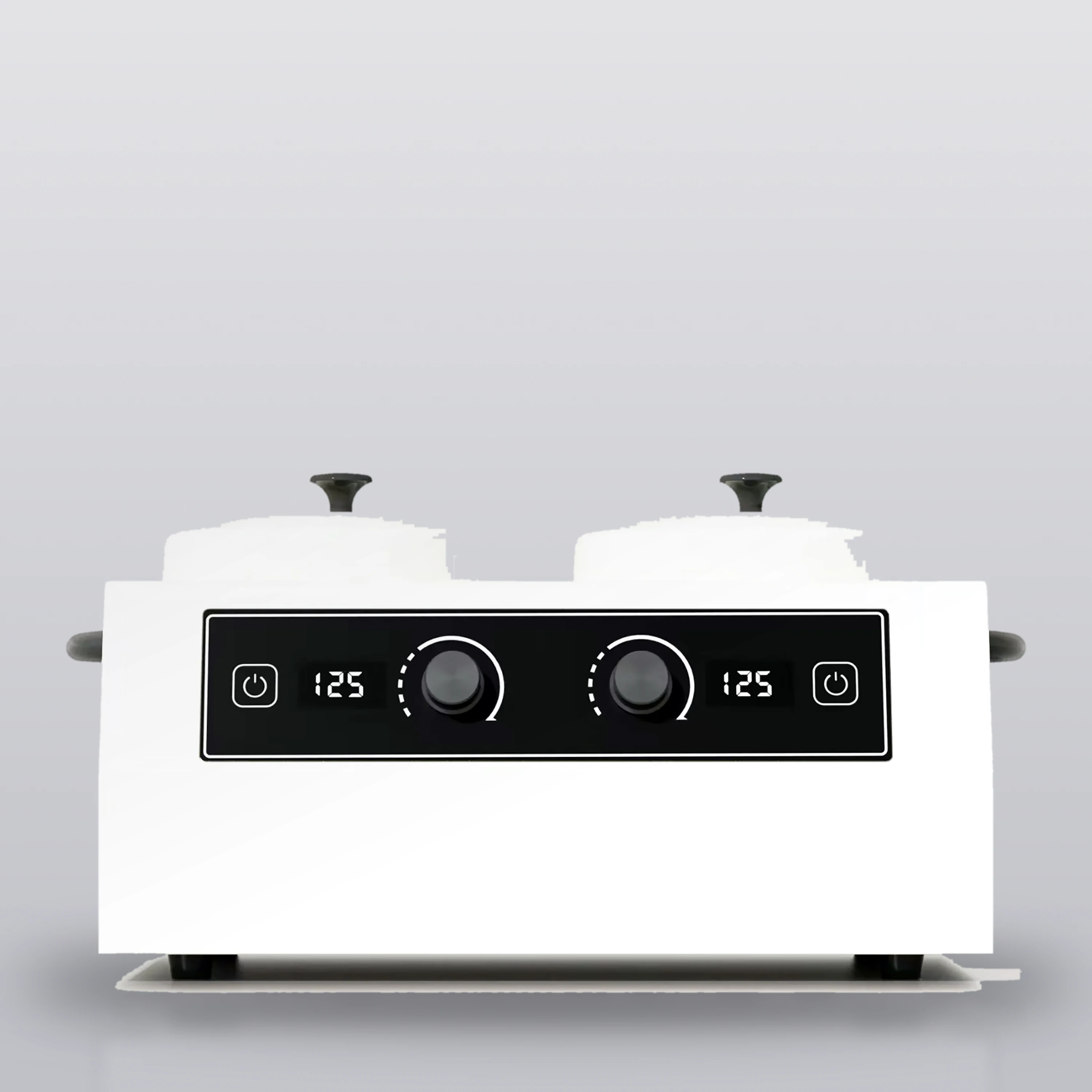
Two working temperatures, two pots: the dual-pot station answers the formula-mix problem without enlarging a single warmer.
FAQ
Can we ship our US-certified wax heaters to Canada unchanged?
Is French labeling required outside Quebec?
Which warmer capacities should a first Canadian order include?
Contact Miro Wu, Dedicated Account Manager — miro.wu@beautome.com · WhatsApp +86 188 1393 3019. Canadian-variant quotes, certification documentation and first-container mixes answered within one business day.