







Wax Heaters for Brazil: 127 Volts, One Plug and the INMETRO File
Brazil is the one large market where a wax heater cannot be specified with a single voltage, and where the plug is not a detail on the purchase order but a certification item in its own right. Distributors who quote “220 V, European plug” and expect to fix it in the warehouse lose the first container at customs; those who plan two element variants and one certification file win the account. Here is the arithmetic, the plug standard, and the paperwork sequence behind a Brazilian wax heater launch.
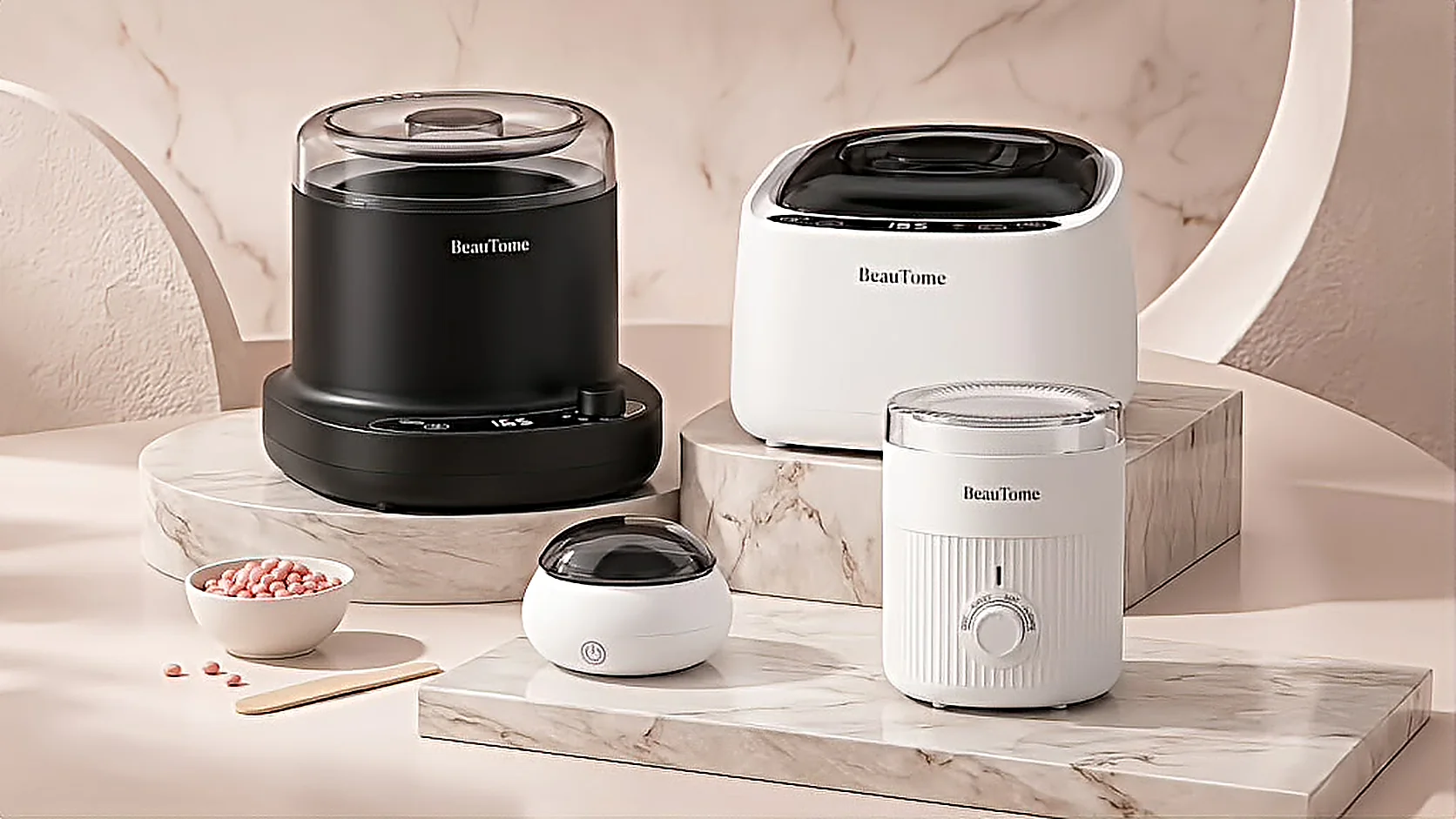
Nine models from 20 ml to 800 ml: for Brazil, each destination voltage becomes its own configuration on the certificate.
A large, growing and unusually price-literate market
Brazil generated roughly USD 500 million of hair-removal wax revenue in 2025, growing at about 10% a year through 2035 (Global Market Insights, 2026 edition) — and a second, more conservative reading from Deep Market Insights puts 2025 at USD 0.35 billion, reaching USD 0.53 billion by 2034 at 4.8%. The gap between the two estimates is normal for this category and worth stating openly to a buying committee: whichever number is used, Brazil dominates Latin America, and Latin America is the fastest-growing wax region at roughly 9.9% a year to 2035.
Both sources agree on the structure that matters to an equipment supplier. Soft wax is the larger segment today, while hard wax is the fastest-growing one — which is an equipment argument, not a consumable argument. Strip wax needs one pot at one temperature and a trolley; hard wax needs accurate low-temperature control, a second working temperature for the film waxes, and a technician who can read the film. A market shifting toward hard wax is a market that replaces heaters.
The voltage is not one number, and that changes the product
Brazil runs at 60 Hz with both 127 V and 220 V distribution, and which one reaches a given salon depends on the local utility and the building’s age. This is not a formality. A heating element is a resistor, so power falls with the square of the voltage ratio:
A 230 V element on 220 V delivers about 91% of its rated power — a 100 W pot behaves like a 92 W pot, heats a little slower, and mostly works. The same element on 127 V delivers about 30% — a 100 W heater becomes a 30 W heater that may never reach working temperature in a room at 30 °C. And a 127 V element wired into 220 V is a burnout, not a slow pot.
The practical consequence: a wax heater is not a dual-voltage product and cannot be made into one by fitting a different cord. If a distributor sells into both distribution zones, the purchase order carries two element variants of the same model — same housing, same controller, different resistive element, different wattage on the nameplate — and the cartons are printed with the destination voltage. The same applies to the thermal fuse and the wiring harness, which are rated against the current the element actually draws at that voltage.
Frequency is the quieter half. A resistive element does not care about 60 Hz, but a controller that derives its timing from the mains, or a fan whose speed follows frequency, does. Ask for a test report that covers 60 Hz explicitly; a 50 Hz-only report describes a different product, and a certification body will say so.
NBR 14136: the plug is a certified component
Brazilian appliances must be fitted with a plug to ABNT NBR 14136, the round three-pin standard, in two ratings: 10 A and 20 A, with different pin diameters and spacing, so a 20 A plug physically will not enter a 10 A socket. The old flat-pin NEMA pattern has not been acceptable for appliances sold in Brazil for well over a decade, and a container fitted with one is a compliance problem before it is a commercial one.
Two operational details follow. First, the plug and cord assembly is itself a certified item — it is not a part the importer can swap. Second, a wax heater is a Class I appliance in most of the range, which means the earth pin is functional, not decorative; a two-pin moulded cord on an earthed chassis will fail structure checks regardless of how well the pot performs. Specify the plug rating as its own line on the purchase order, with the destination voltage beside it.
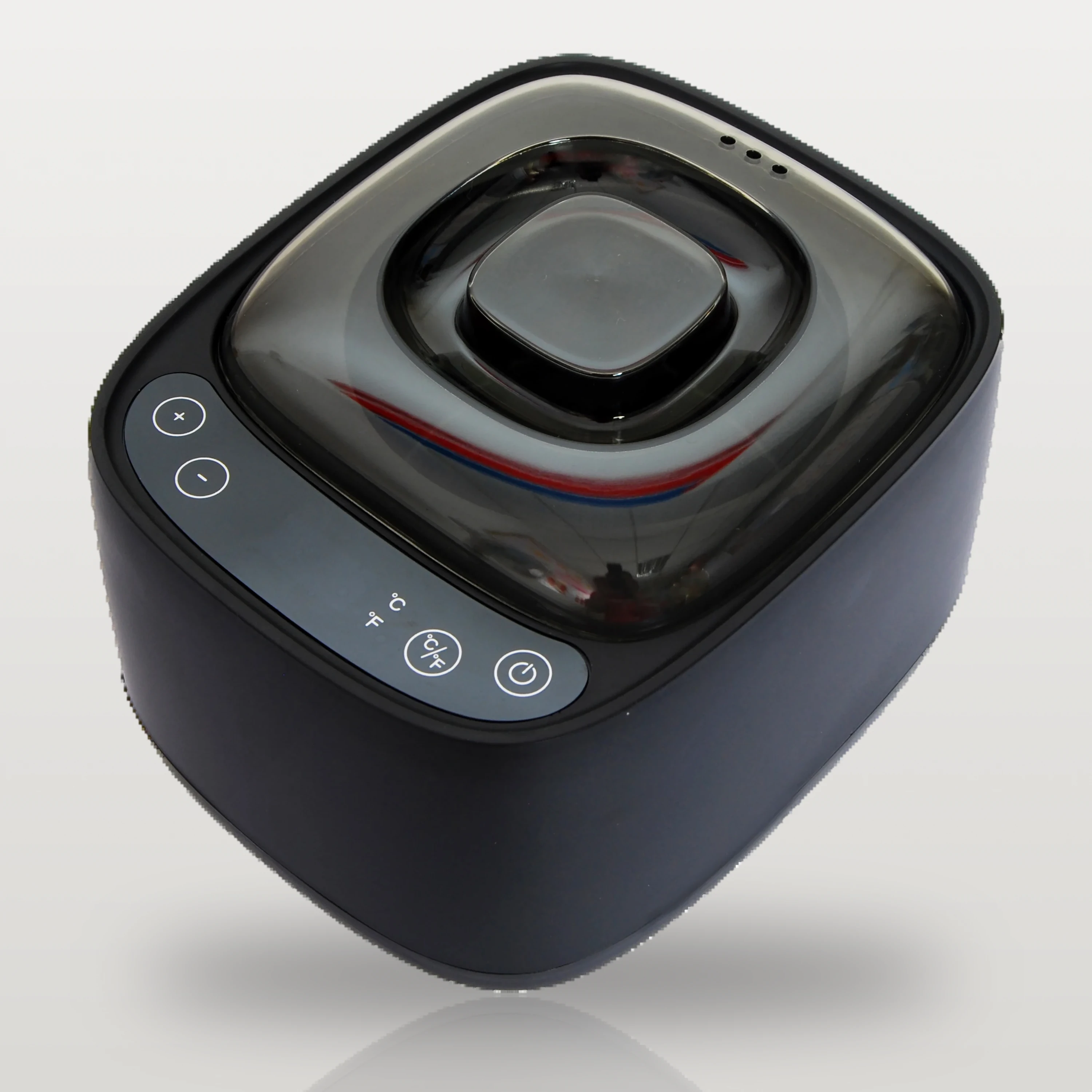
The 450 ml single-knob pot holds roughly 400 g of beads — about one technician’s working day.
The INMETRO file: who holds it decides the schedule
Household electrical appliances sold in Brazil fall under mandatory safety certification, established by INMETRO Portaria 371/2009 and enforced for the appliance categories it lists since 2011. The technical basis is the ABNT NBR IEC 60335 family: the general part 1 plus the part that matches the product — for a pot that melts wax, the liquid-heating part of the 2-series is the closest fit, and the exact part should be confirmed in writing with the certification body rather than assumed. Five features of the process decide whether a launch takes one quarter or three:
The certificate is held by a Brazilian entity. A foreign factory cannot hold it. The importer, or an authorised representative registered in Brazil, applies and remains the holder — which means the certificate does not travel with the brand if the distributor changes. Treat the holder question as part of the commercial negotiation, not an afterthought.
Testing runs at an INMETRO-accredited laboratory, and several assessments — abnormal operation, construction review — must be completed there. A CB report from an IECEE laboratory reduces repeated testing but does not replace the Brazilian file: the national differences in Portaria 371 are exactly the items that get tested again.
There is a factory audit and an annual surveillance visit. That is a planning item for the factory as much as for the buyer: the audited scope must include the models being shipped, and the quality records must show production consistency against the certified construction list.
Documents, labels and warranty are in Portuguese. Manual, safety instructions, nameplate and packaging text all follow the Portuguese requirement, and the INMETRO mark appears with the certification body’s identification.
Any change to the construction list is a change to the certificate. A new element supplier, a new controller board, a different plug moulding, a second voltage variant — each one is a notification or an extension, and shipping before it is registered is the cheapest way to create a recall. This is the single most common failure in a two-voltage program: the 127 V version is added to the range after the 220 V certificate is issued, and nobody tells the certification body.
Building the range for Brazilian salons
Capacity follows the same arithmetic as everywhere else, and Brazilian salons respond to it because it converts a catalogue into a staffing plan: 450 ml holds roughly 400 g of beads, about one technician’s full day. From there the ladder is straightforward — 20 ml for brow and lip touch-ups, 180 ml as the second pot for a small room or a mobile kit, 250 ml and 400 ml for single-service stations, the 450 ml single-knob pot as the workhorse, 500 ml with a digital display where the salon keeps a written SOP or a franchise manual, 800 ml for back and chest work, and the dual-pot stations for the one rule that cannot be engineered away: a 45–50 °C rosin-free hard wax and a 55–60 °C film wax cannot share a pot. Turning the dial up and waiting ten minutes is how salons create scorched wax, complaints and rework.
Climate is the other local variable. In the north and northeast, a treatment room sits above 30 °C for most of the year and the pot runs a long duty cycle; in the south, winter rooms start cold and the number that matters is minutes to working temperature with a full load at a stated room temperature, not the empty-pot figure on a brochure. A chip-controlled heater holds its set point across both; a bimetal thermostat swings wide, and the technician compensates by turning the dial up — which is the beginning of every scorched-wax complaint.
What goes on the purchase order
Six lines prevent most of the friction: model mix and quantities; destination voltage per carton, with the element voltage and wattage stated separately from the nameplate voltage; plug standard NBR 14136 and its rating; Portuguese manual, label and warranty text; INMETRO certificate holder and the certificate number covering the shipped models; and a spare parts kit at roughly one set per ten units — element, inner pot, controller or thermostat, knob and lid — held at the distributor, not at the factory. The distributor who can repair a pot in the same week owns the replacement market; the one who quotes four weeks of transit for a thermostat loses the account to a local brand with worse hardware.
Quick FAQ
Can one wax heater model cover both 127 V and 220 V in Brazil?
Does a CB report remove the need for INMETRO certification?
Why does a salon need two pots instead of one adjustable one?
Next step
Send us the destination states, the salon types you supply and the volume you are planning for the first year, and we will return a model mix with the two voltage variants, the plug specification, the certification sequence with realistic dates, and a spare-parts ratio. Contact Miro Wu, Dedicated Account Manager — email miro.wu@beautome.com or WhatsApp +86 188 1393 3019.
Related: the full wax heater range, the 127 V arithmetic in Mexico, and the OEM/ODM process for private-label equipment programs.