







The Wax Heater Range Audit: What to Cut, Keep and Add Before Your Next Container
Most distributors do not choose a wax heater range. They accumulate one — a 180 ml here, a 450 ml there, a digital model a salon asked for once. Three years later the catalog holds nine models, four of them compete with each other, two never sell, and the warehouse is financing slow-moving stock while salons ask for the one size nobody stocked. This is the audit we run with distributors before a reorder: cut the duplicates, keep the backbone, add the two things that actually increase basket size.
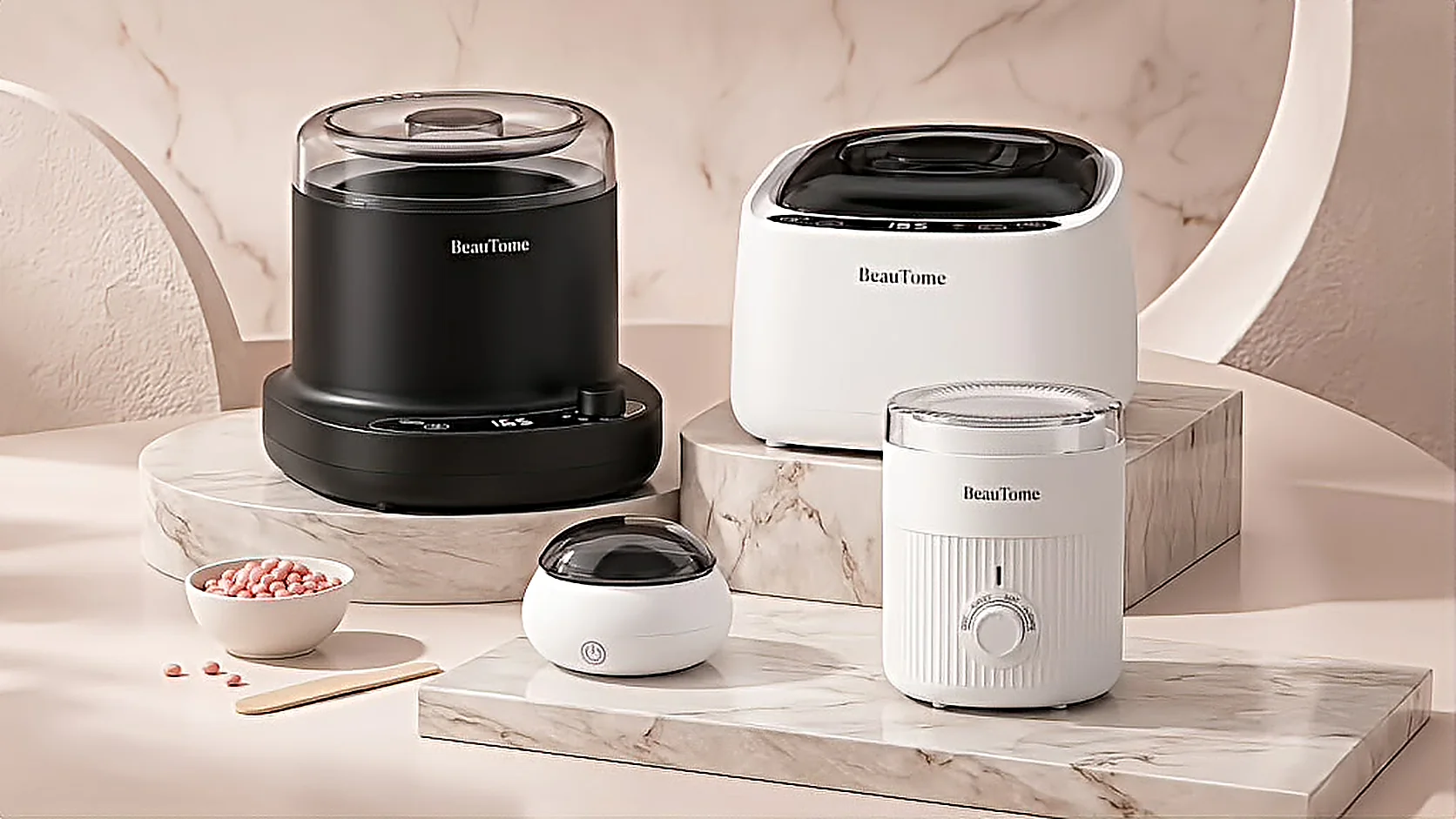
Nine models from 20 ml to 800 ml, plus the double-pot units — the raw material of a range, not yet a range.
Start with the pot, not the catalog
One number organizes the entire category: a 450 ml pot holds roughly 400 g of wax beads, which is about one technician’s working day on a mixed menu. Every sizing decision downstream of that figure becomes arithmetic instead of opinion. A single-chair studio does not need 800 ml; it needs a pot it can empty and clean before the wax oxidizes. A three-room waxing bar does not need three 180 ml pots; it needs one 450 ml per room plus a second pot for the second working temperature.
And that is the second organizing fact, the one most ranges ignore: two working temperatures mean two pots. A rosin-free hard wax in a 45–50 °C window and a consumer-grade film wax at 55–60 °C cannot share a setting, and switching a pot between them costs more minutes per day than the second pot costs once. This is not an upsell argument; it is the reason single-pot salons run one formula badly instead of two formulas well.
450 ml ≈ 400 g
One pot, one technician, roughly one working day — the sizing unit for every decision that follows
2 °C bands
45–50 °C and 55–60 °C are two different pots, not two settings on one
1 : 10
Spare parts per unit shipped: heating element, inner pot, controller, knob — held at the distributor, not the factory
The four numbers that decide a model’s fate
Before cutting anything, measure. Four specifications separate a model that earns its shelf space from one that merely fills a catalog row.
Fill in grams, not milliliters. Wax beads are sold by weight and pots by volume, and the conversion is not one to one. Publish both, or your sales team will keep quoting the wrong one.
Warm-up time at full load. Almost every brochure figure is measured on an empty pot, which no salon ever runs. A full pot to working temperature, at a stated room temperature, is the number that decides whether a salon opens on time.
Hold band over four hours. Not the set point — the swing. A controller that overshoots by 10 °C on the first cycle and drifts afterwards scorches wax and changes how the film behaves on the strip. Chip-controlled units hold a narrow band; bimetallic thermostats oscillate by design.
Cleaning minutes. Removable inner pot, rounded interior, no square shoulder where wax collects. Two minutes versus twenty, twice a day, is the difference a salon feels every week.
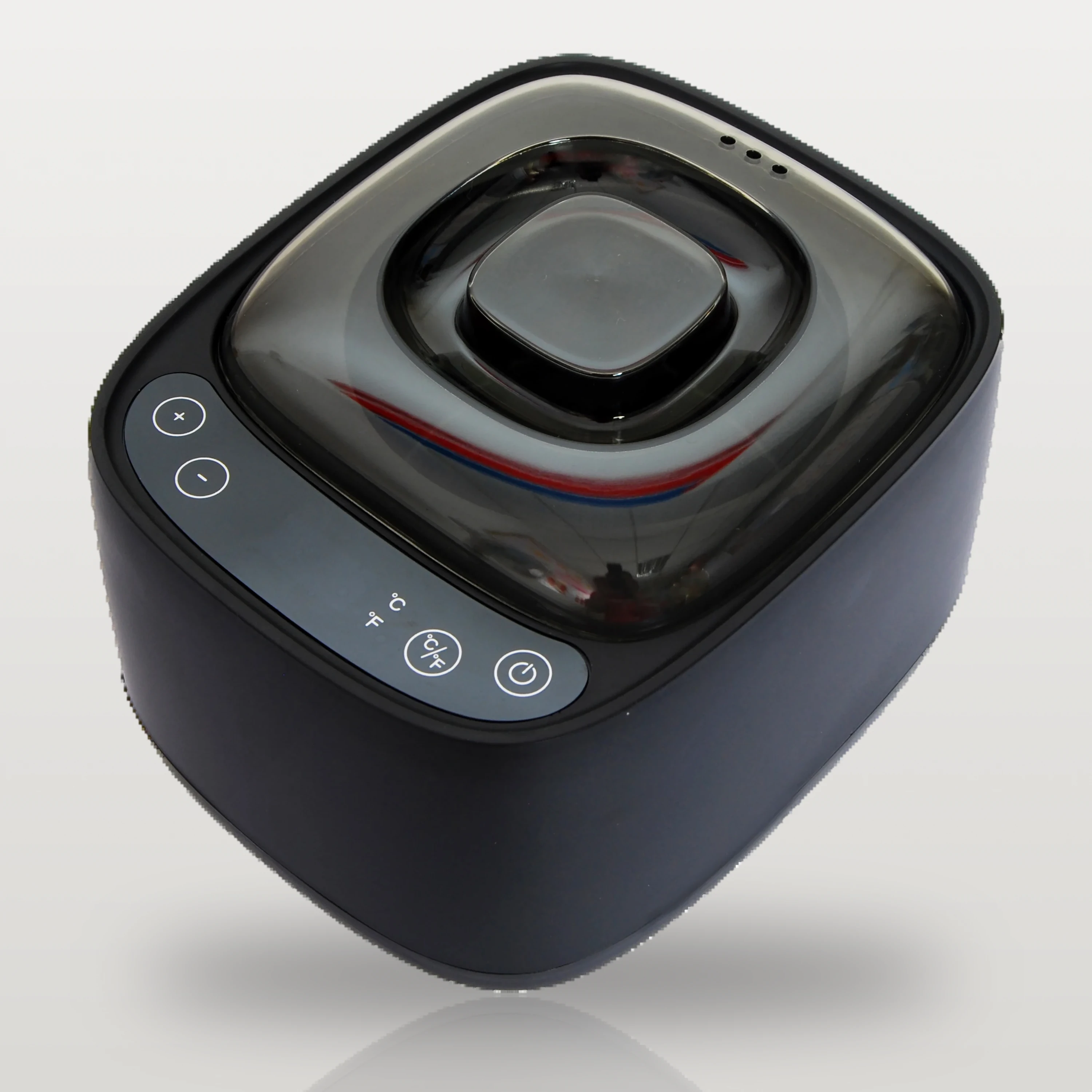
The 450 ml workhorse — the model that should carry the largest share of any reorder, and the one most ranges over-diversify around.
Cut: the models that only look like choice
Three patterns account for nearly all dead stock. Size twins: a 400 ml and a 450 ml in the same range answer the same question, and the second one only fragments your own volume. The undifferentiated middle: a non-digital 500 ml sitting beside a digital 500 ml, where the only difference is a display the salon cannot see from the chair. The orphan: a small pot stocked for a use case nobody in your territory sells — the 20 ml graphene unit is a genuinely different product for brow and face work, but if none of your accounts do brow waxing, it is a sample, not a SKU.
Keep: the backbone five
A working range is narrower than a catalog. 180 ml for the second wax in a small room, mobile kits and barber chairs. 250 ml for single-service studios and esthetic rooms where a 450 ml pot would sit half full and oxidize. 450 ml as the volume model — the one that should be 50–60% of units shipped. 500 ml digital where the buyer needs a visible set point: chains writing standard operating procedures, inspection-facing clinics, training academies. 800 ml for high-throughput waxing bars and back-and-chest work, where a technician would otherwise refill mid-service.
Add: the two moves that raise basket value
The first is the double-pot station — two 400 ml chambers or a 400/800 ml pair on one base. It is the only configuration that lets a room run a 45–50 °C rosin-free formula and a 55–60 °C film wax at the same time without doubling the floor footprint. Sell it as the two-formula station, not as a bigger machine, and it lands with exactly the accounts that already buy two wax lines from you.
The second is the spare-parts kit at 1:10. Elements, inner pots, controllers, knobs, lids and cords, held at the distributor rather than the factory. It converts a warranty conversation into a same-week repair, which is the single strongest reason a salon chain standardizes on one supplier. It is also margin that does not compete with any other line in your catalog.
A reorder mix you can defend
For a territory of roughly one hundred salons, a defensible opening mix looks like this: 55 units of 450 ml, 15 of 180 ml, 10 of 250 ml, 12 of 800 ml, 8 of the 500 ml digital — and, if the territory has any chain presence, 6 double-pot stations rather than another six single pots. Adjust the tail, never the head: the 450 ml is the model that pays for the container.
Then write the purchase order so the range survives the destination. Voltage and frequency per market, stated as the nameplate string you will print, not as a range you hope is accepted. Molded plug type per destination as its own line item, because the same 230 V unit ships with a Schuko, a type G or a type J cord depending on where it lands, and a plug adapter is not a compliance answer. Language of the manual and nameplate. Spare-parts ratio. And the market-access file for each destination — CE under the Low Voltage, EMC and RoHS directives with (EU) 2019/1020 operator details in the EU, an NRTL listing in the United States, and the local mark and licensed holder elsewhere — confirmed with your importer before the cartons are printed.
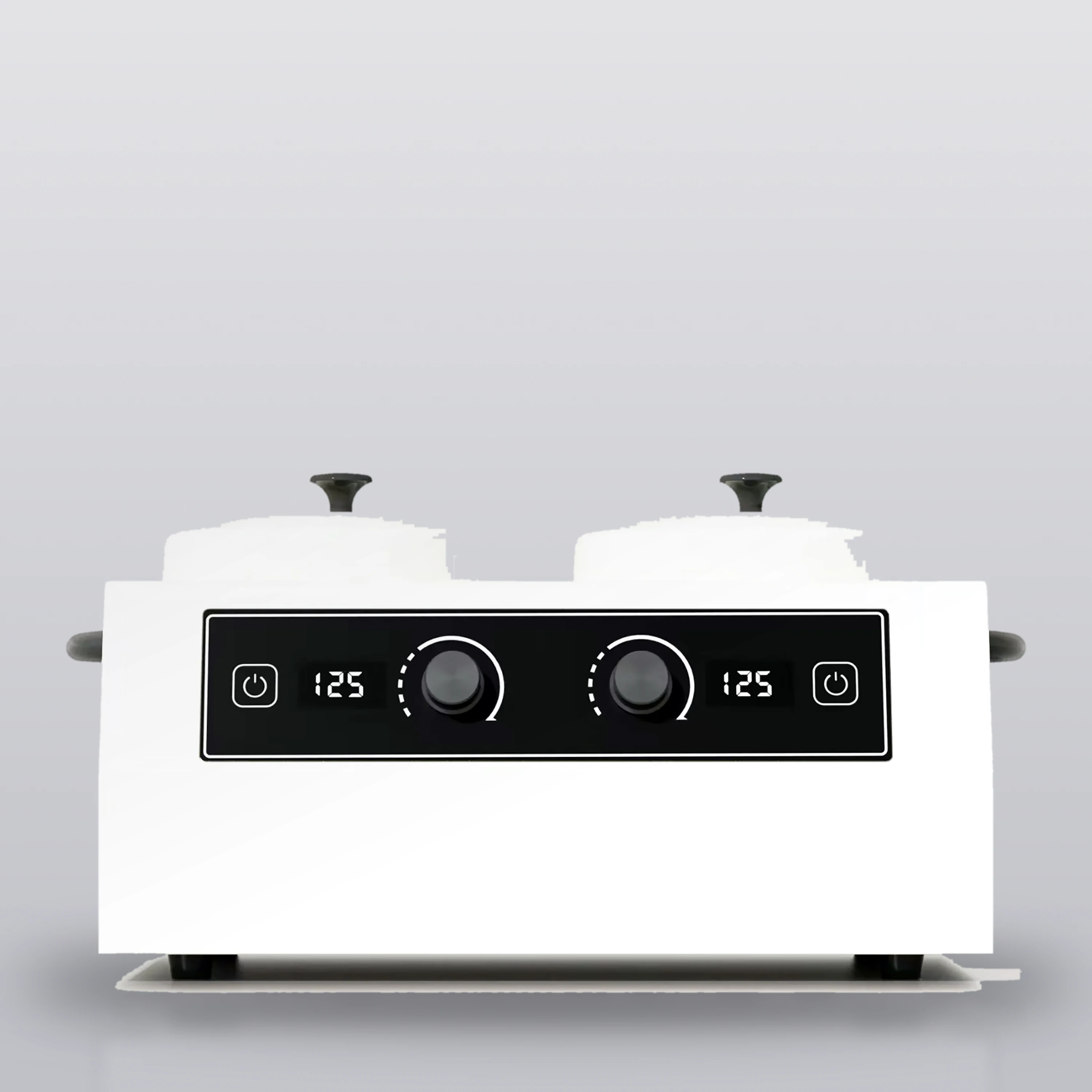
The double-pot station: two chambers, one base, two working temperatures — the configuration that scales a waxing bar without adding floor space.
Quick FAQ
How many wax heater models should a distributor actually stock?
Is a digital controller worth the price difference for salons?
What should be in the first spare-parts order?
Next step
Send us your current range, your territory and your last twelve months of unit mix, and we will return an audit sheet: which models overlap, which to keep, and a reorder mix with spare-parts ratio for your voltage and plug standard. Contact Miro Wu, Dedicated Account Manager — email miro.wu@beautome.com or WhatsApp +86 188 1393 3019.
Related: the full wax heater and warmer line, the formula range that determines how many pots a room needs, and the OEM/ODM program for private-label equipment.