






Hard Wax for Indonesia and Malaysia: The Halal File Starts at the Bag
Indonesia’s mandatory halal requirement for cosmetics came into force in October 2026. That changes the question every distributor in Jakarta and Kuala Lumpur is asking: not whether the wax is halal, but whose certificate covers this bag, from this factory, under this brand name. The answer is a document chain — and the bag is its last link.
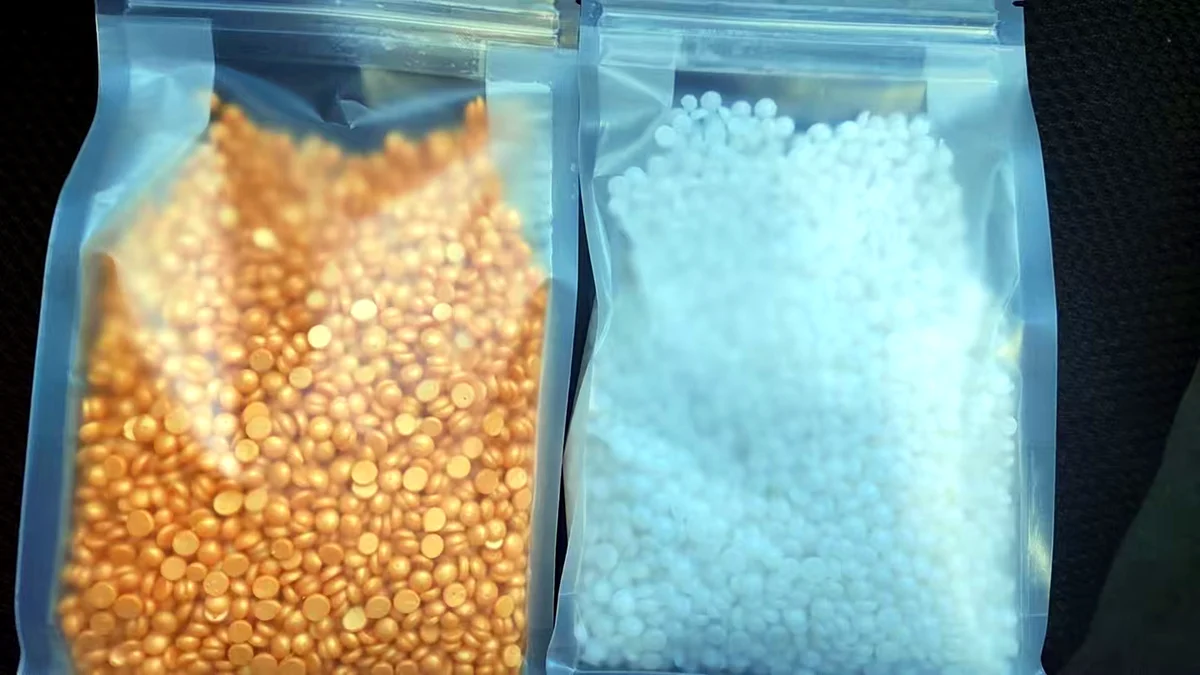
An unlabeled bag is not a shortcut around halal certification. It is the point at which the certificate, the artwork and the label finally have to agree.
The deadline is no longer a planning assumption
Under Indonesia’s halal product assurance framework — Law No. 33 of 2014 and its implementing regulation Government Regulation No. 42 of 2024 — cosmetics are among the categories that must be halal-certified from October 2026. The Halal Product Assurance Agency (BPJPH) spent the first half of 2026 reminding businesses of the date, and its published guidance places the obligation at 17–18 October 2026 depending on the document cited. The requirement is now in force rather than upcoming; for a distributor holding stock that arrived in September, that is a commercial problem, not a regulatory one.
The market behind the rule is not small. Indonesia is the world’s largest Muslim-majority country, with roughly 87% of the population; Malaysia is about two-thirds Muslim. The category keeps expanding: Asia-Pacific is the largest single region for male waxing at about 36.5% of global share (Dataintelo, 2025), and regional wax revenue is projected to run from USD 5.78 billion in 2025 to USD 10.99 billion by 2034, a 7.4% CAGR (Straits Research, 2026). A compliance file that takes four months is not an administrative detail; it decides whether you are on the shelf for the Lebaran season or watching it pass.
Oct 2026
Mandatory halal certification for cosmetics in Indonesia, under Law 33/2014 and PP 42/2024
7.4% CAGR
Asia-Pacific wax revenue growth to 2034, from USD 5.78 bn in 2025 (Straits Research)
2 queues
Product notification and halal certification run on separate tracks — neither replaces the other
How the certificate is actually built
Indonesian halal certification for a cosmetic is a chain with four links. The manufacturer operates a Halal Product Assurance System (SJPH) covering commitment, ingredient assurance, process segregation and evaluation. An audit is carried out by a Halal Inspection Body (LPH), of which LPPOM MUI is the best known. The certificate is issued by BPJPH, and only then may the product carry the Indonesian halal mark. For imported goods, BPJPH can issue on the basis of a certificate from a foreign body that BPJPH recognises — the recognition list is published and revised, so confirm your certifier’s status before artwork goes to print.
Two consequences catch first-time exporters. The certificate is issued against a product and a manufacturing site, not against a company: a second factory, a reformulated batch or a changed ingredient supplier can each require an update, and a private-label brand cannot simply inherit the factory’s certificate under a new name. And the BPOM notification and the halal certificate are different queues — cosmetics need notification before sale, halal is a separate submission with a separate reviewer, and a distributor who assumes one covers the other finds the gap at the port.
What an auditor asks a wax factory for
Wax has a short ingredient list, which makes the audit easier than for a cream — but not trivial. Expect requests for ingredient-level origin declarations for every component, not just the resin: synthetic resin, EVA, microcrystalline wax, paraffin, the vegetable oils, the colorants — each signed by its supplier, not by us on the supplier’s behalf. Expect evidence on animal-derived inputs: our Formula A1 is rosin-free and built on synthetic resin, waxes and vegetable oils and is declared free of animal-derived ingredients by formulation, but the certifier wants the declarations that prove it, including minor components such as processing aids.
Then come the process questions. How is a line that also runs non-halal or unverified material cleaned between runs, and what record proves it? A single filling line serving both halal and non-halal brands is workable with a documented changeover and a storage separation protocol. Batch traceability from bead to bag is required — the same record that supports a recall exercise. Packaging declarations are increasingly asked for too: film, printing ink, label adhesive. None of this is exotic; it is an ordinary quality system read through a different lens, which is why factories that already run batch records clear the audit faster than factories that treat halal as a labeling task.
Malaysia: the mark is a trade description
Malaysia’s framework differs in kind. Halal certification is administered by JAKIM, and the use of a halal mark is regulated as a trade description: describing a product as halal without certification from JAKIM or a body it recognises is an offence, not a marketing overreach. For imports the practical route is a certificate from a foreign halal body recognised by JAKIM, with the local importer holding the commercial relationship. As in Indonesia, the recognised-body list is the document to check, and confirming it is the importer’s job.
The upshot for a regional brand is that one certificate rarely does both jobs: Indonesian recognition and Malaysian recognition are separate decisions about separate certifiers. Decide early whether to certify twice or to certify once with a body recognised in both — a question for the certifier, not for the factory.
Where the transparent bag fits — and where it stops
Our standard private-label format is the unlabeled transparent bag: the factory fills and seals, prints batch and production date on the bag, and the brand applies its own label. That removes printing lead time and lets a distributor carry one SKU across several brands. In a halal market it is also where three documents must converge.
The order is fixed. The recipe dossier and process declaration come first, because they are what the certifier audits. The certificate comes second, because it names the product. Artwork comes third, because the halal mark may appear only once the certificate exists — on a label that already carries the product name in Indonesian or Malay, the importer’s name and address, net content in metric units, batch, expiry, the professional-use statement and the storage instruction. Labels are printed fourth and applied fifth, at premises licensed for the activity.
So the bag is not a way around the file; it is a way to defer the print run until the file exists. A distributor can hold unlabeled stock, finish certification, then print labels for the exact product name on the certificate — instead of scrapping a run because the certifier registered a slightly different name. Three failure points are worth designing around now: the bag carries a batch number while the applied label does not, which breaks traceability; label adhesive on a PE film needs a 40 °C storage test before a tropical warehouse is trusted; and the smallest bag is where artwork runs out of space first, so lay out the 300 g label before the 1,000 g one. Storage discipline does the rest — the heat-and-humidity rules in our Southeast Asia storage guide apply unchanged to a certified product.
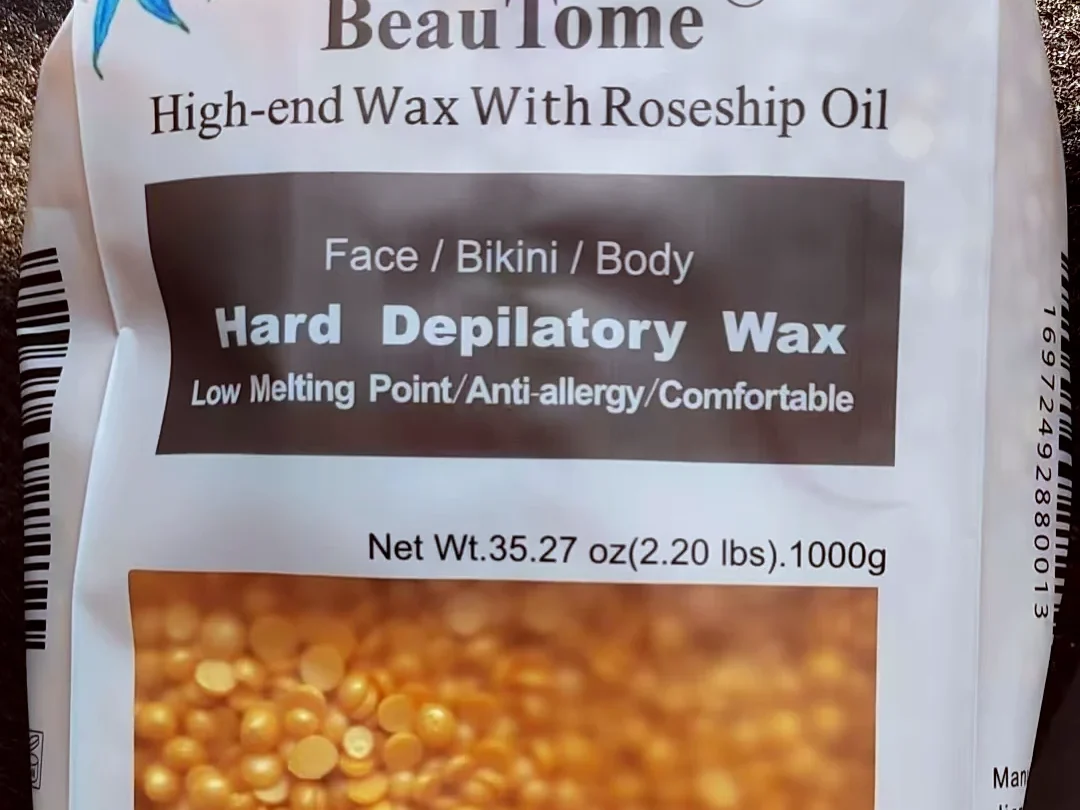
Gold is a standard color for Formula A1; the printed band is where the halal mark, the importer and the professional-use line all have to fit.
Four SKUs against one file
One certification exercise can usually carry the range, if the range is described honestly. Formula A1, the rosin-free flagship, works in a 45–50 °C range — a band, not a single number, because that is how a wax behaves in a room at 30 °C ambient — with Gold and Pink as standard colors and White as a custom color made to order. Formula A2 is the premium rosin cream-white bead, chosen for elasticity on short, dense hair. Consumer-Grade Hard Wax is the 55–60 °C film wax for high-volume strip work, and All-Purpose Soft Wax in the 450 g can covers the strip-and-cloth client. Bags run 300 g, 500 g and 1,000 g: 500 g is the standard salon unit, and 1,000 g only for a back bar with the weekly volume to finish it — a 450 ml warmer holds roughly 400 g, so a kilo bag is a storage decision as much as a price one. Private label runs at low MOQ with no printing cycle to wait for.
The calendar then sets the order date. The pre-Lebaran window is the year’s heaviest waxing season in both markets, and it follows a quiet month in which salons do not reorder. Work backwards from the season, not forwards from the production date: certification, artwork, production, then a buffer for the port. Distributors who opened their halal file in the third quarter of 2026 are shipping into this season; those who started in October are selling into the next one. Product specifications are on the wax formulas page, and the private-label route under OEM and ODM.
Quick FAQ
Is our wax already halal, or does it need certification?
Can we ship unlabeled bags and apply the halal mark ourselves?
Do we need separate certifications for Indonesia and Malaysia?
Next step
Tell us the market, the SKU mix and whether you are certifying under your own brand or supplying a licensed importer, and we will return a quotation with the ingredient dossier, the batch-record format and the label artwork schedule attached. For a quotation, contact Miro Wu, Dedicated Account Manager — email miro.wu@beautome.com or WhatsApp +86 188 1393 3019.