






Hard Wax for US Retail and E-Commerce: Small Formats, Amazon Gating and the Label That Moves to You
Everything a private-label wax brand sells to salons is a bulk transaction. Everything it sells on a US shelf or an Amazon listing is a consumer transaction with a different rulebook — a gate to pass before the first unit goes live, a federal listing behind it, and since January 2026, a labeling job that no longer gets outsourced to the warehouse. This is the retail line: what the bag looks like, which documents unlock the listing, and where the clear-bag workflow suddenly earns its keep.
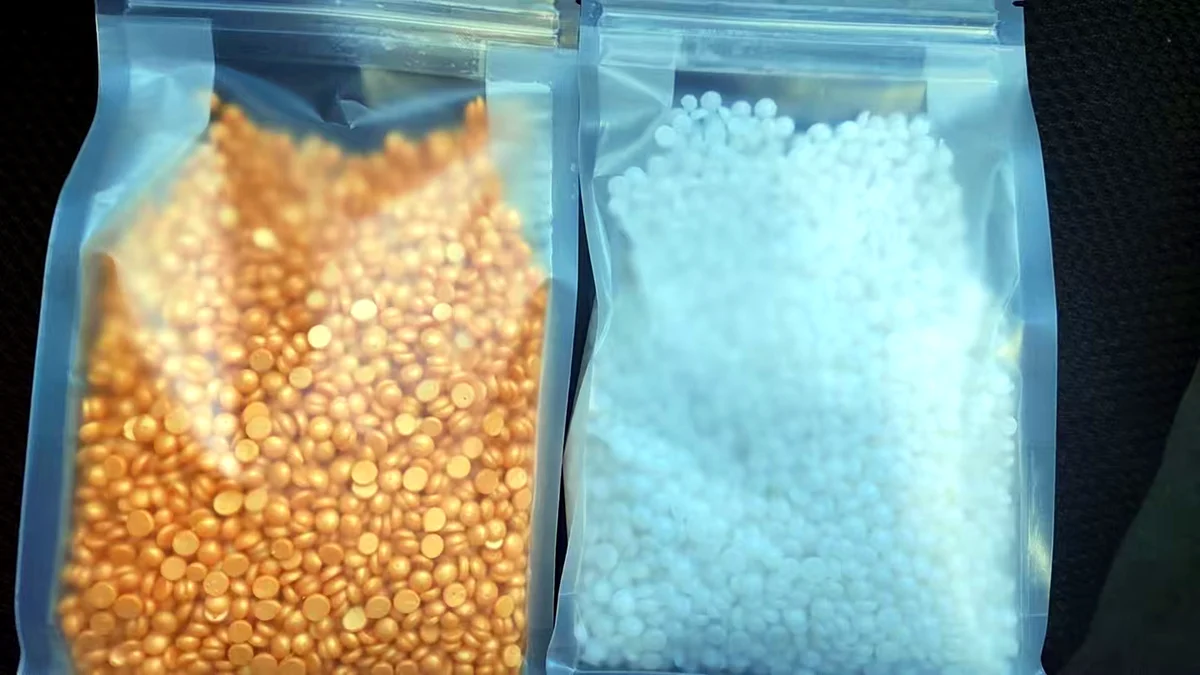
The unlabeled transparent bag is the retail shortcut: the formula is finished at the factory, the legal label goes on under your supervision, on your timeline.
The retail line is a different product than the salon line
The salon range is built around consumption: 500 g bags as the standard pot refill, 1,000 g for the back bar of a high-volume room. A retail shelf inverts that logic — the buyer is a household doing legs and brows once or twice a month, and the unit that moves is the 300 g bag: heavy enough to signal value, light enough to sit on a peg or an e-commerce fulfillment shelf without costing a fortune in freight per unit.
The four formulas map onto retail cleanly. The Consumer-Grade hard wax, a film wax with a 55–60 °C working range, is the retail workhorse — forgiving application, clean stripless removal, priced for volume. Formula A1, the rosin-free flagship with a 45–50 °C working window, is the premium and sensitive-skin position, in the standard Gold & Pink colors with White available as a custom color produced to order. Formula A2, the high-grip cream-white wax, stays mostly professional — its strength on short, coarse hair is a salon story, not a bathroom story. And the All-Purpose Soft Wax in the 450 g can remains a professional line: strip wax at home is a mess nobody repeats. A sensible US retail start is one hero SKU in 300 g with a second colorway behind it, not the whole range at once.
Two rules apply to every consumer bag regardless of formula. A professional use statement belongs on the salon SKUs, and its absence on retail SKUs is a deliberate signal — but the retail bag needs the full consumer labeling set described below. And storage advice stays honest: 15–24 °C, dry, out of the sun; wax beads tolerate a warm mailbox better than a hot garage.
300 g hero
The retail unit that moves — salon logic is 500 g refills, shelf logic is one bag a household finishes
120 days
Deadline for the responsible person to list each product with FDA after first marketing — updated annually
Jan 2026
Amazon discontinued its FBA prep and labeling services — labels and barcodes now go on before inbound, by you
Amazon gating is now a compliance checkpoint
Amazon’s beauty and personal care category is gated: a seller cannot simply create a listing. Getting approved requires a Professional selling plan, an invoice from the manufacturer or an authorized distributor dated within the last 180 days showing at least ten units, clear product photos, and MoCRA-related documentation — with reviews typically completing within one to five business days (Amazon seller guidance, 2026). For a private-label brand the invoice is where plans fail: the name and address on it must match the seller account exactly, which is why the supply agreement and the seller account should be set up in the same legal entity before the first purchase order is placed.
Gating is not bureaucracy for its own sake — it is the platform pushing the same question every retailer now asks: who is responsible for this product, and can you prove it?
The two FDA numbers behind the listing
Under MoCRA, the manufacturing facility must be registered with FDA (Form 5066), renewed every two years — for a foreign factory that includes a designated US agent. Separately, the responsible person — the brand named on the label — must list each product (Form 5067) within 120 days of first marketing and update the listing annually. Serious adverse events go to FDA within 15 business days, with records kept six years, or three for qualifying small businesses. Note the split: our factory holds the facility registration; you, as the label’s responsible person, hold the product listing. That allocation is exactly why the transparent-bag model works — the compliance identity follows the brand, not the factory (industry guidance, 2026).
Small-business exemptions exist, but read them as narrow before relying on one — and practically, a brand that wants Amazon’s beauty category will need the registration and listing file regardless, because the gate asks for them.
The label images Amazon asks for
At listing creation the product needs a standard identifier — a GTIN/UPC from GS1 — plus the usual attributes and images. When Amazon asks for compliance documents, the request is for images of the complete English label: the product name and identity statement, the full ingredient list, net contents in US customary units, the name and US address of the manufacturer, packer or distributor, required warnings, and the MoCRA US contact. Packaging must arrive new and sealed with lot numbers or similar codes visible (Amazon cosmetics policy, 2026). Every one of those fields is a line on the artwork — which is why the label template should be finalized before the listing, not after Amazon requests it.
Claims discipline belongs in the same breath. Waxing and hair removal sit comfortably in cosmetic territory; the moment a listing drifts into treating or preventing a condition — the vocabulary of OTC drugs — the product leaves the cosmetic lane and takes the listing with it. Keep the copy about hair, skin comfort and ease of use, and the review stays boring in the best way. California adds one more overlay: if the product ships there, a Prop 65 assessment of the formula and packaging is standard practice.
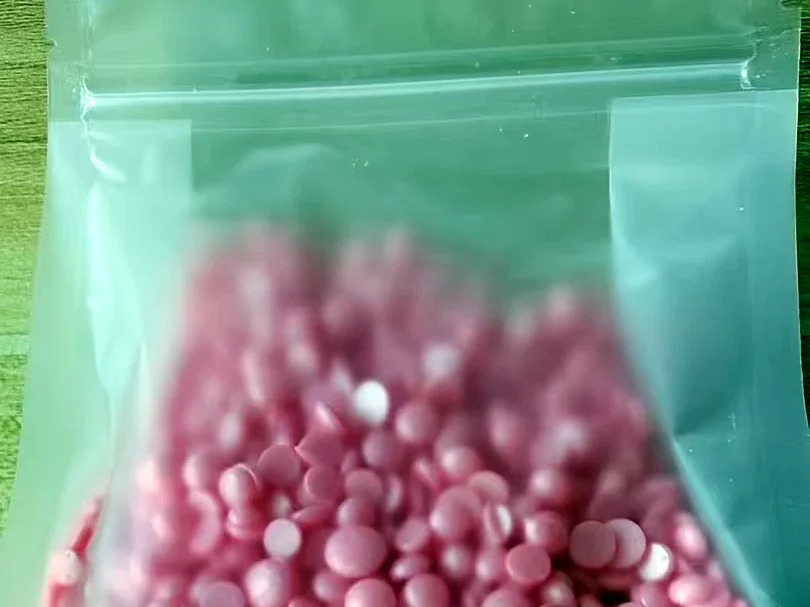
Batch code on the bag seal, legal label from your artwork: the two-layer system that keeps a retail bag both traceable and brandable.
January 2026: the labeling moved to you
Until this year a US seller could send retail inventory to Amazon and pay the platform to apply barcodes and prep the packages. As of January 1, 2026, Amazon has discontinued its FBA prep and labeling services for US sellers (industry guidance, 2026). Every unit now arrives at the fulfillment center already labeled and coded — and rejected at the door if it is not.
This is precisely the workflow the unlabeled transparent bag was built for. The factory ships bags carrying only the batch code and production date; the brand applies its own label — full ingredient list, net contents in both US and metric units, warnings, US contact — at its own facility or 3PL, on its own timeline, with its own GS1 codes. The low MOQ on unlabeled bags means a retail test costs a print run of labels, not a print run of packaging: if the hero SKU misses, the bags return to the professional line as salon refill stock and nothing is stranded. Order the blank bags with the lot field positioned for a standard label patch, and the same bag serves both channels.
Put together, the retail launch has four anchors: the 300 g hero bag with a finalized consumer label template, the FDA facility registration behind it (ours, with US agent), the product listing under your responsible person (Form 5067, within 120 days of first marketing), and labels applied before FBA inbound. The formulation and private-label terms sit on the Wax Formulas page, the branding workflow is under OEM and ODM, and the salon-side history of these two SKUs — batch codes, shelf-life logic and recall drills — is in this article, with the distributor tier structure in that one.
Quick FAQ
Can I sell the salon 500 g bag on Amazon as-is?
Who is the responsible person if the factory is overseas?
Why unlabeled bags instead of pre-printed retail packaging?
Next step
Tell us the retail SKU you want to test, the colorway, and whether you already hold a seller account in the entity that will be the responsible person. We will return a quotation with the unlabeled bag spec, the label template fields and the document set for the Amazon gate. For a quotation, contact Miro Wu, Dedicated Account Manager — email miro.wu@beautome.com or WhatsApp +86 188 1393 3019.