







The Dual-Pot Wax Station: Two Working Temperatures, One Footprint
Somewhere in almost every salon there is a pot set to a compromise temperature — hot enough to keep a film wax flowing, too hot for the rosin-free formula sitting in the same bath. The two-temperature problem is the quietest efficiency leak in waxing rooms, and it is the reason the product line ends with a dual-pot station: two independent controls, two waxes, one piece of equipment. This brief works through why the two temperatures cannot share a pot, what the dual-pot station actually changes in a working day, and how the arithmetic looks from the distributor’s side of the counter.
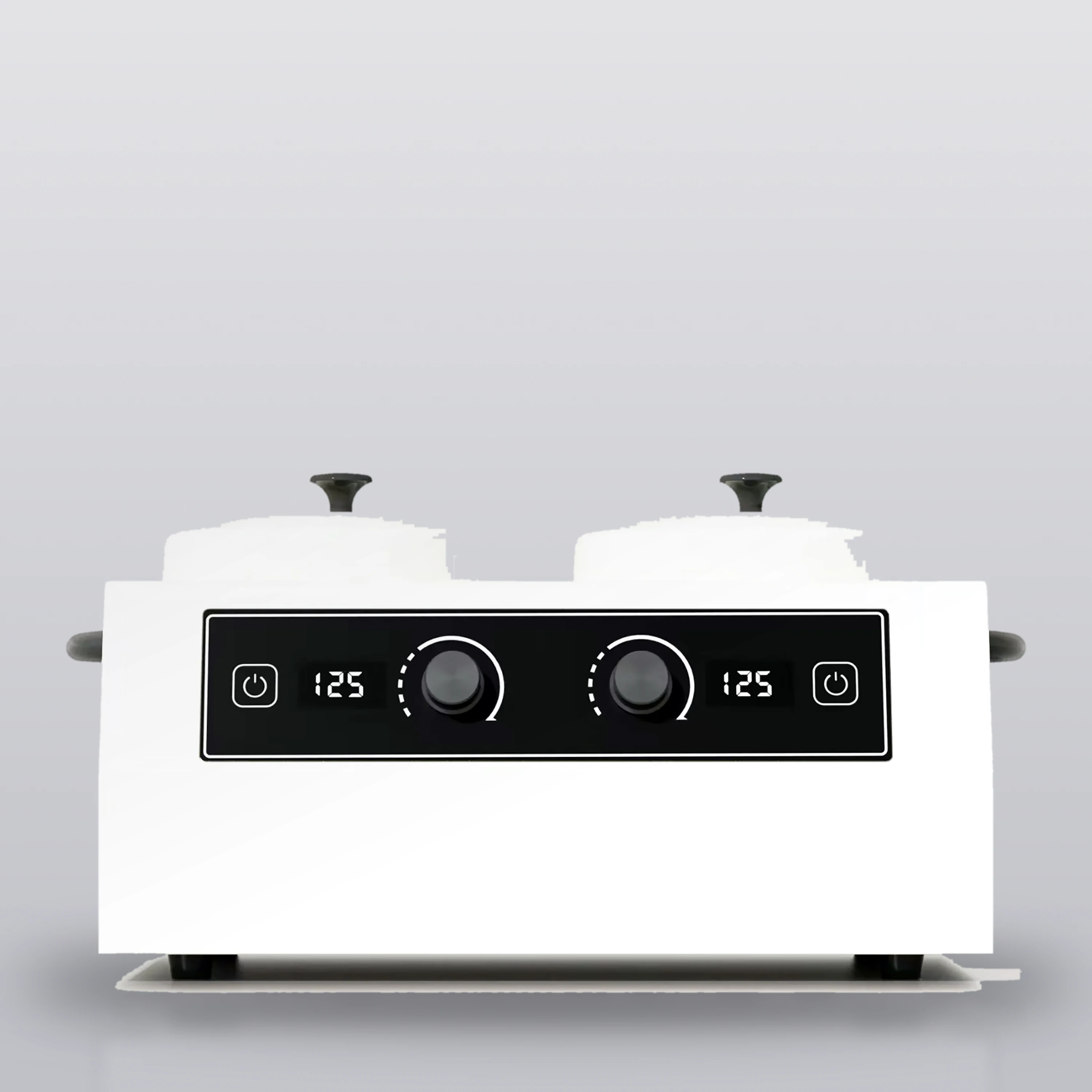
Two controls, two waxes, one station — the answer to a compromise that costs every single day.
Why the two temperatures cannot share a pot
Professional waxing runs on two working windows. Rosin-free hard waxes melt and work at roughly 45–50 °C — the low window that protects skin on first-time clients, sensitive services and Brazilian work. Film-style hard waxes work at roughly 55–60 °C — hot enough to spread into the thin, fast-setting film that pulls short, coarse hair in one pass. These are not preferences; they are the physical windows the formulations are built around.
Set one pot between the two and both formulas lose. The low-temperature wax runs above its window: it gets runnier, grips less predictably, and the “gentle” selling point quietly disappears. The film wax runs below its window: it never spreads thin, sets early and tears instead of peeling. A technician who spends the day nudging a dial between two wrong temperatures produces two kinds of rework — and rework, not wax price, is the cost that actually decides whether a waxing service makes money.
The global hair removal wax market was valued at USD 2.34 billion in 2026, projected to USD 3.53 billion by 2032 at 6.68% CAGR (Research and Markets, 2026), with hot wax holding about 55.4% of demand (Market Growth Reports, 2026). Growth keeps pulling more formulas into the same treatment room — which is exactly what turns one pot per room into two temperatures per room.
45–50 °C
Working window for rosin-free hard wax — sensitive and first-time services
55–60 °C
Working window for film hard wax — coarse hair and one-pass pulls
USD 2.34B
Global hair removal wax market 2026, to USD 3.53B by 2032 (Research and Markets, 2026)
What the dual-pot station changes in a working day
The dual-pot models in the line — SW6B with two 400 ml pots, SW8B with two 800 ml pots — put two independent controls in one housing. Each side holds its own formula at its own window, all day, without a technician touching a dial. Three things change at once:
Throughput stops dropping at the worst moment. The mid-afternoon slot is when mixed bookings stack up — a Brazilian at 14:00, a back-and-chest at 14:45. With two pots live, the technician switches formulas, not temperatures; the waiting time between services becomes peel-and-wipe time instead of reheat time. The gram arithmetic behind the pots stays the same as everywhere else in the line: a 450 ml pot holds roughly 400 g, about one technician’s day, so each side of a dual station carries a full working load rather than half of one.
The room buys capacity without buying furniture. Two separate warmers mean two power cords, two footprints and two things to clean around. One dual station halves that: a single footprint, a single plug path, one lid-off cleaning routine. In the small treatment rooms that dominate city salons — where a second pot has to compete with a trolley for floor space — that is not a nicety, it is the difference between the second temperature existing at all.
Training becomes one rule instead of a judgment call. “Left pot gentle, right pot film” is a rule a new technician holds from day one. Temperature judgment is exactly the skill that takes months to build and that drives the rework described above; a fixed two-pot layout deletes the judgment from the daily routine.
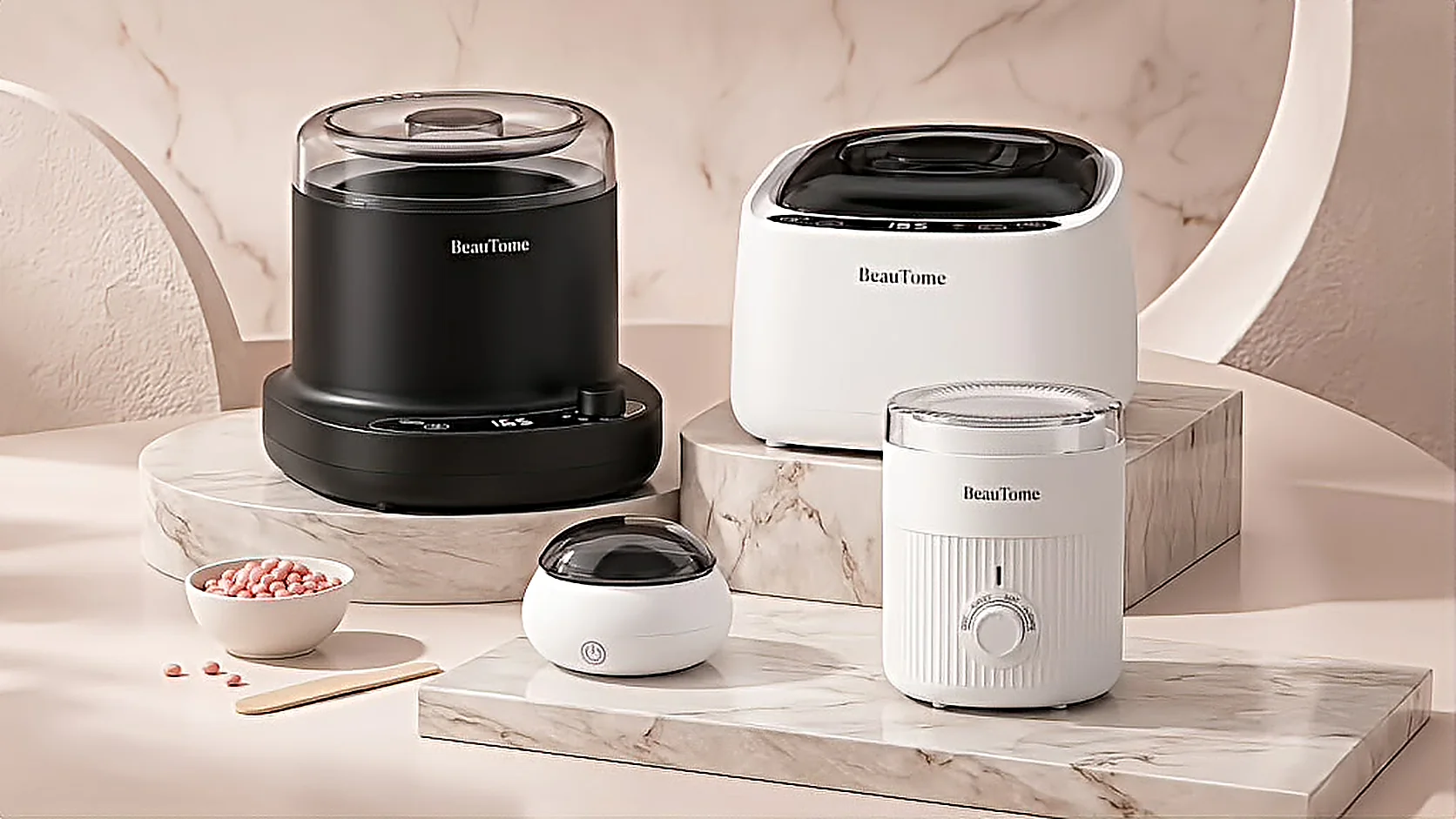
The dual station sits at the top of a 20–800 ml ladder — same chip-controlled temperature logic at every size.
Where the dual pot sits in a distributor’s line
For a distributor building the range, the dual-pot models are not a fourth size of the same product — they are the upsell that completes the capacity story. The ladder already answers “how much wax does this room burn” from the 20 ml detail pot through 180 ml mobile, 250 ml single services, 400–450 ml single-technician work and 500 ml digital control. The dual station answers a different question — “how many formulas does this room run” — and it is the one model that sells itself to a buyer who already owns two warmers, because replacing two units with one station is a space story, not a price story.
It also carries the consumables conversation. A salon that runs two temperatures properly stocks two formulas — the rosin-free bag and the film wax bag — and restocks both on the cycle the pots create. Distributors who lead with the dual station tend to find the wax conversation opens on capacity and ends in a standing consumables order, which is where the margin actually lives.
Two practical lines belong on every purchase order for the dual models: confirm the voltage and plug for the destination market — the station draws for two pots at once, so the circuit question a single pot raises gets asked twice — and book the first-order spare-parts set (heating elements, inner pots, controls) at roughly one set per ten units, because a dual station that loses one side is a single pot with half its selling point.
Quick FAQ
Can a salon just keep two separate warmers instead?
Which formulas should run in each pot?
Does the dual station change the wax consumption math?
Next step
Tell us your market and your typical treatment-room layout, and we will return the dual-pot specification, the destination-market voltage and plug configuration, and a starter consumables mix to match the station. Contact Miro Wu, Dedicated Account Manager — email miro.wu@beautome.com or WhatsApp +86 188 1393 3019.
Related: the wax heater product line, the formula range behind the two windows, the 20 ml detail pot, and the full article index.