



Wax Heaters for Serbian and Croatian Salons: One Plug, Two Conformity Routes
A distributor in Belgrade selling into both Serbia and Croatia has an unusual advantage and an unusual trap. The advantage is physical: 230 V at 50 Hz, type C and type F sockets, one cord set, one heater. The trap is legal: the same unit needs a Serbian conformity mark to enter Serbia and a CE declaration with an EU-established operator named on the packaging to enter Croatia — and neither document is accepted in place of the other.
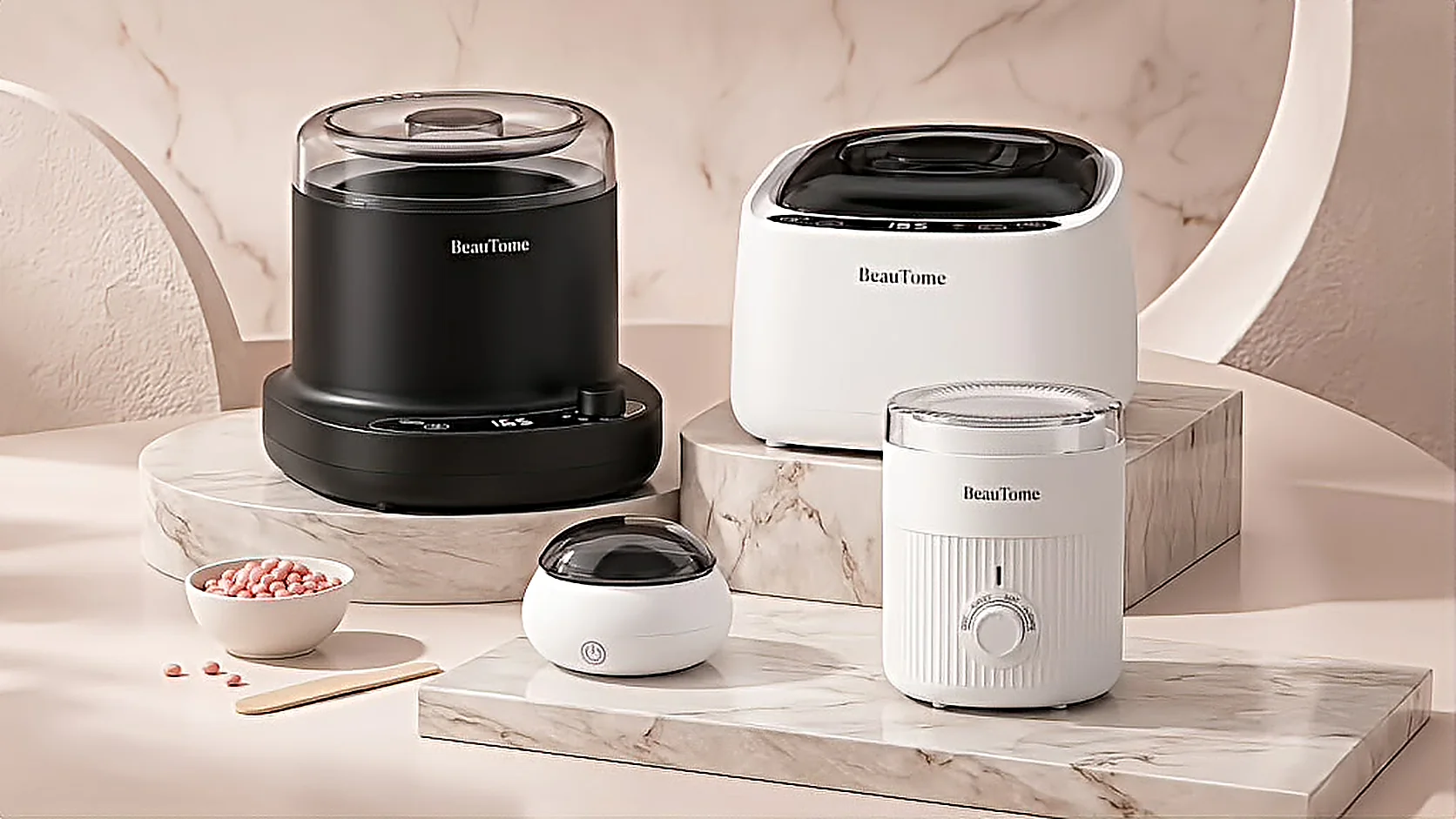
One hardware platform, two conformity routes: the heater does not change between Belgrade and Split, but the nameplate, the carton and the certificate do.
What is genuinely identical
Start with what does not need a decision, because it is a short list and it saves money. Both markets run 230 V at 50 Hz. Both accept type C (Europlug) and type F (Schuko) — Croatia as an EU member, Serbia as a market that has aligned its electrical requirements with European practice. One molded cord set per unit covers the pair, and there is no dual-voltage variant to stock, no 60 Hz question, no transformer conversation.
The application does not change either. A treatment room in Novi Sad and a treatment room in Split both need a pot that holds a set temperature for eight hours, a lid that closes between clients, and an inner pot that can be lifted out and cleaned to the bottom. The difference between the two markets is not the wax; it is the paperwork that has to travel with the heater.
Serbia: the mark is AAA, and CE does not replace it
Serbia is not an EU member. Its product safety framework rests on the Law on Technical Requirements for Products and Conformity Assessment (Official Gazette of the Republic of Serbia No. 36/09), with the shape and use of the conformity mark set out in the rulebooks issued under it (98/09, later amended by 23/17). The mark itself is the AAA mark — three capital A’s arranged in an equilateral triangle — and for products within its scope it is the only lawful mark for placing goods on the Serbian market.
Four details decide whether an order clears or stalls:
The applicant must be local. A foreign manufacturer cannot file directly. The application goes in through an authorised representative established in Serbia, and the certificate is issued to that holder. When a distributor changes, the certificate does not automatically follow — that is a commercial risk worth writing into the distribution agreement, not discovering at customs.
CE is the technical basis, not the permission. Serbian rules were built by transposing European directives, and harmonised European standards are accepted as evidence against Serbian essential requirements, so existing CE test reports are normally enough to avoid repeat testing. They shorten the route; they do not remove it. Plan on a certificate validity of about three years and a technical file that has to be kept for ten.
The mark has a specification. Minimum height 5 mm, applied to the product where possible and otherwise to the nameplate, packaging or accompanying documents, with the notified body’s number and the year of issue in the prescribed positions. A sticker printed in the warehouse rarely satisfies the dimensional and positional requirements, and a sticker that lifts off in a 32 °C room is the first thing an inspector picks at.
ACAA is coming, but not yet. Serbia has been negotiating an Agreement on Conformity Assessment and Acceptance of Industrial Products with the EU. If it enters into force — or if Serbia joins the Union — CE will take over from AAA. Until then, a CE-marked heater with no AAA certificate is simply not placed on the Serbian market, however good the file behind it is.
Croatia: CE, and the importer’s name on the box
Croatia has been an EU member since 1 July 2013, so the route is the ordinary European one: Low Voltage Directive 2014/35/EU, EMC Directive 2014/30/EU, RoHS 2011/65/EU, CE marking, a declaration of conformity, and the technical file. Since Regulation (EU) 2019/1020 came into application in July 2021, an economic operator established in the EU must be identified on the product or its packaging — which for a Chinese factory normally means the Croatian importer or the distributor’s EU entity.
Two Croatian specifics are easy to forget. Instructions and safety information must be in Croatian, and the party placing the equipment on the market carries the WEEE and packaging obligations for it. Neither is onerous; both are the kind of item that surfaces after the container has landed, when the fix is a reprint rather than a proofread.
5 mm
Minimum height of the Serbian AAA conformity mark, with the body number and issue year in the prescribed positions
~3 years
Typical validity of a Serbian conformity certificate — and it is issued to the local applicant, not to the brand
1 : 10
Spare parts per working units — fuses, thermostat, cord set — the ratio that keeps a distributor’s promise of same-week replacement
One SKU, two artworks — separated at the factory
This is where the trap sits. The same heater leaves the factory with two different identities: for Serbia, a nameplate carrying the AAA mark and Serbian-language instructions; for Croatia, a nameplate carrying CE, the EU operator’s name and address, and Croatian-language instructions. The bill of materials is identical. The label, the manual and the carton are not.
The mistake is to ship one version and sticker the other locally. On the Serbian side, the mark has a dimensional and positional specification and a certificate behind it, so a warehouse sticker invites a question the distributor cannot answer. On the Croatian side, adding a non-EU mark to a CE-marked product muddies the declaration the importer has to sign. Separate the labels at the factory and print the destination on the carton — it is the cheapest compliance decision in the whole order.
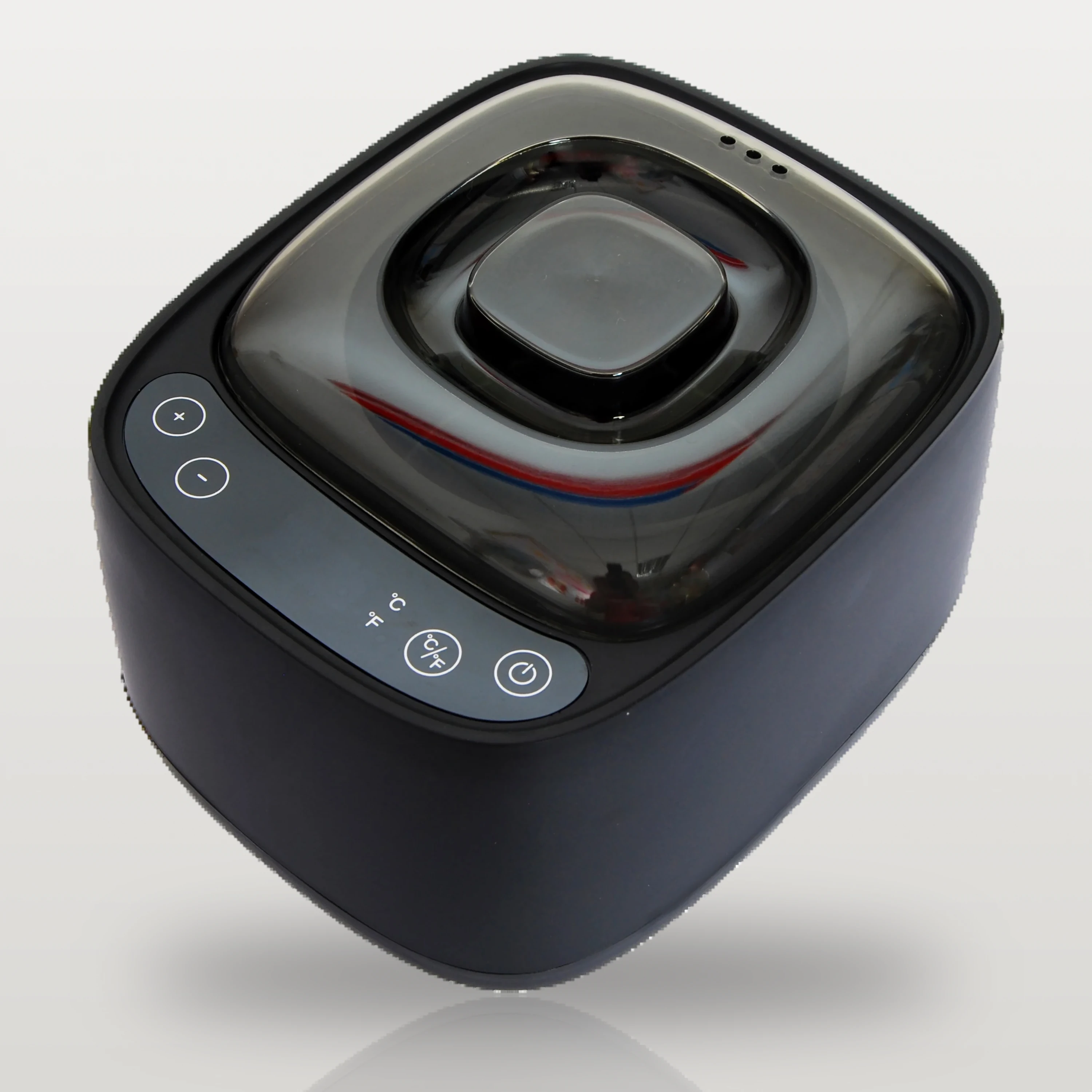
A 450 ml pot holds roughly 400 g of beads — about one technician’s day across a normal menu, and the default first pot in a small single-owner room.
The room decides the capacity, not the country
Serbian and Croatian salons are overwhelmingly small and single-owner, which makes the buying decision short: the owner is the buyer, the demo happens on her bench, and the argument that wins is the one about her own minutes. Three numbers organise the range.
450 ml is the workhorse. It holds roughly 400 g of beads, which is about one technician’s day across a normal menu. 180 ml is the second pot for brow, lip and face work — it is not a smaller version of the workhorse, it is a different job. 800 ml and the double-pot stations are for rooms running two technicians or a high-volume waxing menu, where the constraint is refill time rather than floor space.
Then the temperature question, which is where most first orders are wrong. Hard wax and film wax do not share a working band — the low-temperature rosin-free band and the higher film-wax band are roughly ten degrees apart — so a room running both needs two pots, not one pot turned up between clients. Turning a pot up and waiting is how wax gets scorched, and scorched wax smells like a complaint.
Which brings the control question. A bimetallic thermostat swings around its set point; the swing is invisible in winter and obvious in a room at 32 °C in July, when the pot overshoots between clients and the wax at the wall of the inner pot discolors first. Chip control holds the set point, and over a year of daily use the difference shows up as less wax thrown away and fewer mid-service top-ups — a cost argument, not a feature argument, which is the only kind that survives a conversation with an owner.
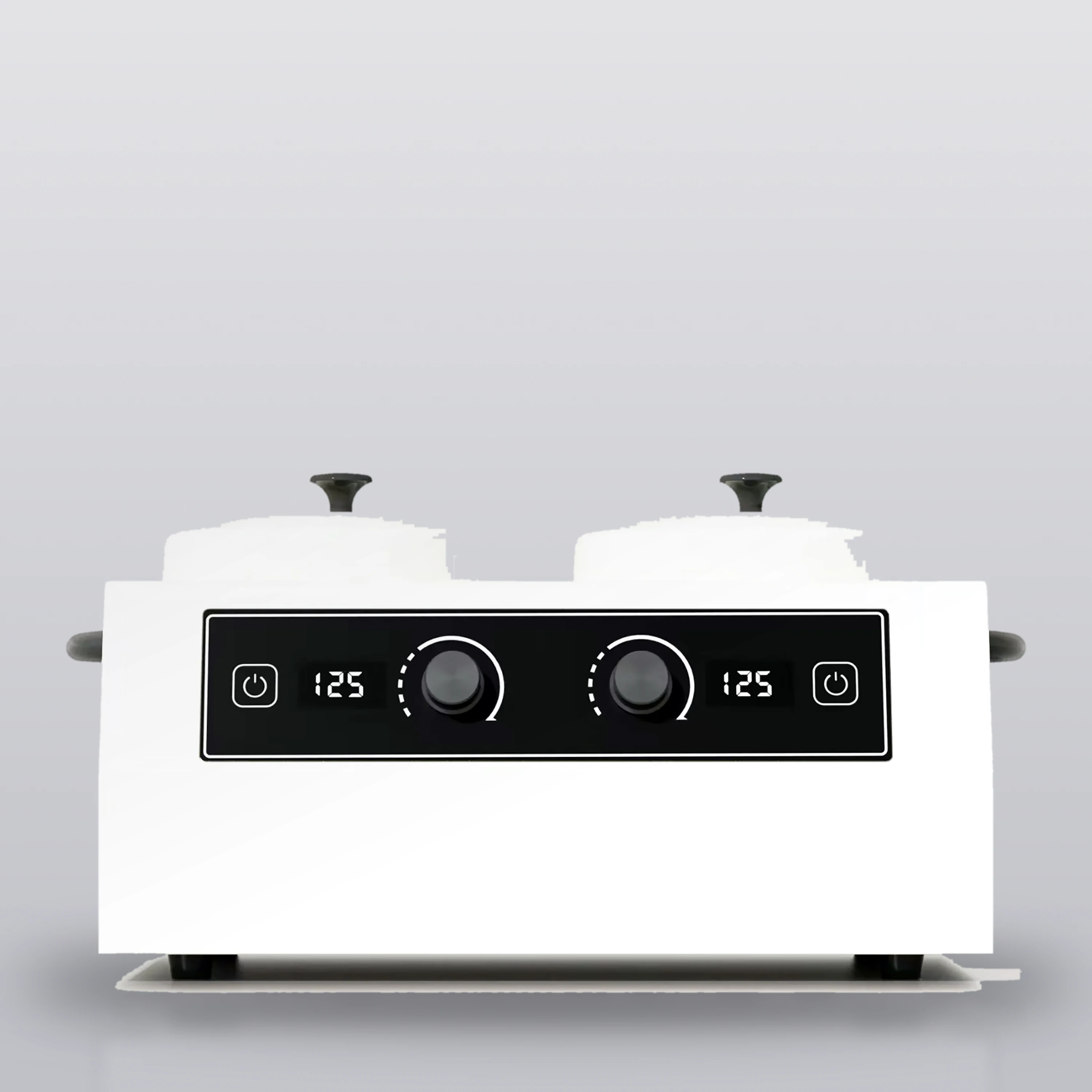
Double-pot stations exist for one reason: two working temperatures running at the same time, not one pot turned up between clients.
The part that decides the second order
Neither market rewards a distributor who sells a heater and disappears. What both reward is the same-week replacement: fuses, a thermostat, a cord set, an inner pot. Carry spares at roughly 1:10 on the wear items, keep them in 230 V configuration, and put the replacement promise in writing — because in a market of single-owner salons, the recommendation that wins the next ten customers is the one given by the owner whose pot was fixed on a Tuesday.
Both markets also share a season: July and August heat, rooms without air conditioning, and wax that arrives soft after a day in a van. Storage guidance travels with the product, and it is worth printing on the inner lid as well as in the manual.
What to write into the purchase order
Split the order by destination, not by model: Serbia lines with the AAA nameplate and Serbian instructions, Croatia lines with CE plus the EU operator and Croatian instructions. Add the cord set as its own line even though it is the same plug for both, so the factory cannot assume. Specify the working temperatures you need per room, the number of pots per room, and the spare kit. Then put the conformity route in writing for each destination — who applies, who holds the certificate, and what happens when the distributor changes.
For the hardware side of the decision, the wax heater range carries all ten models from 20 ml to 800 ml, including the 450 ml single-knob entry unit, and the OEM/ODM program covers what can be changed on an existing mold — nameplate, cord set, color and carton — and what cannot.
Quick FAQ
Can one CE certificate cover both Serbia and Croatia?
Do I need separate heater models for the two markets?
How many pots does a small two-technician salon actually need?
Next step
Tell us how many treatment rooms you supply, which markets each shipment is destined for and which working temperatures each room runs, and we will return a split order sheet: models per room, nameplate and manual version per destination, and a spare kit sized to your installed base. Contact Miro Wu, Dedicated Account Manager — email miro.wu@beautome.com or WhatsApp +86 188 1393 3019.
Related: all buyer topics for distributors, the full product range, and the depilatory wax range that runs in these pots.