







Wax Heaters for Israeli Salons: The Week, the Room and the Plug
Israel is a small market with a short country and a long week. Tel Aviv to Haifa is ninety minutes, one warehouse covers the territory, and a distributor can serve the whole country from a single address. What makes the market different is not geography — it is that the working week, the size of the treatment room and the wall socket each change what salons actually buy. Get those three right and the range becomes obvious. Get them wrong and you ship 800 ml pots into rooms that hold two chairs.

The same range, six different rooms. In Israel the room count and the working week decide the mix long before price does.
The week: one cold start, every week
Most Israeli businesses work Sunday to Thursday, Friday is a short day, and a large share of salons close from Friday afternoon through Saturday. Confirm the actual schedule with the buyer — it varies by city and by ownership — but plan on this shape: five full days, one half day, one closed day.
That shape produces a pattern European suppliers rarely plan for. The pot is switched off on Friday afternoon, sits cold through Saturday, and has to reach working temperature for the Sunday morning appointments. It is the one cold start that repeats every single week, and it is the number that decides whether the first client of the week waits.
So when you quote, quote warm-up time at full load, measured at a stated room temperature — not the empty-pot figure from a brochure. A 450 ml pot filled with beads behaves very differently from an empty chamber, and a technician who arrives forty minutes early to find the wax still solid will not blame the schedule; she will blame the machine.
Two practical consequences follow. First, a lid matters: an uncovered pot left at working temperature all day oxidizes faster and skins over, and the skin has to be skimmed before the first client. Second, the half-day Friday changes the afternoon peak, not the morning one — the heavy booking block is Sunday to Thursday between midday and evening, which is exactly when a pot that cannot hold temperature under repeated lid openings becomes visible.
The room: small, shared and multi-purpose
Israeli studios tend to be compact and multi-purpose. The same room does brows in the morning, waxing in the afternoon and nails on a Thursday evening. That changes the range in a way a square-meter calculation does not capture.
One 450 ml pot holds roughly 400 g of beads, which is about one technician’s working day on a mixed menu. That is the working standard for a single treatment room, and it should carry the largest share of any order. A 180 ml unit is the second pot: brows, face, a second formula, or a room that only books short appointments. A 250 ml suits a single-service esthetic room where a 450 ml pot would sit half full and oxidize. A 500 ml digital earns its place where the set point has to be written into a procedure — chain manuals, training, inspection-facing clinics. An 800 ml belongs in high-throughput bars and on back-and-chest work, where a technician would otherwise refill mid-service.
And then the one rule that overrides the ladder: two working temperatures mean two pots. A rosin-free hard wax in a 45–50 °C window and a film wax at 55–60 °C cannot share a setting, and switching a pot between them costs more minutes per week than the second pot costs once. In a small room, the answer is not a bigger pot but a double-pot station — two chambers on one base, 400/800 ml, two temperatures, one footprint.
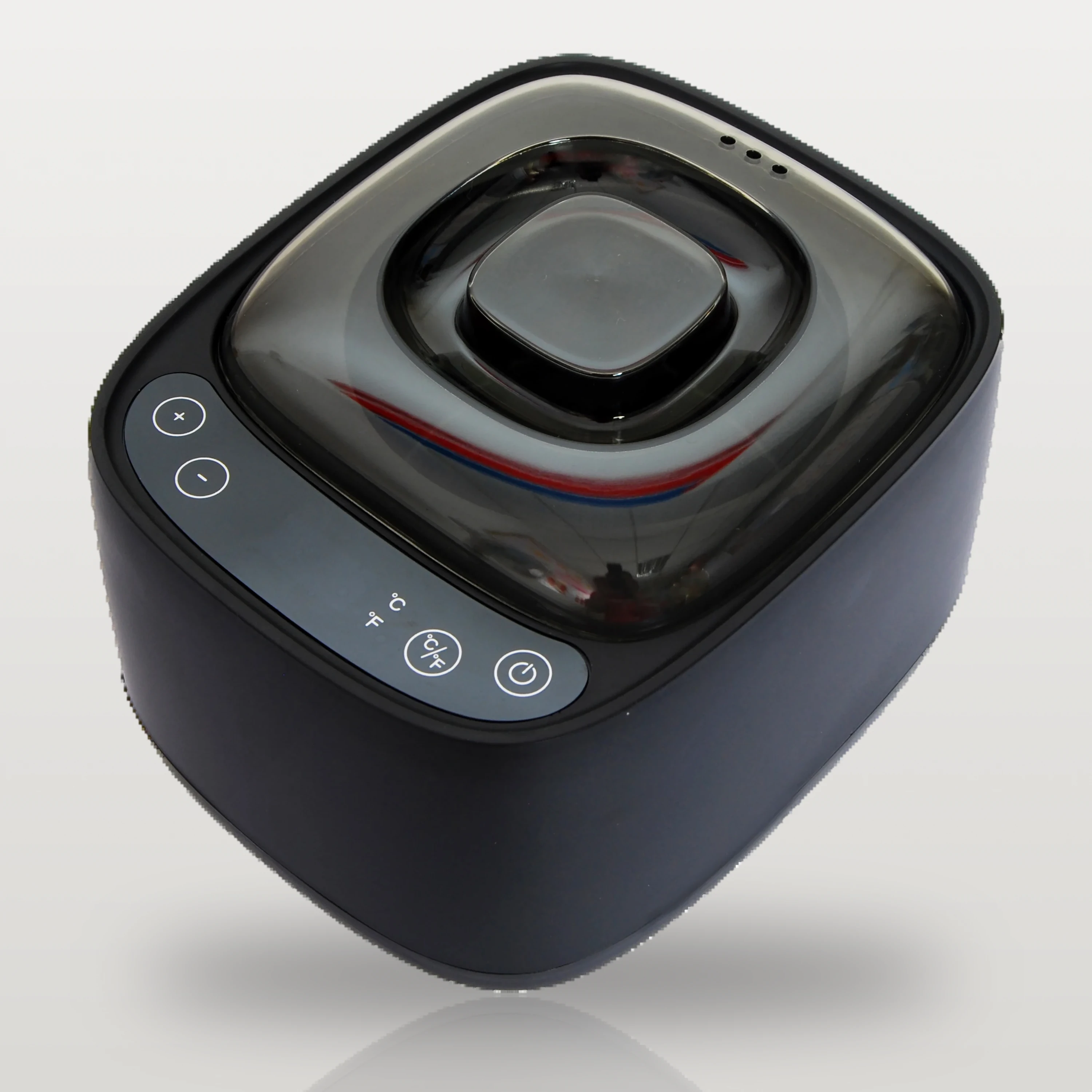
The 450 ml workhorse: about 400 g of beads, roughly one technician’s day, one working temperature — the model that should carry half of any Israeli order.
The plug: SI 32, and a certificate you cannot hold yourself
The electrical side is the part that stalls shipments. Israel runs on 230 V, 50 Hz, and the standard plug is SI 32 — the three-round-pin type H, rated 16 A, with sockets that also accept the two-pin Europlug. In practice that means one molded cord type covers the market, and a European Schuko cord does not: an adapter is a workaround, not a shipped configuration. Put the plug on its own line of the purchase order, and add spare cords at roughly one per ten units.
Certification is the second gate. Electrical products fall under the mandatory standards administered by the Standards Institution of Israel (SII) under the Standards Law of 1953, and the certificate is held by an Israeli importer or authorized representative — not by the factory. Two routes exist and they are not equivalent: a type-approval route, where the model is tested and approved before shipment, and a shipment-inspection route, where goods are tested batch by batch at the border. The second route carries the risk, because a failed batch is a container sitting at customs. Higher-risk classes also carry annual factory inspection, so the file has to survive year two, not just the first shipment.
Three things follow for a heater program. The nameplate must state 230 V, 50 Hz as a single string — there is no need for a voltage range here, and a range invites questions. The manual and labeling should ship in Hebrew, with English alongside, and the on-unit markings should be confirmed with the importer before the cartons are printed. And the technical file, the test report and the declaration must all describe the same model designation that appears on the nameplate, the carton and the invoice. A mismatch there is the most common reason a certificate is questioned after the goods land.
230 V / 50 Hz
Single nameplate string, SI 32 three-round-pin cord, molded — not an adapter
Importer holds it
The SII certificate sits with the Israeli importer or representative, never with the factory
1 : 10
Spare parts and cords per unit: element, inner pot, controller, knob, lid, cord
Heat, humidity and where the wax is stored
The coastal strip is humid for most of the year — Tel Aviv in August sits in the eighties percent — while Jerusalem and the Dead Sea are dry and hotter. Rooms are air-conditioned, storage often is not. Wax beads are hygroscopic at the surface and soften in heat, so the storage instruction matters more here than in northern Europe: 15–24 °C, dry, out of direct sun, off the floor, and bags resealed after opening.
The delivery moment is where the damage happens. A pallet that has crossed a hot loading dock will arrive warmer than the storage band, and opening a bag immediately produces condensation on the beads. Let the pallet come back to room temperature first, then open. That single instruction, printed on the carton in Hebrew and English, prevents most of the “the wax arrived sticky” complaints that reach a distributor in September.
A purchase order that survives the border
Six lines, in this order: model mix (450 ml as the head, 180 and 250 as the second pots, 800 and digital for the specific accounts), nameplate string 230 V / 50 Hz, molded SI 32 cord as its own line with 1:10 spares, Hebrew and English manual and label artwork approved by the importer, spare-parts kit at one per ten units held at the distributor’s warehouse rather than the factory, and the certification route written down — type approval or shipment inspection — with the responsible Israeli entity named.
Because the country is small, one warehouse in the center can reach most of the market the next day, which means the distributor can afford to hold the spare kits and the second-pot sizes that a larger territory could not. That is the structural advantage of this market: service level is cheap here, and a supplier who can support a next-day repair wins accounts that would otherwise buy on price.
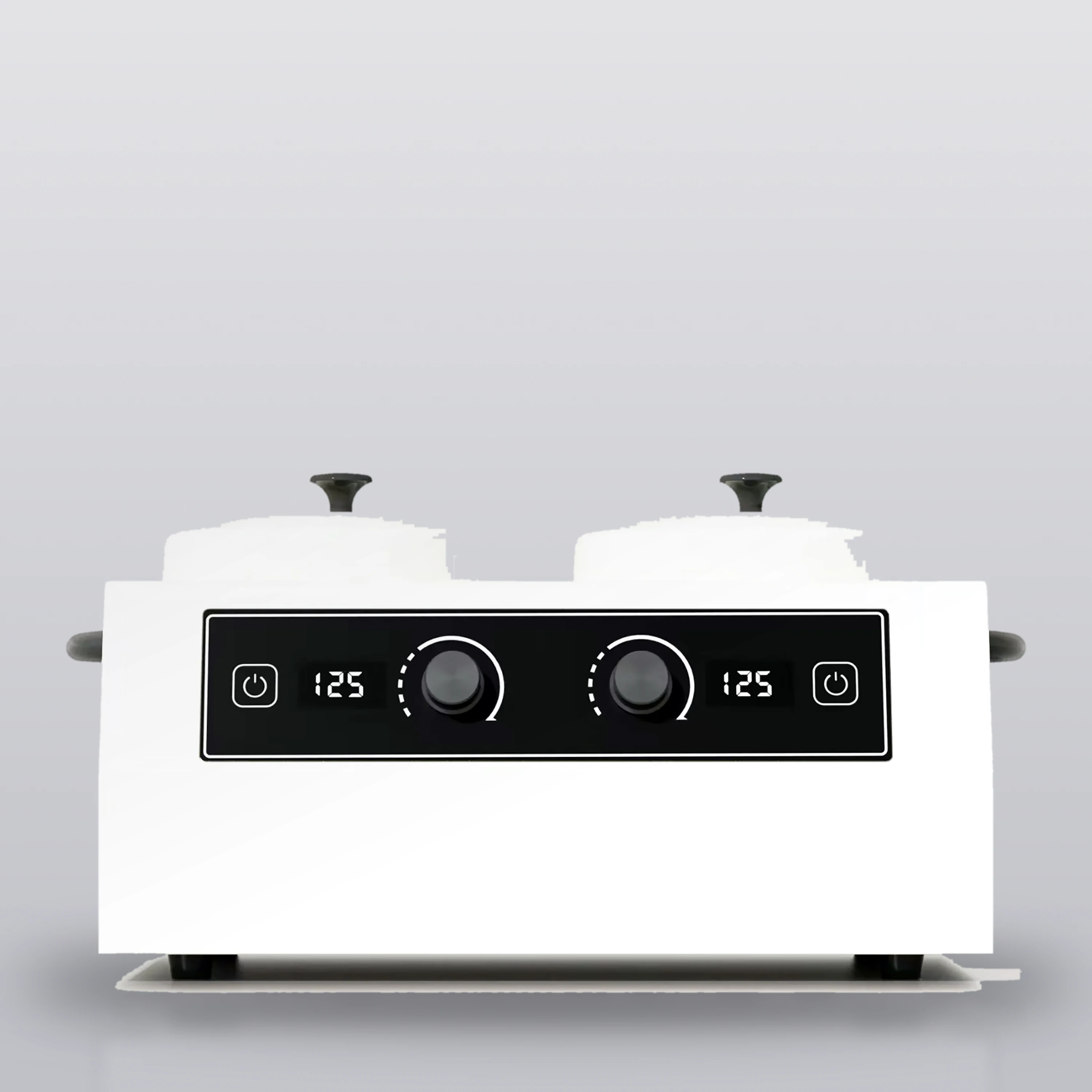
Two chambers, one base: the configuration that lets a compact Israeli room run a 45–50 °C and a 55–60 °C formula without a second footprint.
Quick FAQ
Which plug does an Israeli salon actually need?
Who holds the SII certificate, the factory or the importer?
How many pots does a two-chair studio need?
Next step
Send us your room count, the formulas you intend to carry and your importer’s certification route, and we will return a model mix with spare-parts ratio, cord schedule and label artwork checklist for the Israeli market. Contact Miro Wu, Dedicated Account Manager — email miro.wu@beautome.com or WhatsApp +86 188 1393 3019.
Related: the full wax heater and warmer line, the formula range that determines how many pots a room needs, and our range audit for distributors planning a container.