







Wax Heaters for German Salons: The Test Sticker, the GS Mark and Year Three
In Germany a wax pot is not a countertop appliance. It is work equipment in a workplace, it carries an inspection sticker with a date on it, and somebody has to produce a record when the date comes round. That single administrative fact decides which heaters survive a German salon chain and which ones get replaced in year three — and it is almost never mentioned in an export quotation. Here is what the sticker actually requires, what a tester needs from the pot, and how to build a range that passes the test instead of failing it.
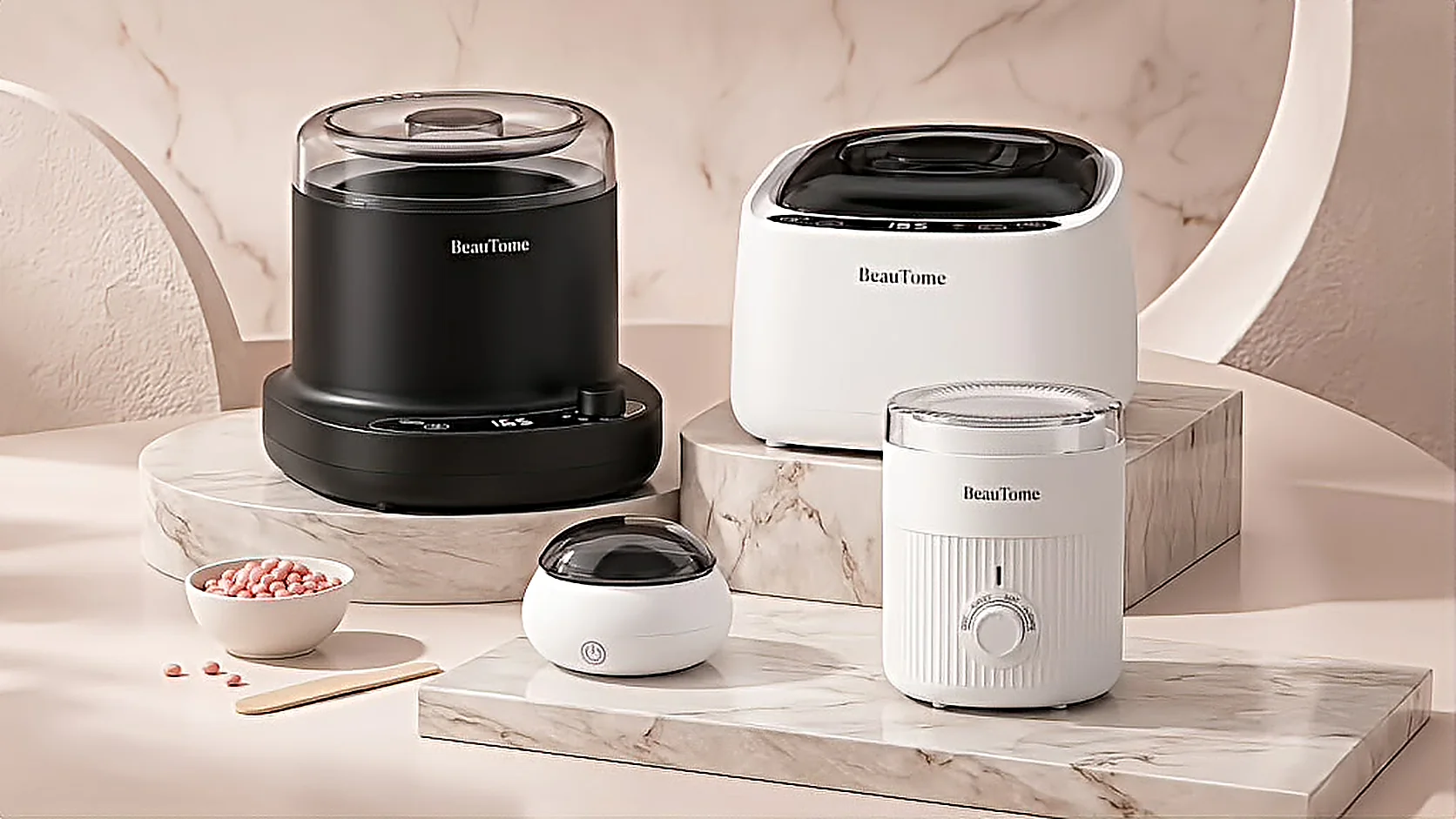
Nine models, 20–800 ml: in Germany the size ladder is only half the decision — the other half is whether the unit can be inspected and documented.
The market, in three different counts
German salon data is unusually well documented and unusually inconsistent, because three providers count three different things. Rentech lists 13,999 beauty salons as of 1 April 2026, up 2.56 percent from 2023, with 88.52 percent single-owner operations, an average salon age of five years and two months, and North Rhine-Westphalia (4,060), Bavaria (2,452) and Baden-Württemberg (1,282) taking the top three places. POIData counted 41,734 beauty salon listings in May 2026, which includes spas and mixed businesses. CompanyData tracks 29,868 registered beauticians, of which 95 percent are sole traders and 99 percent operate a single site.
The gap between the three is a definition gap, not a growth story, and it does not change the commercial conclusion: the buyer is the owner standing at the counter with a cloth in her hand. She does not issue a purchase order, she does not read a data sheet in English, and she will not buy a second pot from a supplier who left her without one for three weeks.
Your wax pot is a tested appliance
Under the German Operational Safety Ordinance (BetrSichV), the employer sets inspection intervals from a risk assessment (§3), and inspections of work equipment must be carried out by a competent person — a befähigte Person — under §14. That person is not bound by instructions on technical matters (§14(6)), and the result of every inspection must be recorded and kept at least until the next inspection (§14(7)), stating the type and scope of the inspection, the result, and the name and signature of the inspector. Failing to inspect, inspecting late, or not recording the result is an administrative offense under §22(1), numbers 28 to 31.
Two technical details follow from that. Repeat inspections of portable electrical equipment are carried out to DIN EN 50699 (VDE 0702), and inspections after a repair to DIN EN 50678 (VDE 0701). And the sticker on the housing that shows the next due date is not the record — the record is a document with a name and a signature on it. German inspection guidance in 2026 is consistent on this point, and the employers’ liability insurance association’s recommended intervals (VBG, May 2026 edition) are guidance, not a legal substitute for the employer’s own assessment.
One more thing is in motion: the DGUV confirmed on 17 July 2026 that Regulations 3 and 4 — the accident-prevention rules behind the familiar “DGUV V3” test — are being revised and merged. No date has been published for the new version. The practice of testing portable equipment and documenting it is not going away, but the citation on the paperwork will change, and a supplier who understands that will not print a standard number into a manual that has to last five years.
What the tester needs from the pot
An inspection is a measurement compared against a documented value, so an untestable heater fails for reasons that have nothing to do with how well it melts wax. Five things decide whether the visit takes ten minutes or turns into a written defect.
A nameplate that is still readable after two years of wax and alcohol. Model, rated voltage, wattage, frequency and protection class. A paper label over a curved housing peels; a laser-marked or etched plate survives. The protection class, stated. Class I equipment has a protective conductor and is tested for conductor resistance, insulation and leakage; Class II is double-insulated, has no protective conductor, and is tested differently. If the class is not on the plate, the tester has to assume, and assumptions get written up. A fuse the owner can change. A thermal fuse that requires shipping the pot back to Asia is a three-week outage in a treatment room. Documented values. The service manual should give the tester what he needs to compare against: insulation resistance, leakage limits, thermostat calibration points. A repair path that preserves the class. If the element or the controller is replaced in the field, the replacement has to keep the unit inside the same protection class — which is an argument for parts, not for glue.
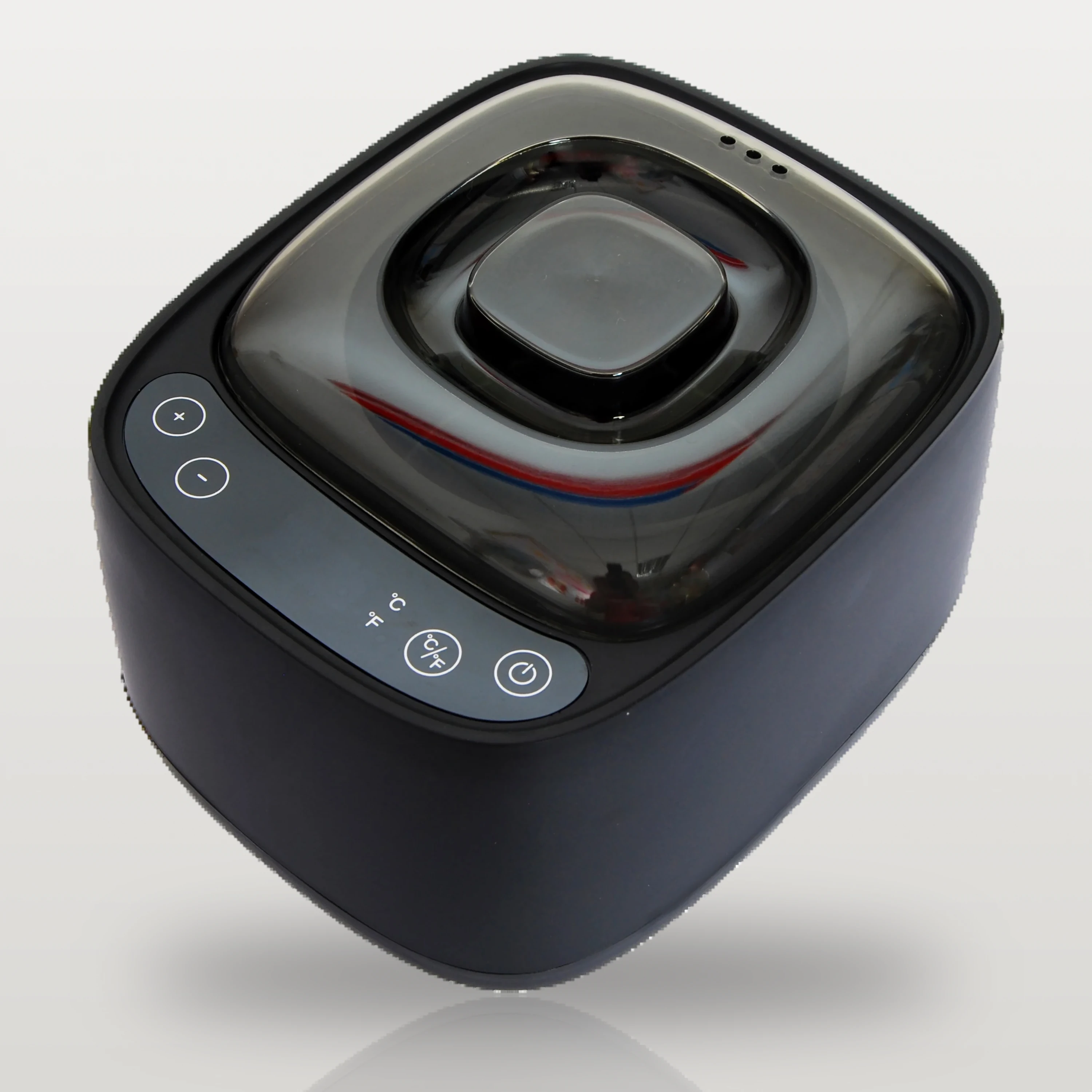
450 ml is roughly 400 g of beads — one technician’s day. It is the SKU a German salon reorders, and the one that has to survive inspection year after year.
Why the cheap pot costs more in month fourteen
Two failure patterns dominate. The first is wax ingress: beads melt, spill, set, and the residue finds every seam. The second is heat soak in a room that runs eight hours a day, which ages the controller and the cord entry long before the element fails. Neither is dramatic; both end with a pot that fails a leakage measurement or trips an RCD intermittently.
At that point the cost is not the replacement price. It is the failed inspection, the salon’s documentation showing an untested appliance in use, and the wait. A distributor holding a 1:10 spare-parts kit — element, inner pot, controller, knob, lid, cord set — converts a three-week shipment into a same-week repair, and that is the service promise a chain will pay for. Sell the kit as a line item, not as a favor.
The capacity ladder, in German rooms
German treatment rooms are small and the menu is narrow, which makes the ladder easier to cut than in most markets.
450 ml is the backbone — about 400 g of beads, one technician’s working day — and should be half or more of any opening order. 180 ml is the second pot for brow and face work, because a second wax at a different working temperature needs its own heat. 250 ml suits a single small room where the throughput does not justify a 450. 500 ml with a digital readout earns its place where the SOP asks for a visible number: training, franchise audits, insurance documentation. 800 ml is for back and chest, where a technician reloads constantly on a smaller pot. The double station at 400/800 ml puts two working temperatures on one footprint, which is usually the answer in a two-room studio with no spare counter.
And the rule that decides the count: 45–50 °C and 55–60 °C cannot share a dial. Two working temperatures mean two pots, every time, whatever the label on the front says.
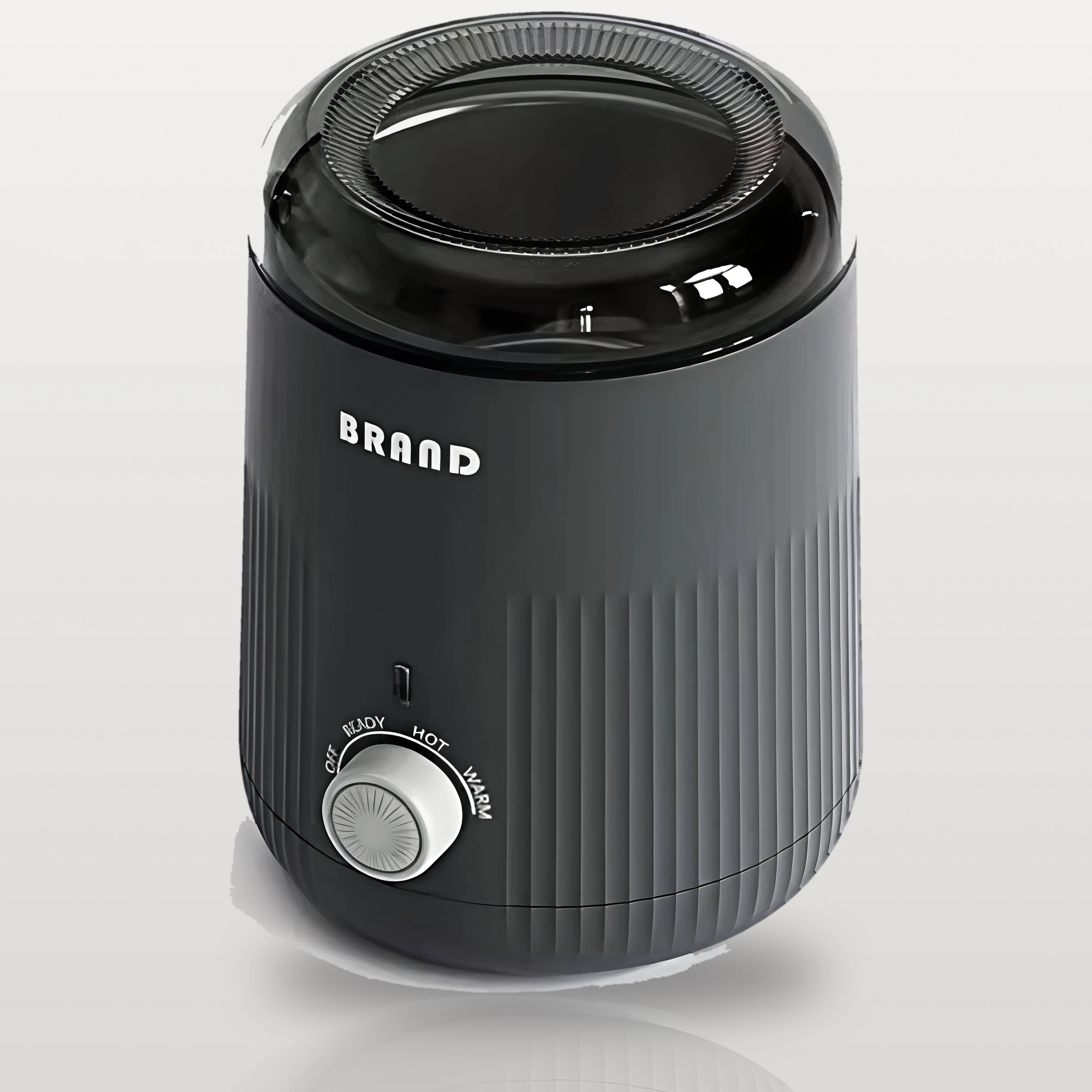
A second working temperature is a second pot: 180 ml covers brow and face without taking counter space from the main unit.
The paperwork around the product
The product file is the standard European one: Low Voltage Directive, EMC Directive, RoHS, and (EU) 2019/1020 requiring an economic operator established in the Union with its details on the product or packaging. The manual has to be in German, and in German that means written, not machine-translated — a salon owner who cannot follow the cleaning instruction will not follow it.
The GS mark is voluntary. It is issued under the Product Safety Act by a body recognized by the ZLS, it signals that the unit was tested by a third party, and German chains and insurers do ask for it. It is not a legal requirement and it does not replace CE. Say that plainly in your own sales material; overstating it is the fastest way to lose a technical buyer.
Two registrations sit with the German entity that places the goods on the market, not with the factory: ElektroG for waste electrical equipment (WEEE) and the Verpackungsgesetz packaging register (LUCID). A supplier can provide the documents those registrations require — brand, model, weight, packaging material — and should say so early, because a missing registration stops a container at the warehouse door. Finally, 230 V at 50 Hz with a Schuko type F plug: put the cord set on its own line of the order, not inside a phrase like European plug.
Quick FAQ
How often must a wax heater be inspected in Germany?
Is a GS mark required to sell a wax heater in Germany?
Can the salon’s own electrician carry out the test?
Next step
Send us the room count, the working temperatures on your menu and the model mix you are considering, and we will return a German-market configuration with the nameplate data, the service sheet and a spare-parts ratio for your warehouse. Contact Miro Wu, Dedicated Account Manager — email miro.wu@beautome.com or WhatsApp +86 188 1393 3019.
Related: the range audit for cutting duplicate models, one order across two socket systems, the sixty days before Cosmoprof, and the full wax heater range from 20 to 800 ml.