






Hard Wax for US Franchise Systems: Getting on the Approved List
The fastest-growing part of American waxing is not the independent studio. It is the franchise system — and a franchise does not buy wax the way a salon does. The person who chooses the formula, the person who pays the invoice and the warehouse that ships the cartons are three different parties. Suppliers who win these accounts stop pitching the owner and start answering the committee: can you hold a formula to a written standard, trace a batch, and hand the label to us?
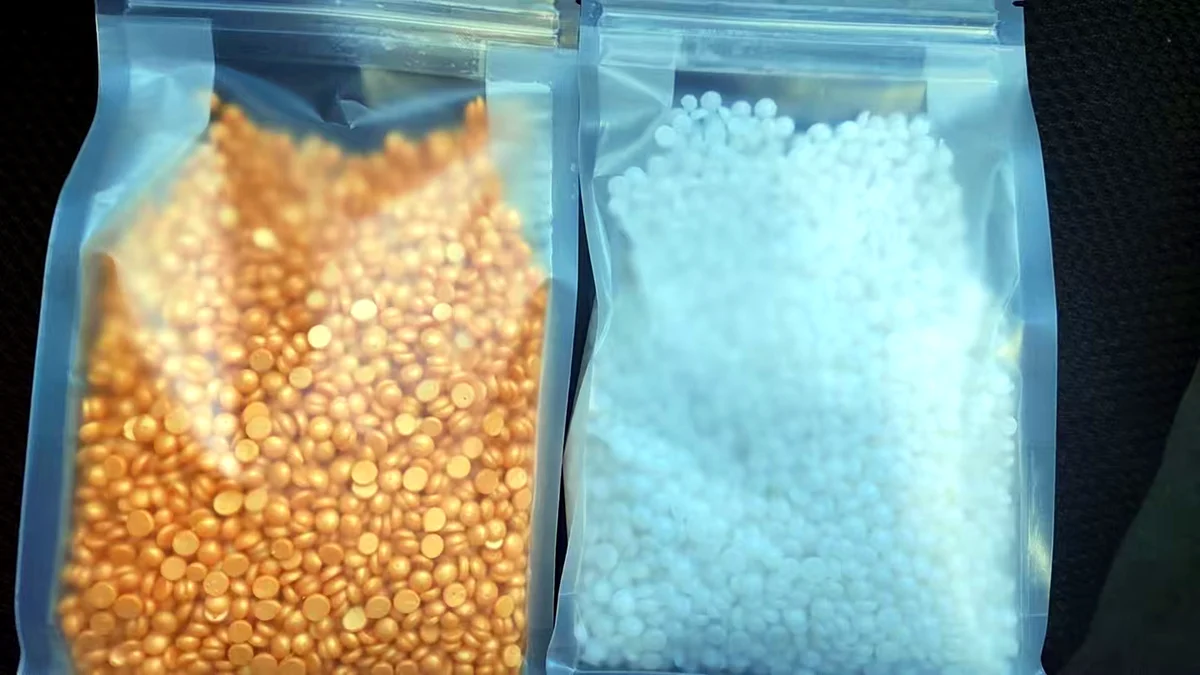
Gold and pink beads in unlabeled transparent bags — the format that lets a franchise headquarters apply its own label after the formula is approved.
Why the franchise channel behaves differently
The published investment ranges explain most of it. Across the waxing systems that disclose 2026 figures, a single studio runs from roughly USD 200,000 to USD 650,000 in initial investment, with franchise fees between USD 35,000 and USD 49,500 and continuing royalties of 6–7% of gross sales plus a 2–4% brand fund. A franchisee who has committed that capital is not experimenting with consumables. They follow the system manual, because the manual is what they bought.
That is reinforced by how the large systems position their wax. One national chain of 150+ studios markets two proprietary formulas by name and trains its technicians under a trademarked method; the largest system in the country runs a proprietary hard wax through a scripted four-step protocol so that a service in Denver matches one in Tampa. Another chain with 38 open studios and 28 more announced is doing the same with a single signature wax and a membership structure.
The conclusion for a supplier is uncomfortable but useful: in a franchise, the wax is brand property, not a commodity purchase. You are not competing on price per kilogram. You are applying to become the standard.
Three decision layers, three different conversations
The franchisor owns the approved products list, the training curriculum and the service protocol. They care about consistency across units, about not being embarrassed by a batch, and about the paperwork that sits behind the label. This is where a supply relationship is actually decided.
The franchisee places the order and pays for it, but within a list. Their real question is operational: does this formula behave the same way in my room, with my technicians, on my clients’ skin.
The distribution layer — a system warehouse, a 3PL or a designated distributor — splits cartons, ships to stores and holds the safety stock. If your packaging does not survive that layer, the system will hear about it before the franchisor ever sees your samples.
Most supplier pitches fail because they are aimed at the second layer with arguments built for the first. A franchise committee does not want a better wax. It wants a wax it can write into a manual and defend two years later.
The five documents a franchisor will ask for
One: a formula standard, expressed as a band. Our rosin-free flagship, Formula A1, is specified with a melting range of 45–50 °C — a band, not a single number, because a single number is a promise no production batch can keep. Alongside it: the standard colors (Gold and Pink), the custom option (White, produced to order), and the acceptance criteria for each batch.
Two: batch traceability. A lot code that can be read from the bag seam and matched to an outer carton and a production record. A franchise investigating a complaint needs to go from a bag in a store in Ohio back to a batch and a date, in minutes.
Three: a certificate of analysis per lot. Not a generic specification sheet — the actual values for the lot that shipped.
Four: packaging in the units the system runs. 300 g for satellite or express locations, 500 g as the store standard, 1,000 g only for high-volume back bars where the bag is consumed inside a week. A 500 g bag is roughly a 450 ml pot, about one technician’s working day.
Five: a label plan. This is where the unlabeled transparent bag earns its place in a franchise conversation. The factory prints the lot code and the production date; the brand applies its own label at its warehouse or 3PL. No print run, no artwork lead time, no obsolete packaging when a formula is renamed — and, critically, the regulatory identity stays with the party whose name is on the label.
45–50 °C
The working band for rosin-free Formula A1 — specified as a range so a batch can be tested against it
500 g
The store standard: about one 450 ml pot, roughly a technician’s day on a mixed menu
120 days
MoCRA product listing window after first sale — the brand’s obligation, not the factory’s
The arithmetic the committee will run
Consumption is the argument that survives a spreadsheet. A single service uses roughly 40 to 70 g of hard wax depending on area; a Brazilian sits at the higher end. Take a store doing 25 waxing services a week at an average of 50 g: that is about 1.25 kg a week, or 5 kg a month — ten 500 g bags per store per month.
Multiply by the system. Forty stores consume roughly 200 kg a month, four hundred bags, twenty cartons. That is not a container; it is a pallet every two to three months, which changes the conversation entirely: the constraint is not freight, it is keeping one formula and one bag size consistent across forty rooms. And it explains why systems consolidate on fewer SKUs than independent distributors do — every additional formula is another stock line in every store.
Which is also the argument against a broad range in a franchise proposal. Offer four, positioned clearly, and let the system cut one:
Formula A1, rosin-free, 45–50 °C — the default for sensitive skin and intimate areas, in standard Gold and Pink, with White produced to order. This is the formula a system can put in a manual because it is the easiest to defend clinically.
Formula A2, premium rosin, cream white beads — high elasticity for short, dense, coarse hair; back, chest, legs on clients who need grip rather than gentleness.
Consumer-Grade Hard Wax, 55–60 °C film wax — the volume formula for legs and arms, and the easiest to teach a new hire.
All-Purpose Soft Wax, 450 g cans — the strip line for legacy rooms that still run muslin.
Note that the first and the third sit at different working temperatures. That is a heater decision, not a wax decision: a store running both needs two pots, and the heater range should be quoted in the same proposal.
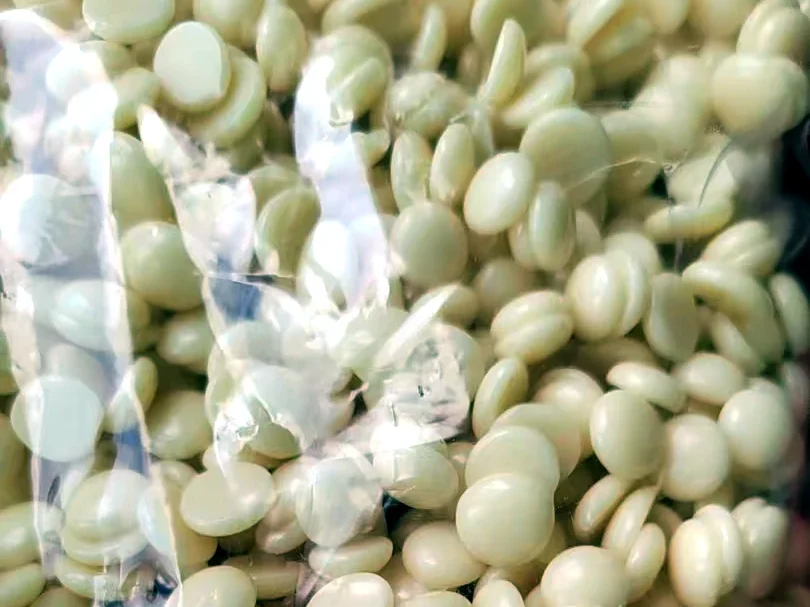
Formula A2 in cream white: the grip formula for back, chest and coarse hair — positioned as the second line, never the default.
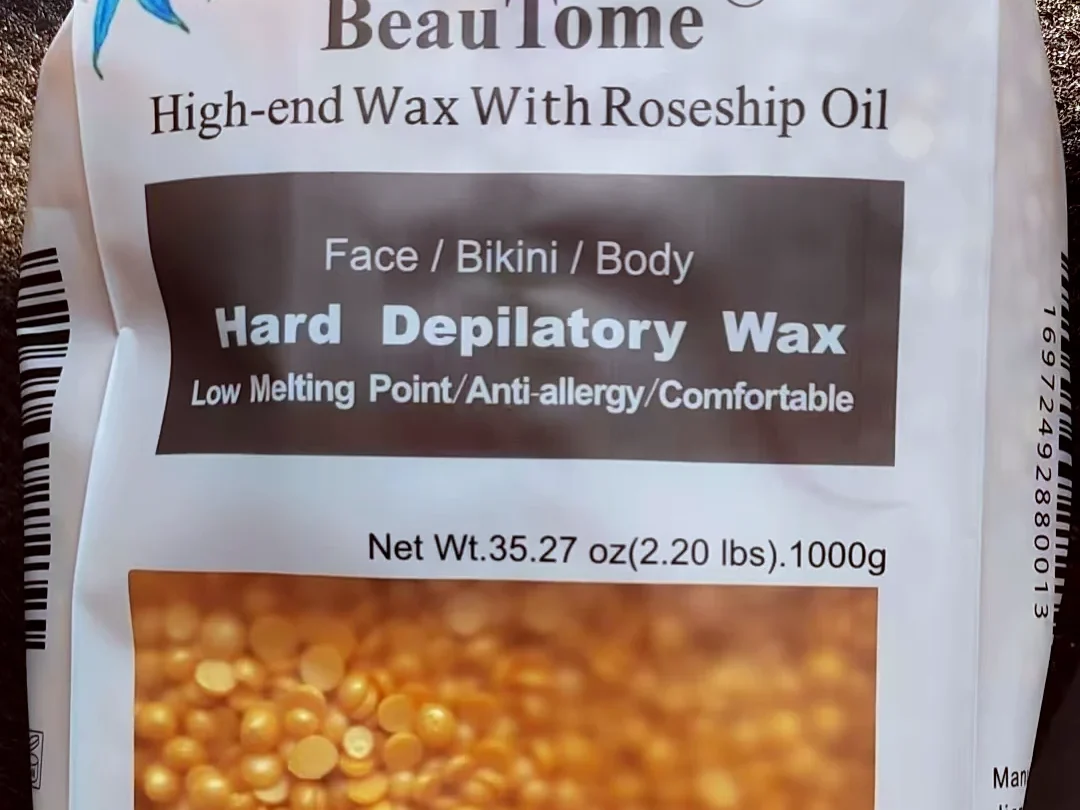
Formula A1 in its standard Gold: the formula most likely to survive a franchise committee, because a band and a batch record are easier to defend than a claim.
The label is the compliance boundary
Under MoCRA, the responsible person is the party named on the label. Factory registration and product listing are two different filings held by two different parties: the manufacturing facility registers, while the brand lists each product within 120 days of first commercial distribution and updates it annually. Serious adverse events are reported within 15 business days, and records are kept for six years, or three for small businesses. The FDA has stated publicly, most recently in September 2026, that it does not issue registration or listing certificates — so a buyer asking for one is asking for something that does not exist.
This is precisely why the unlabeled bag works in a franchise and would not work in a retail chain that expects shelf-ready packaging. The label moves to the party that carries the obligation, at the moment that party is ready. The formula can be approved, sampled and trialled while artwork is still in review. Our earlier guide to US retail and e-commerce supply covers the label content and Amazon gating side of the same question.
The 90-day pilot a committee will actually approve
No franchisor switches forty stores on a sample. They run a pilot, and they approve it in advance with metrics written down. Propose it yourself: three to five stores, eight weeks, four measurements — strip failure rate (shattering, stringing, residue), grams per service against the system’s current figure, client complaints logged by category, and rebooking rate on treated clients. Add one technician per store keeping a one-page log, and a single technical contact who answers within a working day.
If the pilot holds, the conversation moves to the approved list, and the commercial terms become simple: a neutral, unlabeled supply with low minimum order quantities and no print cycle, so the system can switch formulas without writing off packaging. Private-label programs for the formula line start at low MOQ for exactly this reason — the cost of being wrong should be a bag, not a pallet.
What we will not do is pretend the pilot is unnecessary. A franchise that adopts a formula on a rep’s recommendation and then discovers a batch behaves differently in a humid Florida room has a much more expensive problem than a delayed decision.
Quick FAQ
Can we buy unlabeled bags and apply our own label?
What melting point should we specify in a system manual?
Do we need a different formula for humid markets?
Next step
Send us your store count, your current consumption per service and the formulas you are considering, and we will return a proposal in the shape a committee can approve: formula band and batch record, bag sizes, label plan, pilot protocol and a landed cost per store per month. Contact Miro Wu, Dedicated Account Manager — email miro.wu@beautome.com or WhatsApp +86 188 1393 3019.
Related: the full formula range, the US opening order for single studios, and the OEM/ODM program for house brands.