







Training Four Hard Wax Formulas in One Day: What Russian and CIS Distributors Teach Their Network
A hard wax does not fail in the bag. It fails on the strip — because the pot was two degrees cool, because the layer was too thin, because the technician pulled up instead of along. Every one of those failures looks like a product fault to the salon and like a training gap to the distributor, and only one of those two readings produces a second order. This is the one-day curriculum we hand to distributors in Russia and the CIS, written so it can be taught by a sales manager rather than a chemist.
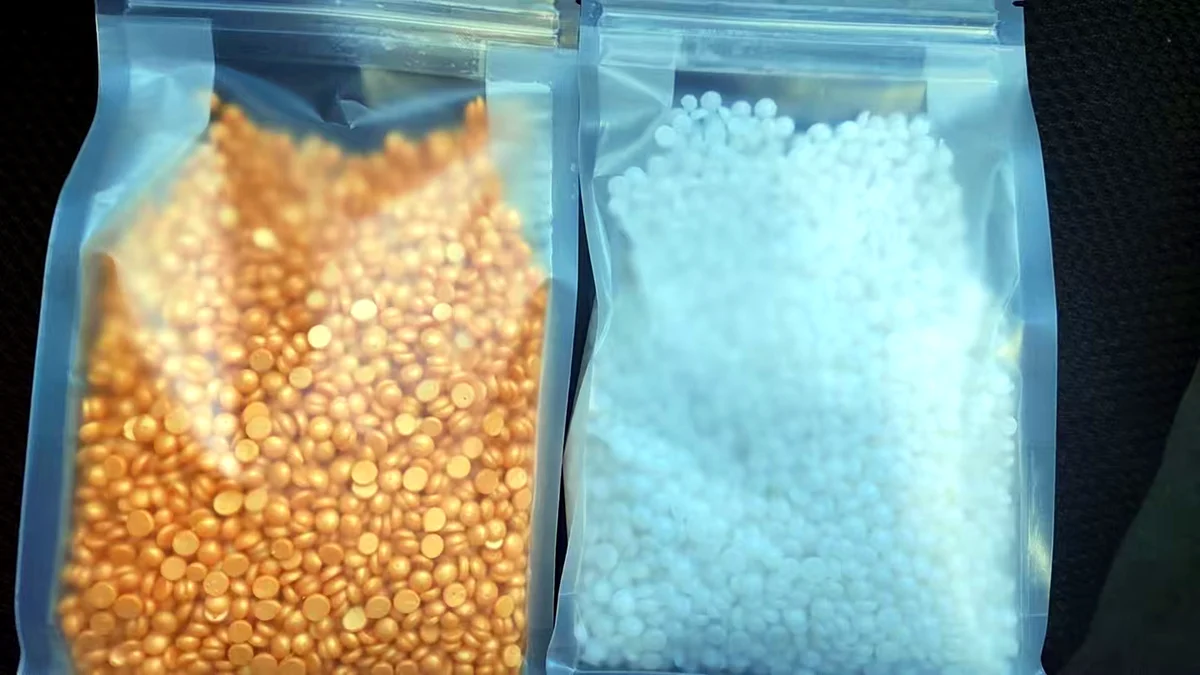
Gold and pink beads in unlabeled transparent bags — the format that lets a CIS distributor’s own brand reach a salon without a printing cycle.
Why the second order is a training problem
Two things changed the Russian market in the last four years. The first is supply: the number of domestic beauty brands operating in Russia grew from roughly 1,100 in 2022 to about 3,000 by 2026, according to Russian trade press reporting on the sector, and domestic brands now hold the majority of the skincare shelf. The second is spend discipline: through the first eight months of 2026 the average beauty salon ticket rose about 4%, while consumers moved toward essentials and own-brand products. Salons are not cutting services. They are counting what each service consumes.
That combination puts the distributor in an uncomfortable position. Your private-label wax is now one of several domestic brands on the shelf, differentiated by formula and by price per service — and price per service is set by the technician, not by the bag. A technician who works two degrees cool uses noticeably more wax per client, re-does strips, and blames the product. The same bag yields a different cost per client in two different rooms, and the only variable between them is training. That is the commercial case for spending a day teaching rather than a day discounting.
Four formulas, four behaviors
Teach the range as four behaviors, not four products. If a technician can predict how a formula will behave, they will choose the right one; if they only know the name, they will use whatever is nearest.
Formula A1 — rosin-free. The flagship for sensitive skin and first-time clients. Melting range 45–50 °C, which is a window rather than a single number: work in the upper half for coarse hair, the lower half for the face and intimate areas. Standard colors are Gold and Pink; White is a custom color made to order and, because it is the most demanding to run, it belongs in a second phase rather than in the opening order. Supplied in 300 g, 500 g and 1000 g bags. Formula A2 — premium rosin, cream white beads. Higher elasticity, made to grip short, dense and coarse hair without snapping; the workhorse for backs, chests and shoulders. Consumer-Grade Hard Wax — 55–60 °C film wax. Thin, pliable, strip-free, and the fastest formula to teach because the film tells the technician when it is ready. All-Purpose Soft Wax — 450 g cans. The strip line for legs and arms: high volume, low price per service, and a different training conversation from the hard waxes.
One rule for the whole day: never let a technician learn a formula on a paying client. Every block below is practiced on a forearm or a leg first.
The eight-hour agenda
09:00 — What wax actually is (45 min). Resin, wax, oil, polymer. Why a rosin-free formula behaves differently from a rosin one, and why “harder” is not “better”. No chemistry beyond what changes behavior.
09:45 — Temperature, and why the pot lies (60 min). Set point versus wax temperature. A probe in the wax, not a dial reading. The 45–50 °C window for A1 and 55–60 °C for the film wax, demonstrated on the same pot so the group sees why one pot cannot serve both.
10:45 — Consumables arithmetic (45 min). Grams per service by area. A 450 ml pot holds roughly 400 g and covers about one technician’s day of hard wax work; a 1,000 g bag is a barbershop back-counter format, not a first purchase for a two-room salon. Let them calculate their own cost per client before lunch.
12:00 — Practical block one: legs and arms (90 min). Film wax and soft wax. Direction of application, thickness, the moment to remove, and the angle of the pull.
14:00 — Practical block two: underarm and bikini (90 min). A1 at the lower end of its window, patch testing, pressure, and how to talk a nervous first-time client through the strip.
15:30 — Practical block three: back and chest (60 min). A2 on coarse hair. Sectioning, working in small areas, and why a large area needs a second pot rather than a hotter one.
16:30 — Failure clinic (45 min). The five failure modes below, deliberately reproduced. A technician who has seen a strip shatter because the wax was too cool will not repeat it.
17:15 — Cleaning, storage, and the paperwork (30 min). 15–24 °C storage, away from light and moisture; never decant beads into a warm storage cupboard; record the batch number so a complaint can be traced to a production run rather than to a rumor.
Five failure modes on the strip, and what each one means
1. The strip shatters or breaks. Wax too cool, or applied too thin, or left too long before removal. Not a formula fault. 2. The wax strings and sticks to itself. Too cool, or contaminated with oil or previous wax. 3. It tears skin. Too hot, or removed upward instead of parallel and against the hair growth. This is the one that produces complaints and should be drilled until it cannot happen. 4. It does not grip. Skin not cleaned and dried, powder or oil residue left on the surface, or the wrong formula for the hair type — coarse hair needs A2, not a softer wax. 5. Residue left behind. Layer too thick, or the removal angle wrong, or oil applied before rather than after.
Every one of the five can be demonstrated in ninety seconds. That is the whole argument for the failure clinic: it converts a complaint into a diagnosis the technician can make alone.
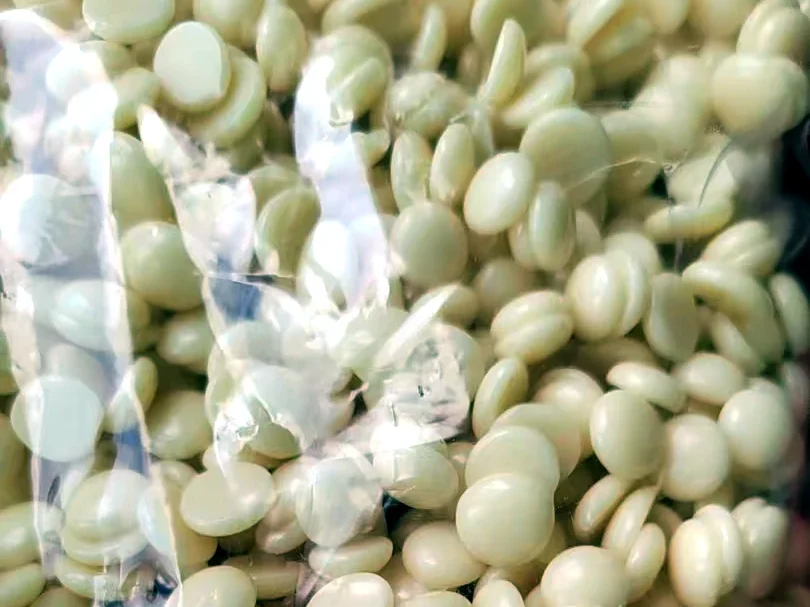
Formula A2 in cream white: the elastic, high-grip wax for short, dense and coarse hair — the formula the back-and-chest block is built around.
Two temperatures, two pots
The training day keeps producing the same equipment conclusion, which is why it is worth teaching rather than mentioning. A1 works at 45–50 °C and the film wax at 55–60 °C. A single pot cannot hold both, and moving a pot between the two costs fifteen to twenty minutes plus an overshoot the technician must wait out in front of a client. A room that offers both services needs either a second pot or a double-pot station on one base.
This is where a wax program becomes an equipment sale rather than a consumable sale, and it is a legitimate one: the salon that adds a second pot stops rationing its formula choice, and its cost per service falls because technicians stop over-applying to compensate for a temperature they cannot hit.
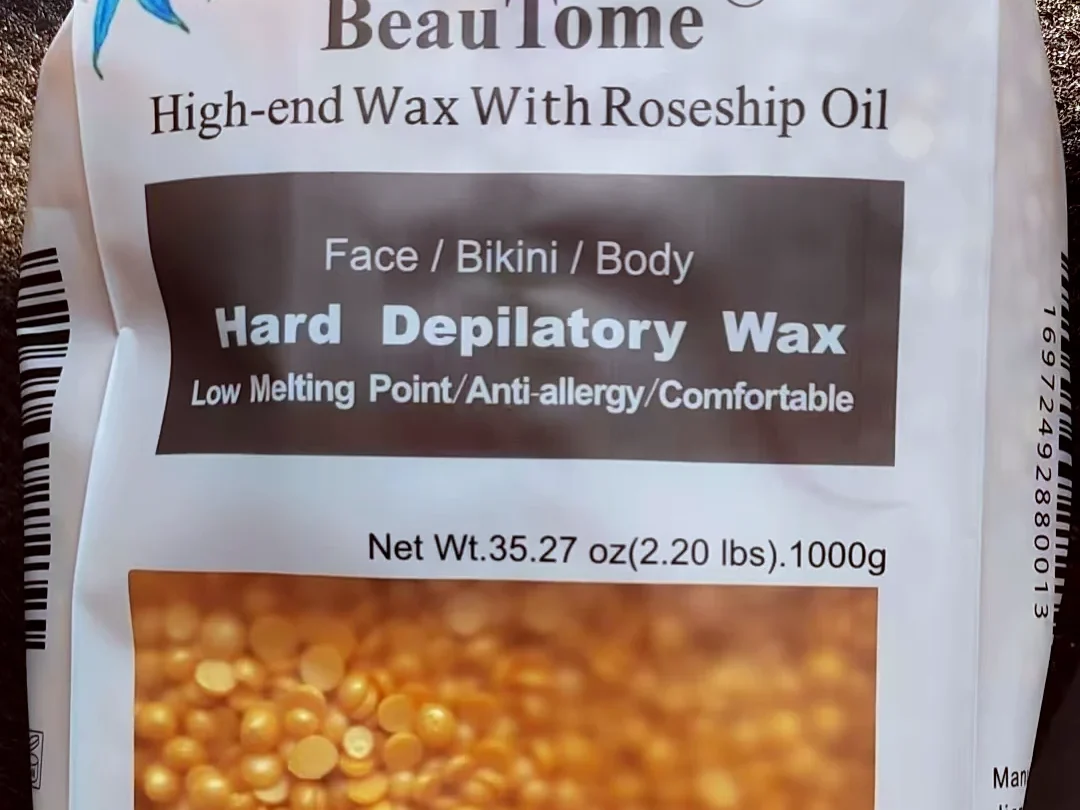
Formula A1 in the standard gold colorway — rosin-free, 45–50 °C, and the formula most often chosen for a first-time client.
Train the trainer, and count the multiplier
One distributor trainer cannot visit three hundred salons. The structure that works is a two-level cascade: you train twelve to twenty salon owners or head technicians per quarter, each of whom trains two or three colleagues in their own room with a printed sheet and a short video in Russian. The arithmetic is the argument — twenty trained leads become forty to sixty technicians, and the cost per trained technician falls by more than half.
Three things make the cascade hold. A one-page card per formula, laminated, with the melting range, the working window, the layer thickness, the removal direction and the pot setting. A certificate with a date, because a certificate with a date creates a reason to come back for a refresher in six months. And a named contact for technical questions, because a trainer who cannot be reached is a trainer who is not called.
One A4 per formula, printed, not emailed
The sheet is the deliverable that survives the training day. Keep it to one side of A4 and include, in this order: formula name and color; melting range as a range, never a single number; recommended working window by body area; layer thickness in millimeters; removal direction; pot capacity and the grams it holds; storage conditions, 15–24 °C, dry, dark; and the batch number field so a complaint can be traced.
Print it in Russian first, with the English original on the reverse for the trainer. This is also where the unlabeled transparent bag earns its place in the program: because the bag carries no printed brand story, a distributor can attach its own label and its own sheet without a printing cycle, and private label runs start at low MOQ — which is what lets a new domestic brand test four formulas in twenty salons before committing to a container.
Where the compliance conversation sits
Training does not replace market access, and it should not try to. For Russia and the CIS, depilatory products sit under TR CU 009/2011 with national registration for this product category, the applicant must be an entity established in the union, and the labeling obligations — including the Russian-language content and the batch traceability the training sheet already asks for — fall on whoever places the goods on the market. We covered the document chain in the twelve-week launch timeline and the registration mechanics in the earlier Russia and CIS briefing; treat this article as the layer that comes after the certificate exists, because a compliant product that nobody knows how to use is still a return.
Quick FAQ
How many formulas should a new private label launch with?
Why is the A1 melting point quoted as a range?
Can we run our own brand on unlabeled bags?
Next step
Ask us for the training pack: the one-page card for each of the four formulas, the eight-hour agenda in an editable file, and the failure-mode photographs your trainers can use in the room. Contact Miro Wu, Dedicated Account Manager — email miro.wu@beautome.com or WhatsApp +86 188 1393 3019.
Related: the twelve-week timeline from artwork to first container, wax heaters for Russia and CIS distributors, and the OEM/ODM process for private-label programs.