





AI Smart Nail Lamp for Italian Nail Studios: One Country, Two Plug Gauges
Italy is one of Europe’s most mature gel-polish markets — and one of the few where the same shipment can face two different wall sockets. Italian studios run on 230 V, but the national type L plug comes in a 10 A and a 16 A gauge that are not interchangeable, alongside Schuko hybrids in every modern renovation. This is what an Italian nail order actually needs: the ordinary EU compliance file, an Italian-language console and manual set, and a cord line decided before the container is stuffed.
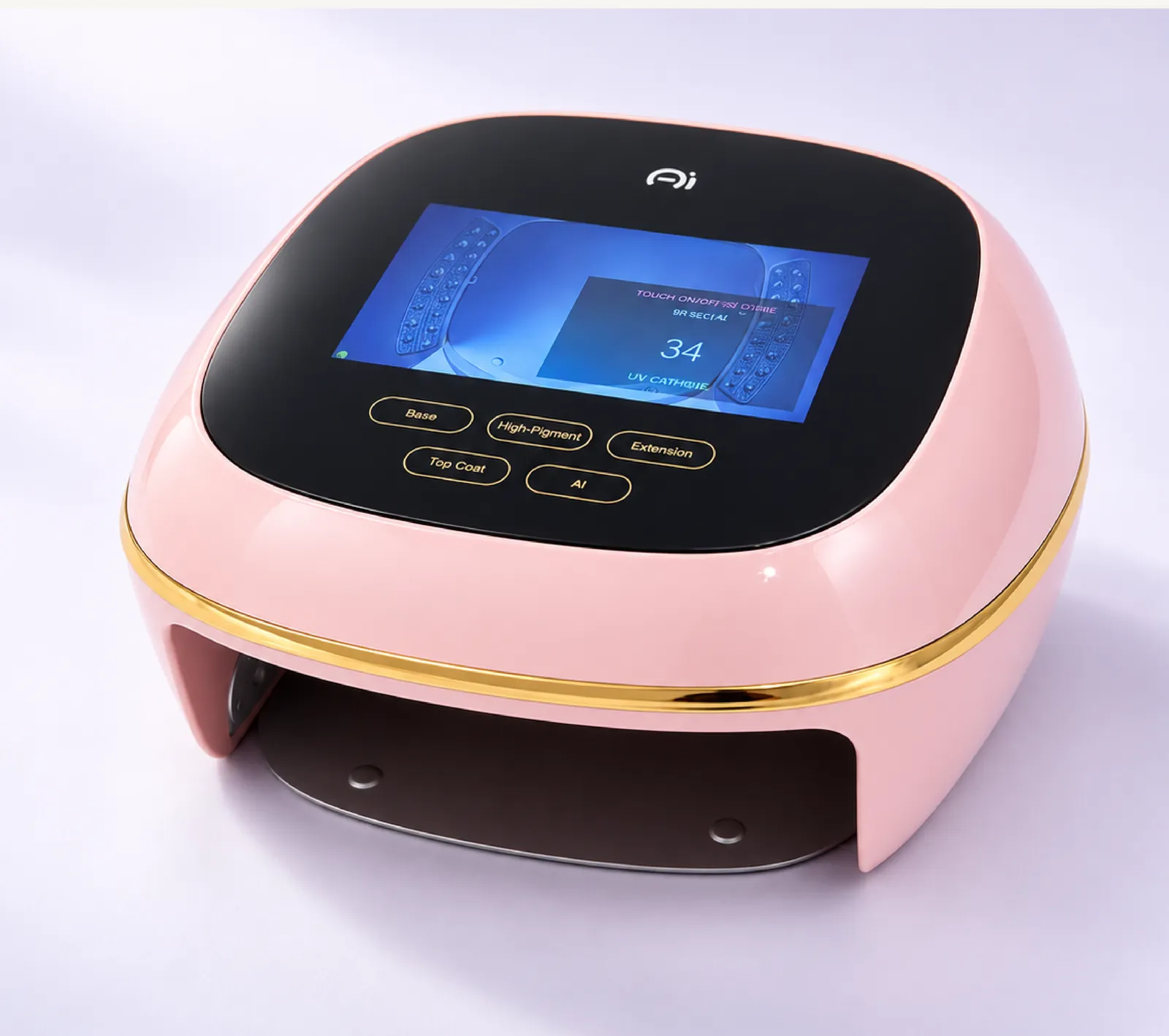
The Italian order is won on details the spec sheet does not show: plug gauge, console language and a file the importer can defend.
A mature market that still trades up
Italy counted 2,968 nail salons as of April 2026, concentrated in the wealthy north: Lombardy leads with 569, followed by Lazio (432), Emilia-Romagna (381), Piedmont (236) and Tuscany (226) (Rentech Digital, 2026). The category behind them keeps growing: the Italian nail polish market generated about USD 524.6 million in 2025 and is projected to reach USD 888 million by 2033 at a 6.8% CAGR, with UV gel polish as the fastest-growing segment (Grand View Research, 2026). Independent analysis puts the professional salon channel at 55–60% of category value, and notes that value growth of 5–7% a year is running well ahead of volume growth of 1–2% — a market that trades up rather than expands (IndexBox, 2026).
Two structural facts matter for an equipment brand. First, the service layer is regulated: aesthetic treatments fall under the estetista profession (Law No. 1 of 1990), with training and implementation delegated to the regions — so your buyer is often a qualified professional with a license to protect, not a casual operator. Second, Italian consumers under 40 increasingly read ingredient claims, which makes the salon’s equipment and product story part of the sell. A lamp that visibly treats only the nail, not the whole hand, is a talking point the technician can use across the desk.
One country, two plug gauges — and hybrids everywhere
Italy runs 230 V at 50 Hz, like the rest of continental Europe. The sockets are where it diverges. The national standard is type L under CEI 23-50 — three round pins in a straight line with the earth pin in the middle — and it exists in two physically incompatible gauges: the 10 A version with 4 mm pins spaced 19 mm apart (historically lighting and small-appliance circuits, roughly 2,200 W) and the 16 A version with 5 mm pins spaced 26 mm apart (kitchen and heavy circuits, roughly 3,500 W). A 16 A plug will not enter a 10 A socket, and a Schuko plug fits only where a hybrid or recessed P40 outlet is installed. Modern rooms usually carry a bipasso socket accepting both Italian gauges, or a Schuko/type L combination module.
For a nail lamp the practical consequences are simple. The AI Smart Nail Lamp’s 24 × 24 × 11.5 cm body and modest draw sit comfortably on any 10 A circuit — a lamp never needs the 16 A ring. What matters is the cord: specify the moulded cord set as its own purchase-order line, decide whether the Italian batch ships on Schuko cords (fine where hybrids are installed) or on type L plugs for studios with legacy Italian-only walls, and split cords by destination if the same container continues to France, Switzerland or the UK. A two-euro adapter is a traveler’s solution; it is not what a distributor wants to hand a salon chain across fifty rooms.
2,968 salons
Counted nail salons in Italy, April 2026 — Lombardy 569, Lazio 432, Emilia-Romagna 381
6.8% CAGR
Italian nail polish value growth to 2033, with UV gel as the fastest segment (Grand View Research)
2 plug gauges
Type L 10 A and 16 A are not interchangeable — decide the cord before the container is stuffed
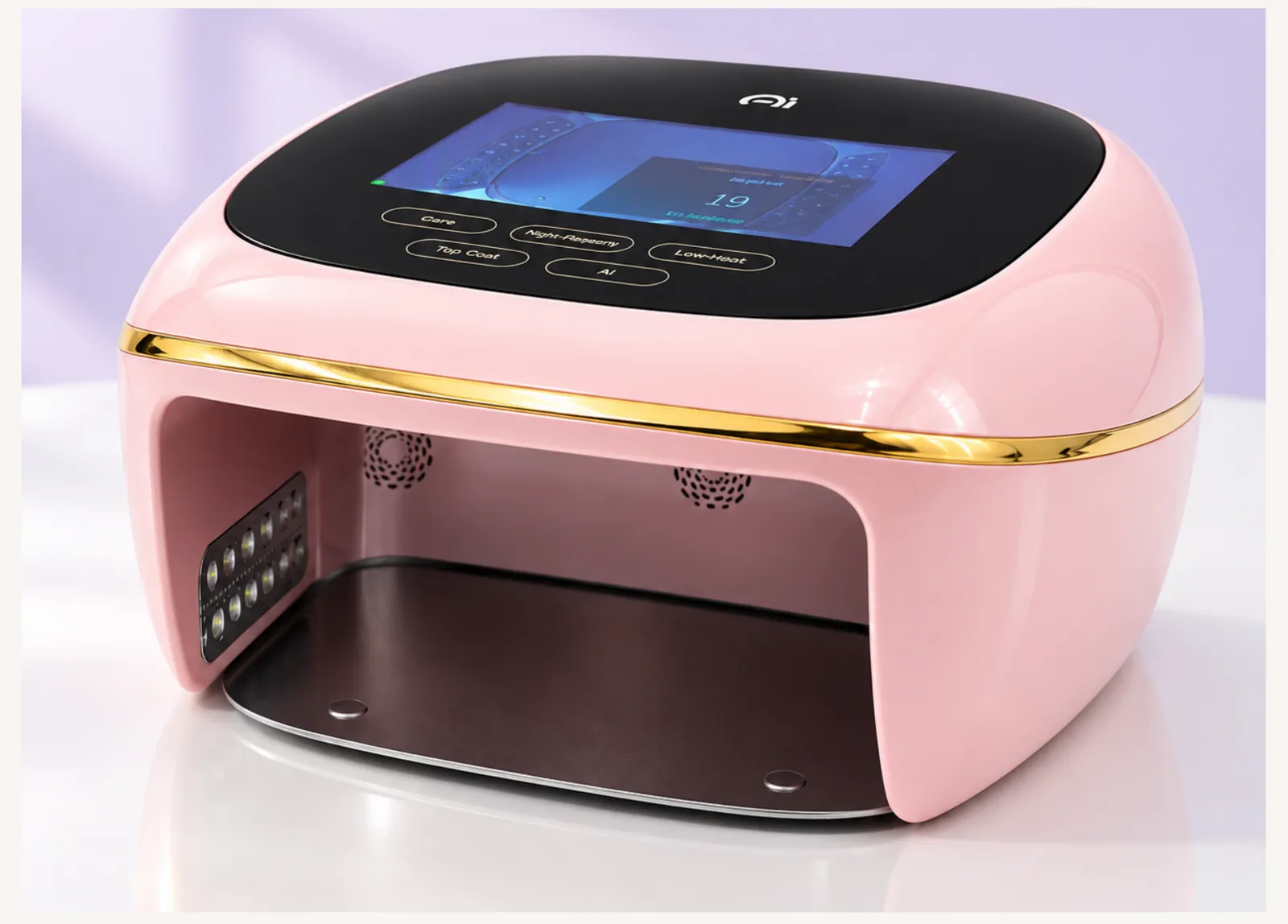
136 dual-band LEDs, 365–370 nm and 395–400 nm, fired as zones over the nail — not as one flood over the hand.
The file is the ordinary EU one — with an Italian face
Italy applies the standard EU route: the Low Voltage Directive 2014/35/EU, EMC 2014/30/EU and RoHS 2011/65/EU, CE marking, and a technical file behind them. Since July 2021, Regulation (EU) 2019/1020 requires an economic operator established in the Union to be named on the product or packaging — in practice your Italian importer or distributor, and the name should match the entity that will answer the market surveillance authority. If the same lamp is also offered to retail or salon retail shelves, GPSR (EU) 2023/988 applies on top of the B2B file. None of this is Italian-specific; what is specific is language. Instructions and safety information belong in Italian, and the region-by-region structure of the estetista rules means local associations and training bodies — often the people who recommend equipment — will read the manual before the regulator ever does.
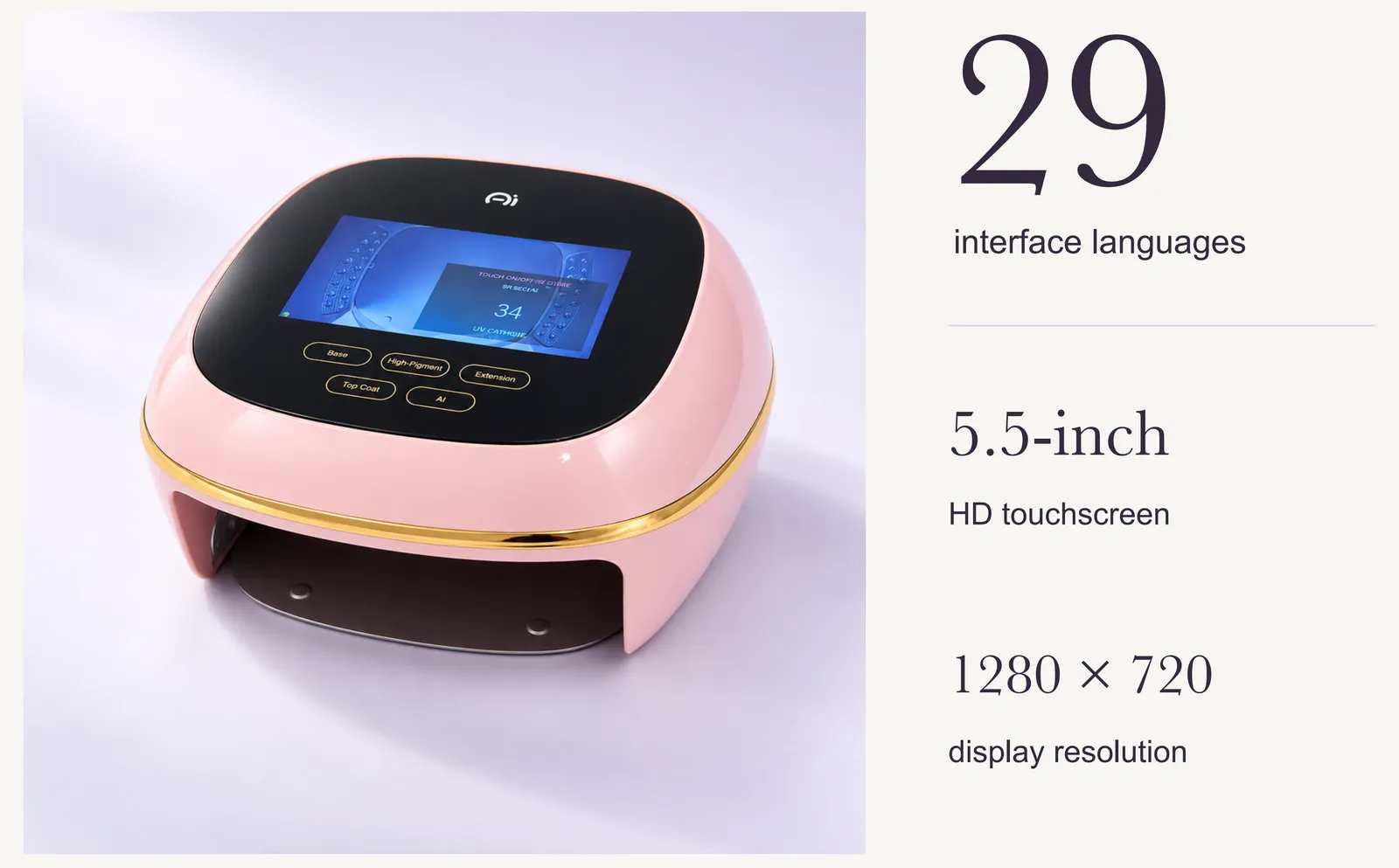
On the console side, the AI Smart Nail Lamp’s 5.5-inch touchscreen ships in 29 languages and can be locked per shift, so an Italian-language interface is a configuration item, not an engineering project. For a franchise or a multi-room studio, lock the language once and the training burden drops to a single quick-start card.
What the demonstration proves
In a market of licensed professionals, the demo table does the selling. The AI Smart Nail Lamp uses a 2 MP camera and on-board AI processing to find the nail in about 0.2 seconds, then fires its 136 dual-band LEDs — 365–370 nm and 395–400 nm — only over the detected zones, so the surrounding skin receives far less unnecessary light exposure. That is the mechanism behind the “dark hands” complaint long-time gel clients raise, and it is honest to present it that way: the curing principle is the same as any modern LED lamp — diodes emitting long-wave UV to set the gel — what differs is the control layer, and the control layer is where the comfort benefit lives. Smart heat control with a light-decay warning turns an invisible output drop into a scheduled service call instead of a week of returned sets — the kind of detail an owner-operator who has run a room for a decade understands immediately.
Lock the console to Italian once; the printed manual set is a separate, regulator-facing matter.
From evaluation unit to private label
The commercial ladder fits a market of many small rooms. White-label, unbranded units start at three to five pieces, and a single evaluation unit can ship before any commitment — enough for a Milan studio group to run a two-week trial across its busiest room. Full custom branding, with logo, colors and retail packaging, starts at 300–500 units. The standard build is AC-powered with no battery; a 6,000 mAh battery version is available on request for home-service technicians, a real but secondary segment in Italy. The purchase order should carry six lines: model and quantity, the cord type split by destination, the 29-language list with Italian locked, the EU economic operator for the 2019/1020 marking, the manual language set, and a first spares ratio — mainly spare cords and adapter plates per ten units. The full specification sits on the AI Smart Nail Lamp page, the branding ladder is under OEM and ODM, and the curing-principle background is explained in this comparison.
Quick FAQ
Do we need type L plugs, or will Schuko cords work in Italy?
Does Italy require any national certification on top of CE?
Is the AI lamp’s light different from a normal UV/LED gel lamp?
Next step
Tell us the cord mix, the console language list and whether the entry point is an evaluation unit or a white-label shelf, and we will return a quotation with the EU operator line and manual set spelled out. For a quotation, contact Miro Wu, Dedicated Account Manager — email miro.wu@beautome.com or WhatsApp +86 188 1393 3019.