




Hard Wax for Japanese Drugstore Private Brands: A Retail SKU Without a Print Run
Walk the hair-removal shelf of any Japanese drugstore and you will find the same quiet fact: almost every own-brand package there was designed by a chain’s private-brand team, filled by a manufacturer they will never name, and labeled in Japan by a licensed entity they contract for precisely that purpose. Overseas wax manufacturers see this channel as opaque. It is not — it is a supply structure with four moving parts, and a foreign factory that understands all four can land a retail wax SKU with a Japanese chain without printing a single label at origin. This is the workflow, the market numbers behind it, and the compliance map that keeps the SKU alive past its first order.
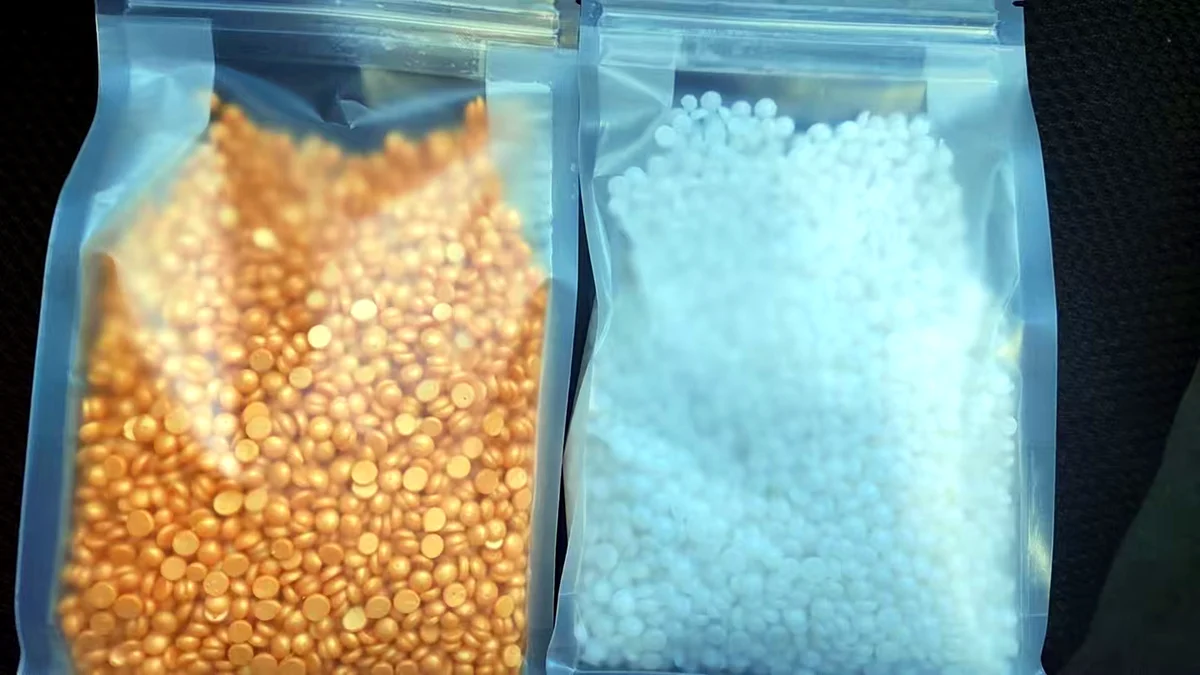
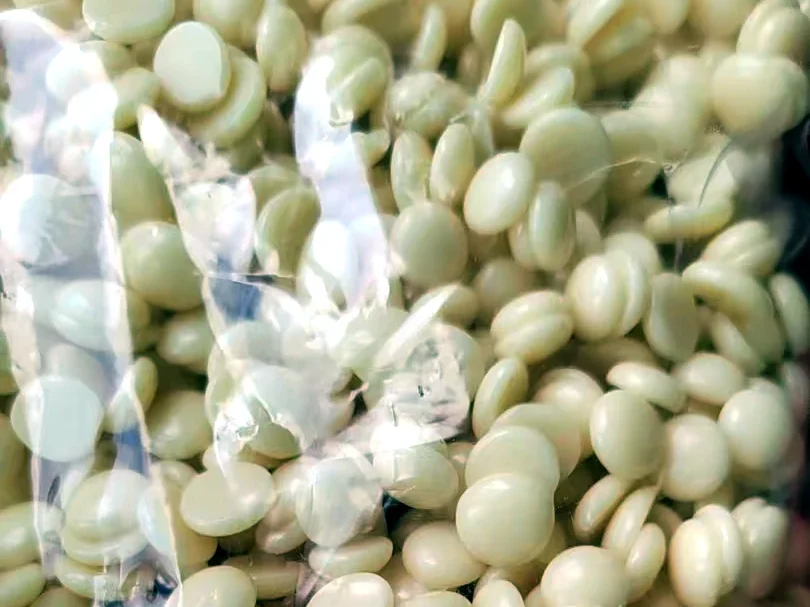
Unlabeled transparent bags: the chain’s Japanese label goes on in Japan, by the entity licensed to apply it.
Why the drugstore channel is worth a wax SKU
Japan’s depilatory wax market is worth roughly USD 700 million (2025) and is projected to hold about 12.2% of the Asia-Pacific market by 2035 (Global Market Insights, 2025) — not the fastest-growing market, but the region’s most premium one, where buyers pay for formulation quality and packaging precision. The private-brand layer on top is expanding faster than the base: the Japanese private-label cosmetics market was estimated at USD 297 million in 2025, growing to USD 539 million by 2034 at 6.9% a year (Deep Market Insights, 2026 report). Every major drugstore chain — the Welcia, Tsuruha, Sundrug and Cosmos generation of stores — runs a PB program, and the hair-removal shelf is one of the categories where a chain can differentiate without a price war, because the format itself is still foreign to most shelf shoppers.
That is the opening. Depilatory creams and strips dominate the shelf; a hot hard wax in a retail-friendly pack is a format Japanese consumers know from salon menus but have rarely been offered in a drugstore. A chain that adds it wants a manufacturer who can hold a consistent melt range, ship beads that pour cleanly, and hand the compliance work to the right entity. The chains’ PB teams are professional buyers — they respond to spec sheets, not to stories.
What a retail wax SKU actually is
The retail product is not the salon product in a smaller bag. Three design choices separate them:
The melt range. The retail hero is a 55–60 °C consumer-grade film wax — the format that sets into a flexible film, grips short hair and removes without strips in a home setting where the user has no professional pot discipline. The professional formulas stay on the professional line: Formula A1, the rosin-free flagship with a 45–50 °C working window, belongs in salons where a trained technician controls the temperature — a low-melt rosin-free bead handed to a home user with a pan on a stove is a burn complaint waiting to happen, and a chain’s legal team will ask which formula is going to which shelf.
The pack. Retail wants a handling size, not a back-bar size: the 300 g bag is the unit that prices well at the drugstore shelf, holds a season of at-home use and survives the supply chain in a 15–24 °C storage band. The 500 g and 1000 g formats belong to salons; putting them on a retail shelf signals the wrong product to the shopper.
Second-SKU discipline. A companion 450 g can of all-purpose soft wax covers the strip-wax user and gives the chain a two-SKU set from day one — enough to test the shelf without committing a planogram. The private-brand arithmetic from the salon world applies here too: two SKUs that both sell beat eight that sit.
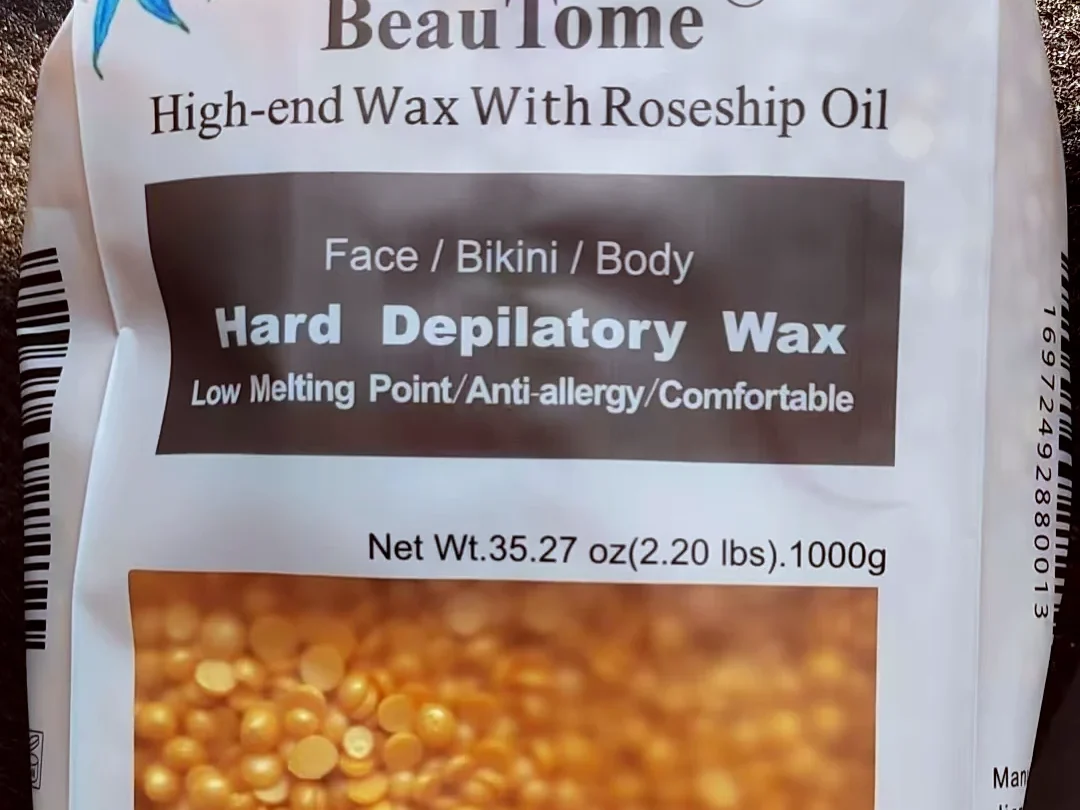
Retail packs carry the chain’s own artwork — which is exactly why the bags arrive unlabeled.
The four-part compliance map, briefly
Japan’s Pharmaceutical and Medical Device Act (PMD Act) structures the channel, and four roles make it navigable. We state the framework here as a sourcing map — the classification of any specific SKU belongs to the Japanese entity and, where needed, a regulatory consultant.
First, classification. How a hair-removal product is treated depends on its claims and formulation: products that stay within cosmetic definitions move on the cosmetics track, while stronger functional claims can push a product into the quasi-drug category (iyakubugaihin), which requires pre-market approval. This is the single decision that sets the timeline, and it is why claims language is a supply-chain question, not a marketing question — we supply the formulation facts; the chain’s side decides what may be said.
Second, the licensed entity. Commercial sale requires a Japan-based marketing authorization holder (MAH) holding the cosmetics manufacturing-and-marketing license; a foreign factory cannot self-certify into the market. For a drugstore PB program the chain or its amenity trading partner almost always holds or designates this entity — which is why the deal structure, not the chemistry, is usually the long-lead item.
Third, the factory registration. The overseas manufacturing site needs accreditation as a foreign manufacturer under the PMD Act — a five-year registration that must exist before the product can be legally imported for sale. Ask any prospective factory for the registration status in the first meeting; it is the difference between a supplier and a warehouse of someone else’s problem.
Fourth, the label. Japanese-language labeling is mandatory: product name, the MAH’s name and address, net content, full ingredients using the Japanese labeling names, and lot identification. And here is the operational detail most exporters miss: applying or replacing labels in Japan is itself a licensed manufacturing activity. The unlabeled transparent bag is not a loophole — it is the correct input to that workflow. The beads arrive identified by bag-seam batch codes, the Japanese label with the MAH’s particulars goes on at a licensed site in Japan, and the chain’s artwork decision never delays a production run in the factory. That is what “a retail SKU without a print run” means in practice: low MOQ private-label supply in unlabeled transparent bags, zero printing cycle at origin, and the compliance work lands where the law wants it.
The supply-side details PB buyers actually test
A Japanese PB sourcing team evaluates a wax supplier on four things, in roughly this order:
Batch traceability. Every bag carries a bag-seam batch code that maps to a production record — date, formula, QC result. The MAH releases batches to market, and it cannot release what it cannot trace. This is the first document request, and the one that disqualifies casual suppliers.
Melt-range consistency. The spec sheet states the working window — 55–60 °C for the consumer film wax — and the factory proves it holds across lots, not just in the sample. A chain that recalls one batch loses the whole program; consistency is the product.
Pour quality and packaging precision. Japanese retail packaging tolerances are unforgiving: beads must pour without clumping after a shipping season, bag weights must match declared content, and the transparent bag must show the product cleanly — the customer is judging the beads through the film, which is why we ship in clear bags in the first place.
Storage and shipping discipline. Wax wants a 15–24 °C band in storage and transport, and summer container temperatures on the Japan route demand the same attention as the Gulf route — beads that arrive fused into a block cost the chain its first impression. Seasoned suppliers ship with temperature-aware packing and let bags return to room temperature before opening, keeping condensation off the product.
The professional line — A1 rosin-free and A2 Cream White — stays in salons; the retail shelf gets the consumer-grade film wax.
A realistic first-order structure
The first order that survives a PB committee is small and boring: one consumer-grade film wax SKU in 300 g unlabeled bags, one soft-wax can, a written spec sheet, the batch-traceability record and the factory’s foreign-manufacturer accreditation number. The chain’s compliance side runs the classification and claims review; the label goes on in Japan; the shelf test runs in a store cluster, not nationwide. If the format proves out, the second wave adds the professional-adjacent line for the chain’s salon-supply segment — and by then the traceability and accreditation work is already done, which is the point of starting boring.
What kills first orders is the reverse sequence: artwork-driven production, MOQ commitments sized for a national launch, and a claims review that reclassifies the product after the bags are printed. None of that survives contact with the PMD Act.
Quick FAQ
Can the drugstore sell hard wax as a cosmetic in Japan?
Why unlabeled bags instead of printing our label at the factory?
What MOQ should a chain expect for a first retail wax order?
Next step
Send us the shelf concept and the buyer’s spec sheet, and we will return the retail SKU recommendation, the factory’s foreign-manufacturer accreditation status, the batch-traceability sample and a low-MOQ quotation in unlabeled transparent bags. Contact Miro Wu, Dedicated Account Manager — email miro.wu@beautome.com or WhatsApp +86 188 1393 3019.
Related: the Japanese document checklist for low-temperature wax, who your real Japanese customer is in the three-tier trade, the full formula range, and the OEM/ODM process.