







Hard Wax for Qatar, Bahrain and Oman: Small Volumes, Three Paperwork Routes
Every Gulf distributor wants to talk about Saudi Arabia and the UAE, and every Gulf distributor already has. The three markets that still reward a patient supplier are smaller, quieter and harder to enter: Qatar, Bahrain and Oman. They buy in modest volumes, they pay properly, and they fail suppliers for a reason that has nothing to do with wax — a registration file that was started too late for the season.
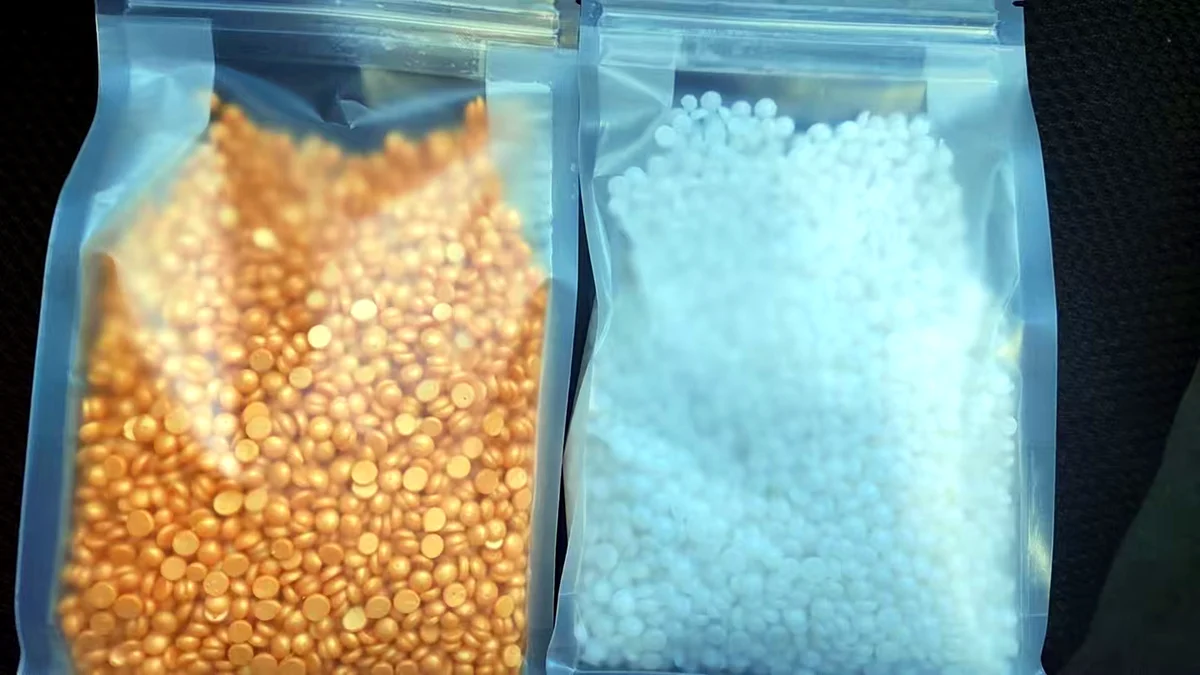
Unlabeled bags leave Doha, Manama and Muscat free to print the Arabic panel their own regulator expects — after registration, not before it.
Small populations, dense demand
World Bank figures for 2025 put Qatar at roughly 3.0 million residents, Bahrain at 1.6 million and Oman at 5.5 million, within a GCC total of about 63 million. None of those numbers supports a container-scale launch on its own. What they do support is a very high spend per resident, because a large share of each population lives in expatriate compounds and city apartments where professional grooming is routine rather than occasional.
Three consequences follow, and they should shape the offer more than any market-size number:
The buyer is usually a trading house, not a salon chain. A Doha or Muscat distributor carries six to ten categories and expects the supplier to hold the product knowledge. Your specification sheet becomes their sales script.
Volumes are real but narrow. Ten to twenty thousand bags a year is a good account here. That is not a reason to offer twelve SKUs; it is a reason to offer four done properly.
Reorders are seasonal, not monthly. Demand clusters around weddings, Eid and the winter season, then falls away when residents leave for the summer. A supplier who cannot deliver in February is not in the market until the following year.
Three countries, three paperwork routes
The GCC harmonizes the technical content and leaves the administration to each member state. In practice that means one product file, three different gatekeepers — and no mutual recognition between them for a cosmetic notification.
Qatar — Ministry of Public Health registration through a local agent. The product must be registered before it is marketed, and the application is submitted by a Qatar-registered agent or importer, not by the factory. Expect to supply the full formulation with percentages, INCI names, a GMP certificate, a certificate of free sale from the country of manufacture, a safety assessment, the label artwork in Arabic and English, and an authorization letter appointing the local party. Registration is product-specific; sources in the market describe the certificate as multi-year, with changes to formulation or claims requiring a fresh submission. Arabic labeling is mandatory, and medical or therapeutic claims will move the product out of the cosmetic category entirely.
Bahrain — NHRA registration through the importer or authorized representative. The National Health Regulatory Authority runs the cosmetic route, again with a Bahraini entity holding the file and submitting through its system. The document set is the familiar one — authorization, commercial registration, manufacturer details, full ingredient list with percentages, label artwork, GMP, free sale certificate, safety data — and the label must carry the Arabic particulars alongside the English ones. As in Qatar, the registered party, not the factory, is the one who answers questions during review.
Oman — the one that reads differently. Public guidance splits on whether Oman operates a central product registration or a per-consignment approval. One widely cited route describes no central product registration: the importer obtains a certificate of conformity from an accredited local body on the basis of test reports, a compliant label and the ingredient list, then takes an import permit through the Invest Easy portal and clears each consignment in the Bayan customs system. Another describes product registration with the Directorate of Pharmaceutical Affairs and Drug Control at the Ministry of Health, with a processing window measured in weeks to months. Both descriptions agree on the regulatory basis: GSO 1943 for cosmetic safety, which Omani ministerial decision 199/2021 is reported to make binding, and GSO ISO 22715 for labeling, in Arabic and English.
The practical instruction is to prepare a file that satisfies the stricter reading — formulation with percentages, INCI, GMP, free sale, safety assessment, Arabic and English label, authorization letter — and then ask the Omani importer which route they are actually filing under before the first purchase order. This is also a useful test of the importer: one who cannot answer that question in a day is not ready to hold your registration.
Registration rules change, and the summaries above are written from market guidance and regulator-facing sources rather than from the regulations themselves. Your importer or a local regulatory consultant should confirm the current route, fee and timeline before artwork is finalized.
The window that decides the year: Ramadan and Eid al-Fitr 2027
Ramadan 2027 is expected to begin around 8 February, with Eid al-Fitr around 9–10 March, subject to the local moon sighting as always. That timing matters more than it looks. Ramadan moves about eleven days earlier each year, so 2027 lands it in February — squarely in the Gulf’s comfortable outdoor season, when weddings, family gatherings and pre-Ramadan grooming all compress into the same weeks.
Working backward from Eid is the planning exercise that separates a stocked distributor from an empty shelf:
Early March 2027: Eid week, the peak. Salons run extended hours, and the film-wax and soft-wax lines move fastest because they are the volume services.
Mid-February 2027: pre-Ramadan and early-Ramadan demand. Stock must already be in the salon or in the distributor’s warehouse; nothing useful arrives in the last ten days.
Late January 2027: container arrival and customs clearance, allowing for the consignment checks described above.
Late November to early December 2026: production slot and purchase order. That is now.
Before that: registration. This is the constraint that actually binds. A Qatar or Bahrain file started in January will not clear in time for a February season, which is why the practical advice to a new distributor is to begin registration with the first sample order rather than with the first container.
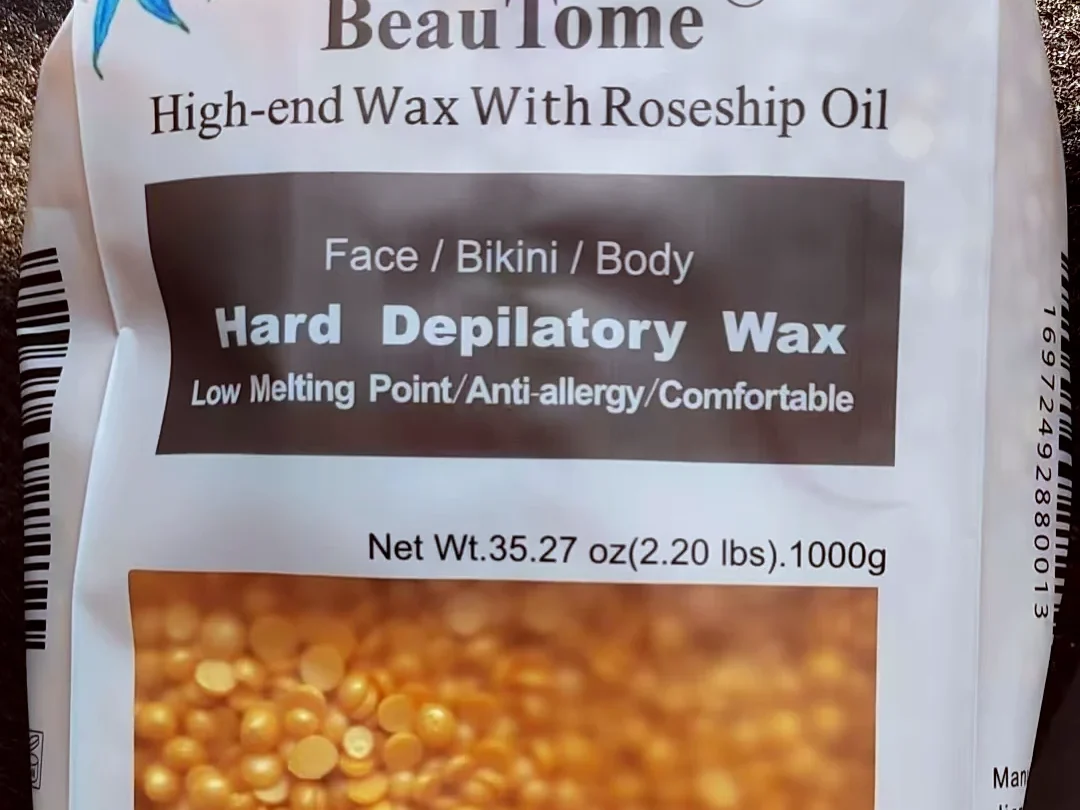
The 500 g bag is the salon standard across the Gulf; the 300 g bag is what a buyer uses to test a formula before committing shelf space.
Four SKUs, three bag sizes, one decision
For markets this size, the range should be short enough that a salon coordinator can explain it in one sentence per product. Ours is four lines, and each answers a different client:
Formula A1 — rosin-free, 45–50 °C melting range. The flagship for sensitive skin, first-time clients and the private-label brand that wants a story. Standard colors are Gold and Pink; White is a custom color produced to order, and it is the one that requires the longest lead time. Specify the range, not a single melting point — a working band is how a technician actually uses the product.
Formula A2 — cream white, premium rosin. Higher grab and more elasticity, aimed at coarse or short regrowth on legs, underarms and the male back and chest work that is standard in Gulf barbershops.
Consumer-grade hard wax — 55–60 °C film wax. The volume line: thin application, fast setting, no strips, and the one that carries retail and e-commerce demand.
All-purpose soft wax — 450 g can. For the strip-based services that still dominate leg and arm work in the region, and for salons that run both systems.
Then the bag sizes, which are a stocking decision rather than a price ladder: 300 g to test a formula in three to five salons, 500 g as the salon standard, 1,000 g only for a distributor warehouse or a high-volume back room. A salon with a 450 ml pot holds roughly 400 g, so a 1 kg bag means decanting and a film of oxidized wax at the bottom — which is how a good formula gets blamed for a bad result.
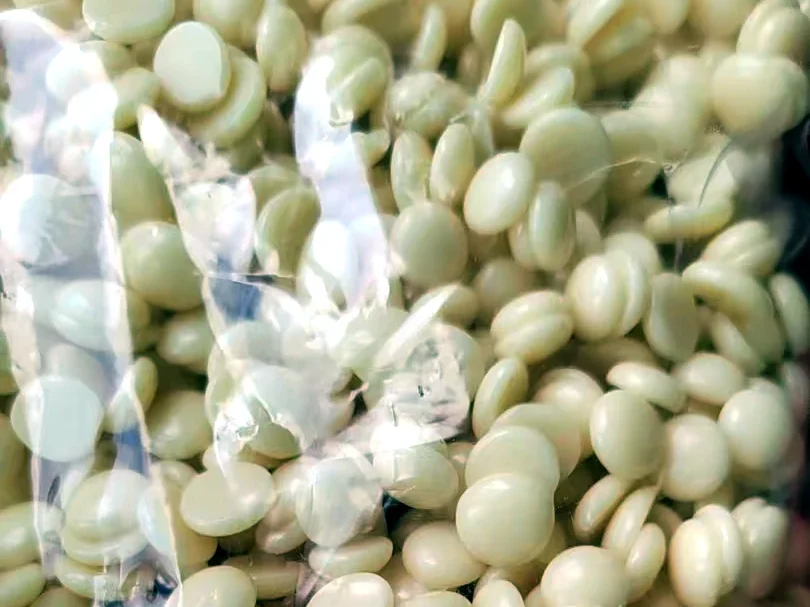
Formula A2 in cream white: the line most often specified for back and chest work in Gulf male grooming rooms.
The label question, answered by the bag
Every one of these markets requires Arabic on the label, and in each of them the entity that holds the registration is the entity that should appear on it. That makes the unlabeled transparent bag the sensible default for a first order: the bags ship with the batch number printed in the seal and nothing else, the importer prints the Arabic and English panel once the registration number exists, and nobody pays for artwork that has to be destroyed after a formulation or address change.
Private label on A1 runs at low MOQ, which is the point — a distributor can put a brand on 300 g bags without a print run that assumes a year of demand. Two details worth testing before the first pallet: whether the label adhesive holds at 40 °C for a week (many do not), and whether the bag carries a flat area large enough for the full Arabic panel plus the batch and expiry. A bag with a batch number and no label is a broken traceability chain; a bag with a label and no batch number is worse.
On storage, the region’s summer is the whole story: keep beads at 15–24 °C, away from sunlight, and let a cold consignment reach room temperature before the bag is opened. Condensation on beads is not visible until the wax spits in the pot.
Quick FAQ
Can one GCC registration cover Qatar, Bahrain and Oman?
How much stock does a first order need to be?
Why insist on a melting range instead of one number?
Next step
Tell us which of the three markets you are registering first and which entity holds the file, and we will send the document pack — formulation with percentages, INCI, GMP, free sale certificate, spec sheet and label artwork template — plus a 300 g sample allocation for salon trials. Contact Miro Wu, Dedicated Account Manager — email miro.wu@beautome.com or WhatsApp +86 188 1393 3019.
Related: the hard wax formula range, the ingredient file for Gulf buyers, and the full article index.