





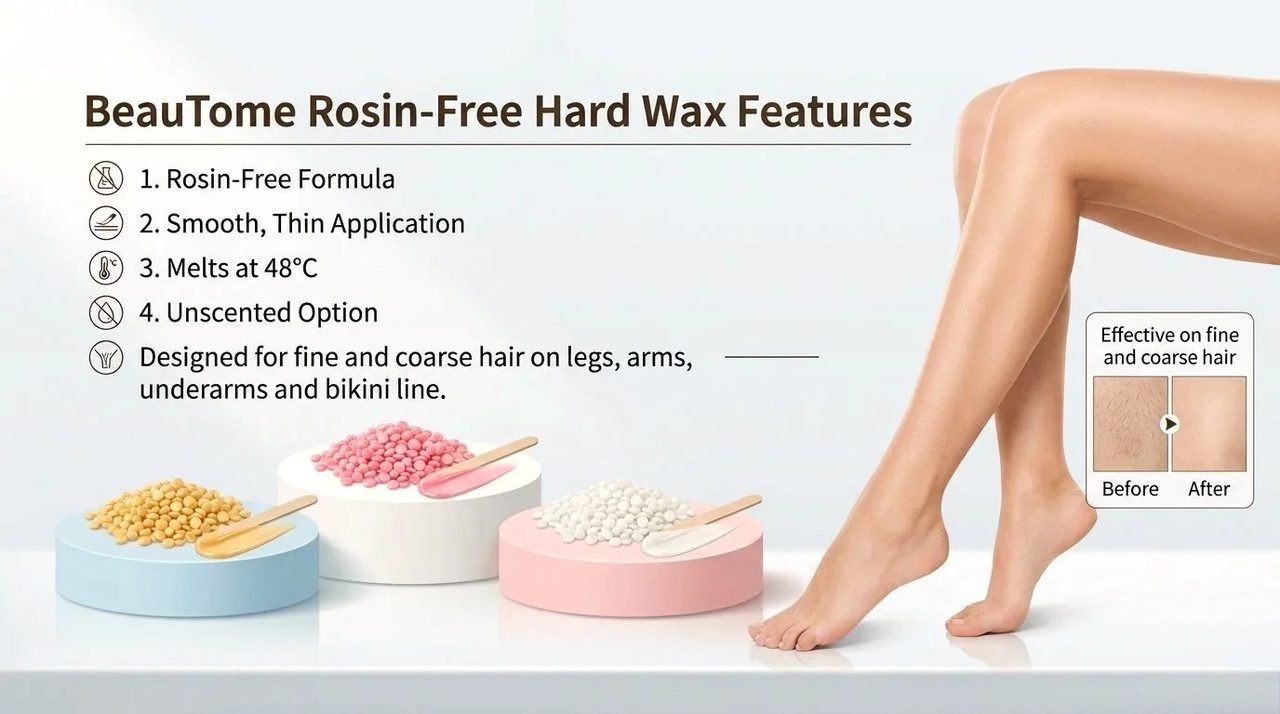
Short answer: A1 is a rosin-free hard wax bead line built on one base in three stock shades — gold, pink and off-white. The base contains no rosin and is listed unscented by design; the beads melt across 42–48 °C with a 48 °C working point and set to a thin, pliable film in a listed reference of about 6–8 seconds. It ships in 100 g, 300 g, 500 g and 1 kg bags. Stock orders ship one 20-bag carton (20 kg net), while private-label projects start at 1,000 kg per colour. The same bead body runs through all three shades; only the colourant system changes.
At a glance
| Model | BeauTome A1 |
| Product type | Hard wax beads — drop-formed pastilles |
| Formula | Rosin-free polymer blend; 9 declared base ingredients |
| Shades | Gold (reference), pink, off-white; other shades to order |
| Scent profile | Unscented by design; no added fragrance |
| Rosin status | Rosin free |
| Melting range | 42–48 °C |
| Working temperature | 48 °C recommended; face and brows at the lower end (42–44 °C) |
| Setting reference | Approx. 6–8 seconds after application |
| Application | Smooth, thin film; removed without strips |
| Intended use | Professional body waxing — legs, arms, underarms, bikini line; face and brows at lower working temperature |
| Pack sizes | 100 g, 300 g, 500 g, 1,000 g bags |
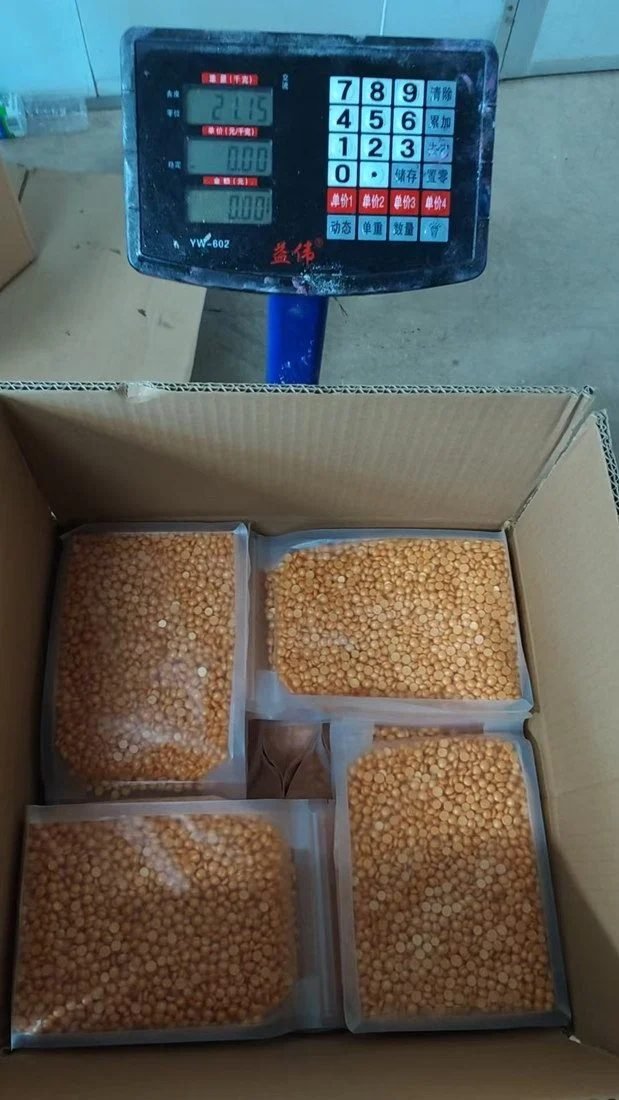
| Stock unit | 1 kg bag; 20 bags per carton (20 kg net, ~21.2 kg gross) |
| MOQ — stock | 1 carton (20 × 1 kg) |
| MOQ — OEM | 1,000 kg per colour |
| ODM reference | 2,000 kg for a formula or melt-point change |
| Branding | Unlabelled as standard; printed to artwork on 100 g / 500 g dielines |
| Storage | Cool, dry, out of direct sunlight; keep the bag sealed |
A rosin-free base for technicians who would rather avoid rosin
A1 is built on hydrogenated polydicyclopentadiene with EVA copolymer, microcrystalline wax and paraffin, softened with rice bran oil, shea butter, coconut oil and petrolatum; the only scent-bearing material is a low level of Rosa Rugosa flower oil carried with the raw materials. The base contains no rosin (colophony). Rosin-free describes the ingredient profile, not a claim of universal skin suitability: check the declaration for the shade you buy and patch-test to your own protocol.
A thin, pliable film that lifts in one piece
A1 spreads as a thin, pliable film rather than a thick blanket. A thin film uses less wax per area, stays flexible as it cools and lifts in one piece, so a 1 kg bag goes further and the couch roll stays cleaner. Film behaviour follows heater temperature, room temperature and how thick you lay it — read the film, not the clock.
Low-temperature melt: 42–48 °C
The wax is specified across a 42–48 °C melting range; 48 °C is the working point most salons run: fully fluid, spreads thin and stays comfortable on legs, arms, underarms and the bikini line. Face and brows are worked lower, around 42–44 °C. A melting range describes the wax, not a skin-application temperature: work to what your heater, room and patch test support.
Unscented by design
No fragrance is added to the formula. What you smell in the pot is the base itself — a faint natural note, not a perfume. That is deliberate: most salons already carry their own ambient scent, and a perfumed wax fights it in a small treatment room; a near-neutral wax leaves the room smelling of your salon. “Unscented” describes the scent profile, not a fragrance-free composition; the gold declaration lists Rosa Rugosa flower oil at 0.1–1%. Ask for the declaration for the shade you buy if your market needs a written statement.
Three shades, one base
Colour is the only variable. Items 1–9 on the declaration are identical in all three shades, so a technician who switches shade does not have to relearn the wax.
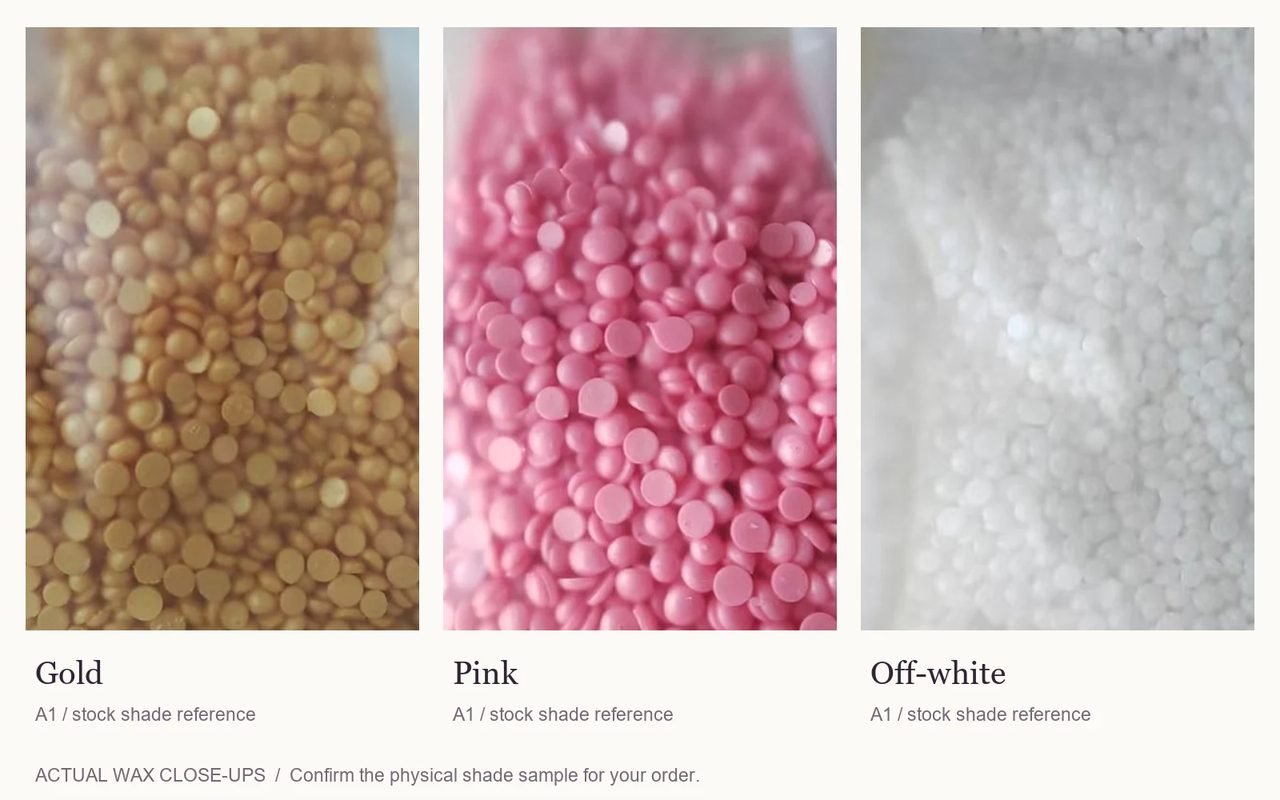
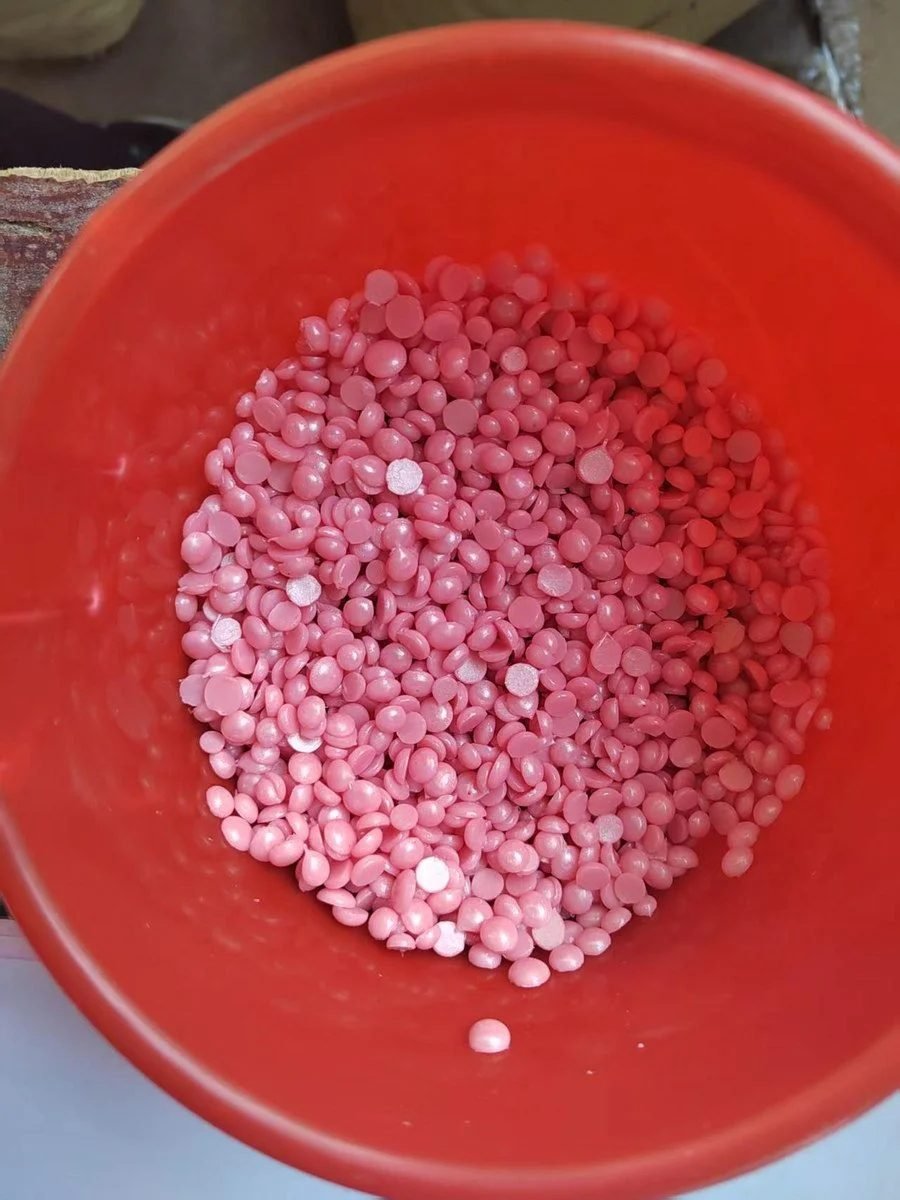
Gold — reference shade, a deep honey gold close to the classic professional look most salons re-order; legs, arms, underarms, bikini. Pink — an opaque rose pink that reads clearly against skin and white couch roll; underarms, bikini, brows. Off-white — near-white beads for work where residue on skin or fabric should not show; face, brows, upper lip. Other colours, including red and light-blue clips, are produced to order against a physical sample or Pantone reference.
From a 100 g bag to a 20 kg carton
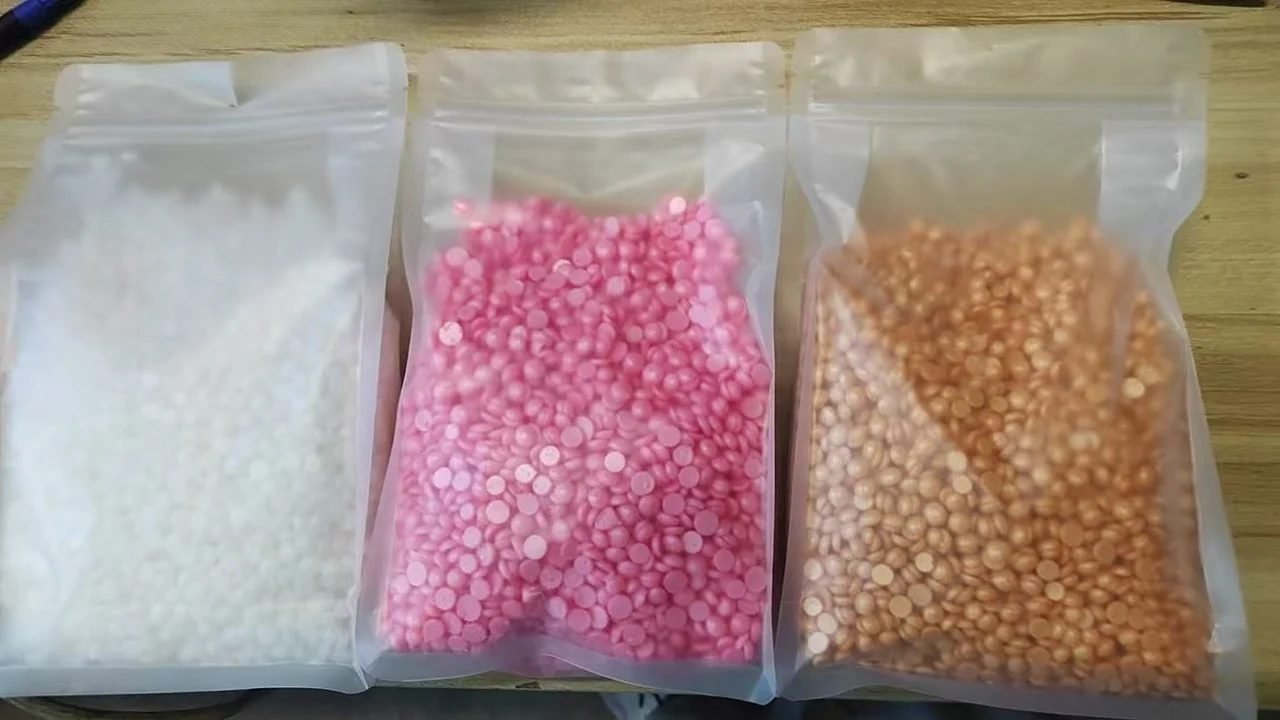
Four bag sizes; the 1 kg bag is the stock unit. The 100 g sachet fits retail packs, gift sets and single-service kits. The 300 g bag is a trial size for a salon evaluating the shade before a carton. The 500 g is the retail bag, printed with your artwork on the 500 g dieline. The 1 kg bag is clear, unlabelled and sealed; twenty per carton, 20 kg net (~21.2 kg gross). Stock ships unlabelled: one kilogram in a clear bag, ready to decant into your own pot. The neutral carton carries MADE IN CHINA marking; your shipping marks on request.
Two ways to buy
Stock, by the carton: 20 × 1 kg unlabelled bags; order one or one hundred. OEM: your artwork on the bag, your shade matched to a sample or Pantone, your labelling language; 1,000 kg per colour. Send your file against the 100 g or 500 g dieline and a print-ready proof returns before the run; shade approval is on a pressed wax chip. A different melt range, fragrance level or oil blend is a development project with its own 2,000 kg+ reference.
Documents that travel with the goods
For the A1 line the source page lists a US cosmetic product ingredient statement filed under CPIS, establishment registration No. 1005715; an Intertek cosmetic GMPC assessment audited against the US FDA 2008 guideline for the Gao’an wax plant; ISO 22716:2007 cosmetics GMP certification for the same plant and scope; and a GHS Rev. 9 (2019) safety data sheet issued March 2025. Declaration, SDS and bag food-contact test report are issued for the batch you receive; full copies are sent with the quotation. These are plant and filing documents, not a claim that the wax suits every skin type.
With the heater and the applicator
Hard wax beads are melted in a heater pot, then carried to the area on a wooden or fine applicator stick rather than rolled on like soft wax. For salon body work, A1 decants into the pot of a 400 ml or 800 ml heater; 180 ml compact and 20 ml detail heaters suit small-area and kit work. Stir as directed and check the actual wax temperature before skin contact.
FAQ
Is A1 fragrance-free? A1 is unscented by design: no fragrance is added, and the only scent-bearing material is Rosa Rugosa flower oil at 0.1–1%, which arrives with the raw materials and reads as a faint natural note rather than a perfume. If your market needs a fragrance-free statement in writing, ask for the declaration for the shade you buy.
What does rosin-free mean for A1? The base contains no rosin. It is built on hydrogenated polydicyclopentadiene, EVA copolymer, microcrystalline wax and paraffin, softened with rice bran oil, shea butter, coconut oil and petrolatum. Rosin-free describes the ingredient profile, not universal skin suitability.
Why is titanium dioxide in the wax? Titanium dioxide (CI 77891, CAS 13463-67-7) is the colourant that makes A1 opaque. An opaque film shows where the wax has been laid, so the layer stays thin and even and a missed patch is visible before removal. It is declared at 0.05–2% in the colourant system; at that level it is a colourant, not a UV filter or an active.
At what temperature should A1 be applied? The melting range is 42–48 °C, and 48 °C is the working point we recommend: fully fluid, spreads thin, comfortable on the body. Face and brows are worked at the lower end, around 42–44 °C. None of these figures is a skin-application temperature — work to what your heater, room and patch test support, and read the film before you strip.
Can I order less than 1,000 kg? Yes — that is what stock is for. Stock ships in 1 kg bags, twenty to a carton, with nothing printed on the bag. The 1,000 kg minimum applies to OEM, where the bag carries your artwork and the shade is matched to your reference.
Which shades are available? Gold, pink and off-white from stock. Other colours — including the red and light-blue shades in the clips — are produced to order against a physical sample or a Pantone reference.
Do the three shades behave differently? No. The base formula is identical and only the colourant system differs, so melt point, film and setting behaviour are the same. A technician can move between shades without changing technique.
Can I put my own brand on the bag? Yes. Send artwork against our 100 g or 500 g dieline and we return a print-ready proof before production. Bags can also ship with the BeauTome label, or completely blank.
What is the difference between A1 and B1? Both are rosin-free, same 42–48 °C range. A1 runs gold, pink and off-white with a 6–8 s setting reference; B1 is the pearl-white classic, unscented, 8–10 s, and the bead packed into the PW6 nose-wax kit.